I stood in my bathroom three years ago and hated it. White tile. Gray walls. It felt like a hospital waiting room, not a place to relax.
I’d been pinning “spa bathroom” boards for months, but nothing I tried felt warm. Then I painted one wall a deep mocha brown on a whim.
Everything shifted. The room finally felt like mine. If you’re staring at your own bland bathroom right now, I get it. Brown did for me what gray never could.
Here’s everything I learned turning that room around, idea by idea.

Top 5 Products to Bring This Look Home
- Amazon Basics Microfiber Herringbone Shower Curtain, Terracotta – A budget-friendly way to add warm terracotta texture to your shower without committing to tile.
- MIULEE Waffle Boho Bath Mat Set, Brown – Two absorbent, ridged mats that instantly ground a white or beige floor in warm brown tone.
- Round Wood-Frame Vanity Mirror – A circular mirror in natural wood breaks up hard tile lines and softens the whole room.
- Bamboo Slatted Bath Mat or Shower Stool – Real wood grain adds texture and a spa feel while staying water-resistant.
- Ladder-Style Bamboo Towel Rack – Leans against any wall and gives you brown-toned storage without drilling a single hole.
Paint One Wall in a Warm Mocha or Chocolate Brown
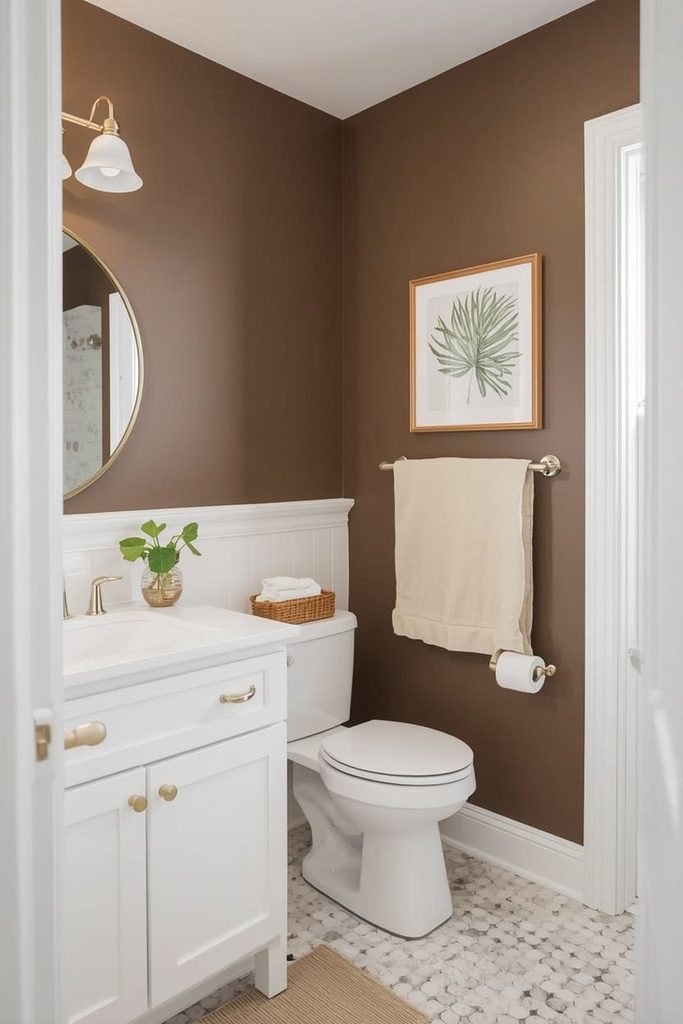
A single brown accent wall changes a bathroom faster than almost anything else you can do. It costs the price of a paint sample and a weekend afternoon.
Pick a warm-toned brown with a bit of red or orange in it, not a flat gray-brown. Shades like Sherwin-Williams Double Latte or a mid-tone mocha read cozy instead of muddy. A true gray-brown can feel cold under bathroom lighting, especially LED bulbs, so bring the sample home and check it morning and night before you commit.
Paint the wall behind your vanity or the wall facing the door, since that’s the first thing you see when you walk in. Keep the other three walls white or a soft cream so the room doesn’t feel closed in. That contrast does most of the work. It lets the brown wall act as a focal point instead of swallowing the whole room.
Use a satin or semi-gloss finish in a bathroom. Flat paint holds onto humidity and stains, and you’ll end up repainting sooner than you’d like. Semi-gloss also bounces a little more light around, which helps if your bathroom doesn’t have a window.
If you’re renting, try a large canvas or removable wallpaper panel in the same brown tone instead. You get the same visual punch without touching the actual wall, and you can take it with you when you move. Command strips hold surprisingly heavy canvases if you use enough of them.
Swap Your Tile for Terracotta or Clay-Toned Options
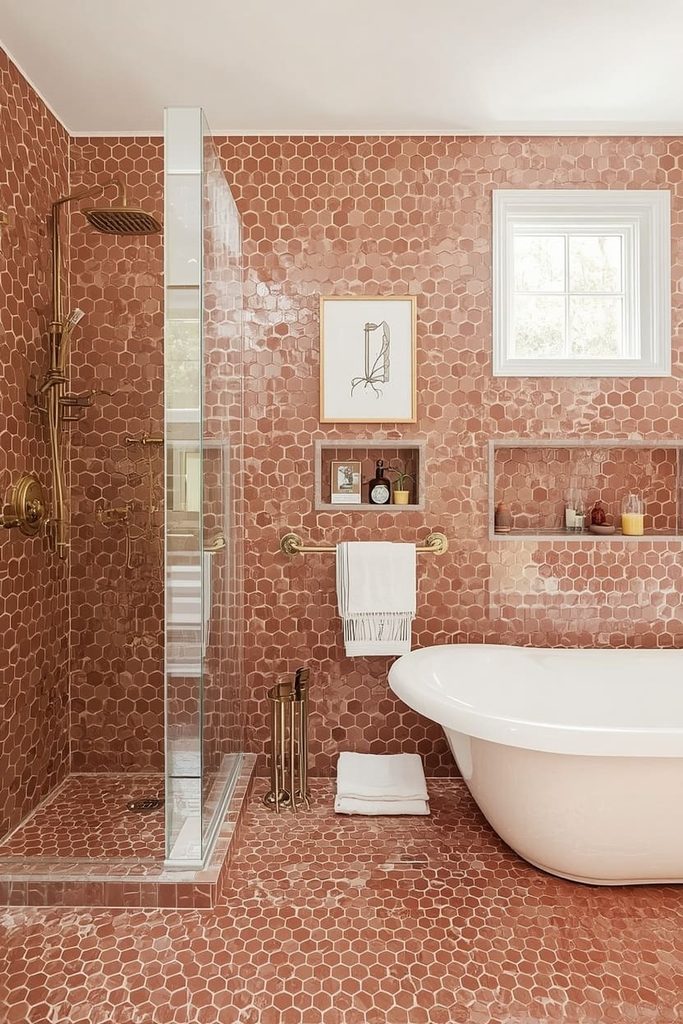
Terracotta tile is having a real moment, and it works because it’s warm without being trendy in a fleeting way. It’s been used in bathrooms for centuries, which tells you something about how well it ages.
If a full tile replacement isn’t in your budget, start small. Terracotta hex tile as a shower floor or a backsplash behind the sink gives you the look without redoing the whole room. Both projects are contained enough that a lot of homeowners tackle them over a single weekend.
Pair terracotta with white grout for contrast, or a matching terracotta grout for a seamless, sun-baked feel. White grout will make the pattern of the tile pop more. Matching grout gives you a calmer, more monolithic look, which tends to suit smaller bathrooms better.
Peel-and-stick terracotta-look vinyl tile has also gotten genuinely good in the last couple of years. It’s a weekend project, not a contractor job, and most versions are rated for wet areas now. This is the route I’d recommend if you’re not sure yet whether you’ll love the look long-term.
Test a sample piece in your actual bathroom lighting first. Terracotta can lean more orange or more pink depending on the light source, and you want to know which one you’re getting before you order forty tiles. Lay the sample on the floor and check it at different times of day.
Bring In a Warm Wood Vanity
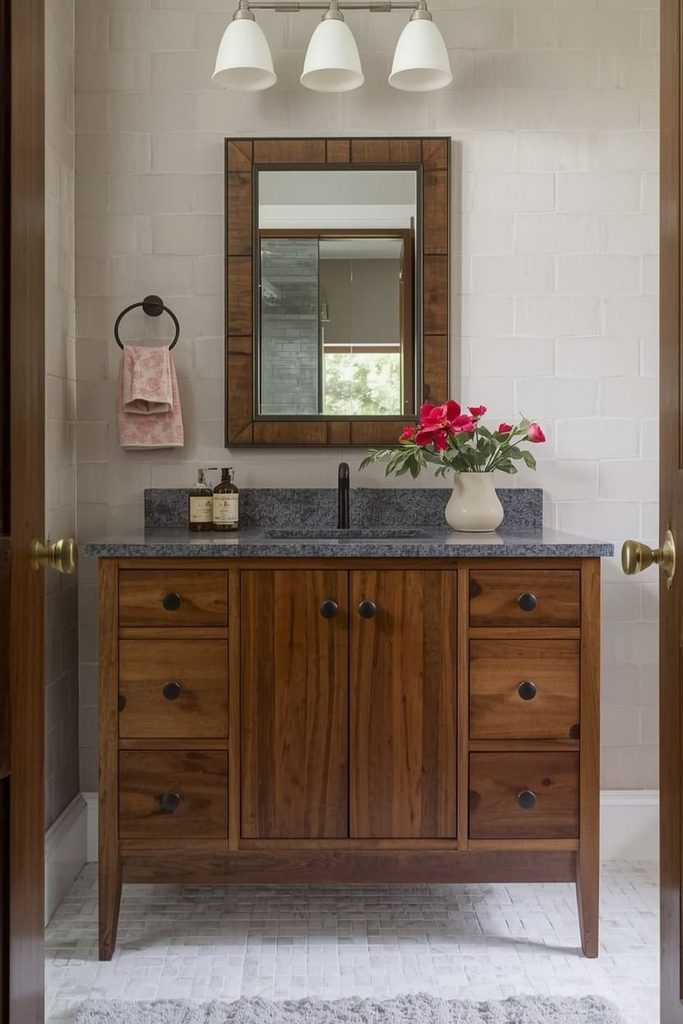
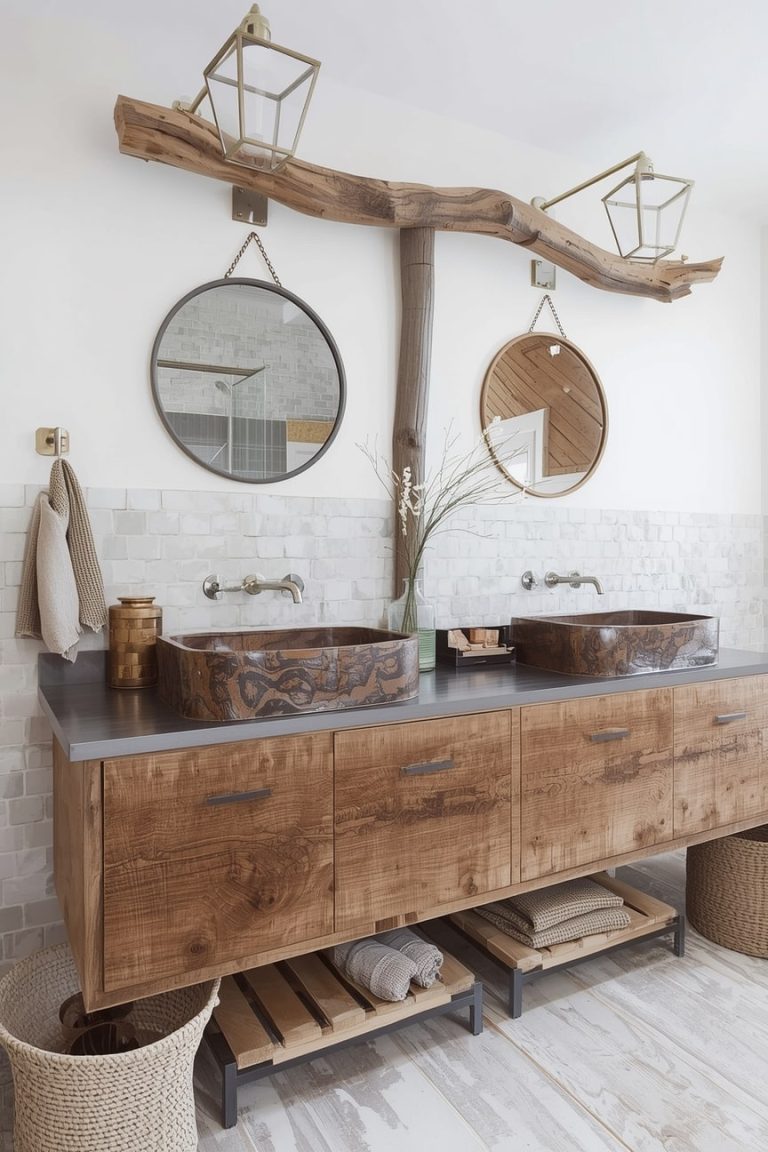
Your vanity is the biggest single piece of furniture in most bathrooms. Swapping a white or gray vanity for one in warm wood does more heavy lifting than almost any other change on this list.
Walnut, oak, and teak all work well in a bathroom because they hold up to humidity when properly sealed. Teak is the most water-resistant of the three if your bathroom runs steamy, since it’s the same wood used on boat decks. Walnut gives you the richest, darkest brown tone if that’s the direction you want.
Look for a vanity with a natural wood grain finish rather than a painted brown, since real grain reads richer and less flat. Grain also hides small scratches and water spots better than a flat painted surface does, which matters in a room that sees daily use.
If replacing the whole vanity isn’t realistic right now, refinish what you have. Sand down a painted vanity and apply a walnut or espresso wood stain instead. It’s a two-day project, mostly drying time, and costs a fraction of a new piece. You’ll need to reseal the top with a water-resistant topcoat afterward.
Add brass or matte black hardware once the wood is done. The contrast between warm wood and dark metal is what makes this look feel intentional instead of accidental. Skip the original builder-grade knobs. They’re usually the first thing that gives away an unfinished project.
Layer Brown and Terracotta Textiles
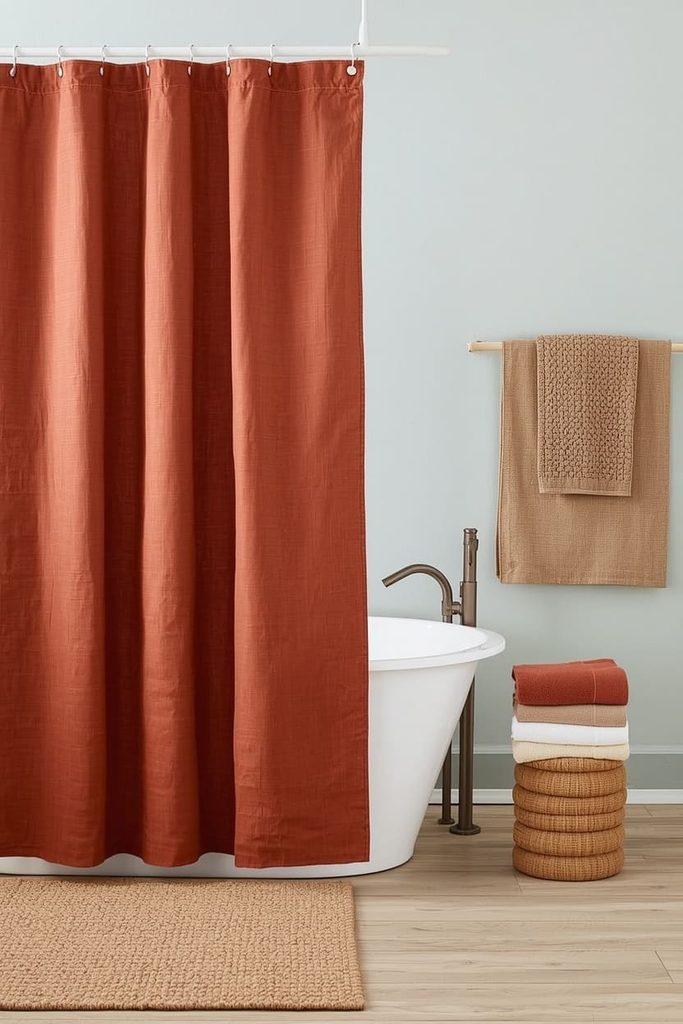
Textiles are the fastest, cheapest way to test whether you actually like a brown bathroom before committing to paint or tile. Towels, a bath mat, and a shower curtain can transform a room in under an hour.
Start with your shower curtain, since it’s the largest fabric surface in the room. A terracotta or chocolate-brown linen curtain sets the tone immediately. Because it covers so much visual real estate, this single swap often does more than a can of paint would.
Add towels in a slightly different shade, like a rust or camel, so the room has depth instead of one flat color. Matching every textile to the exact same brown tends to look flat under bathroom lighting. Slight variation reads as intentional, not mismatched.
Layer in a chunky waffle-weave bath mat in brown or tan. Mixing textures matters here. A smooth linen curtain against a nubby waffle mat and a plush towel keeps the room from feeling one-note, and it gives the eye something to move across instead of resting on a single flat surface.
If you want to test the whole look before buying anything, drape a brown throw blanket over your towel bar for a day. You’ll know almost instantly if the color works in your specific light. This trick has saved me from a couple of returns I would have otherwise had to deal with.
Choose Brass or Matte Black Fixtures
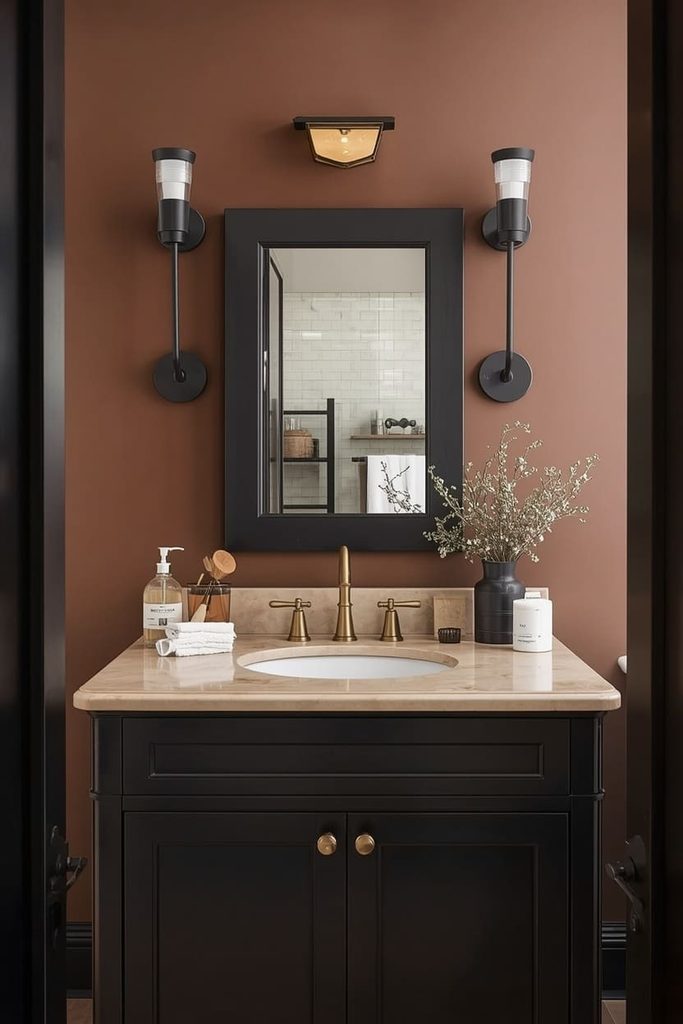
Brown walls or tile need the right hardware to look finished instead of flat. Brass and matte black are the two finishes that consistently work with brown, and they do different jobs.
Brass warms everything up further and leans into that vintage, old-world feel. It works especially well with terracotta tile or a warm mocha wall, since the tones share the same undertone family. A brass faucet against a mocha wall looks like it was always meant to be there.
Matte black does the opposite. It adds sharp contrast and keeps a brown bathroom from feeling too soft or too “cabin in the woods.” If your bathroom leans more modern than rustic, black hardware is usually the better call.
Pick one finish and use it everywhere, on your faucet, towel bar, mirror frame, and cabinet pulls. Mixing brass and black in the same small room usually reads as cluttered rather than curated, even though mixed metals can work in larger spaces with more visual breathing room.
Swapping fixtures is also one of the easiest upgrades on this whole list. Most faucets and towel bars are a 20-minute DIY job with a wrench and a YouTube tutorial. You don’t need a plumber for a straight swap, only for a full relocation.
Add Natural Stone or Pebble Accents
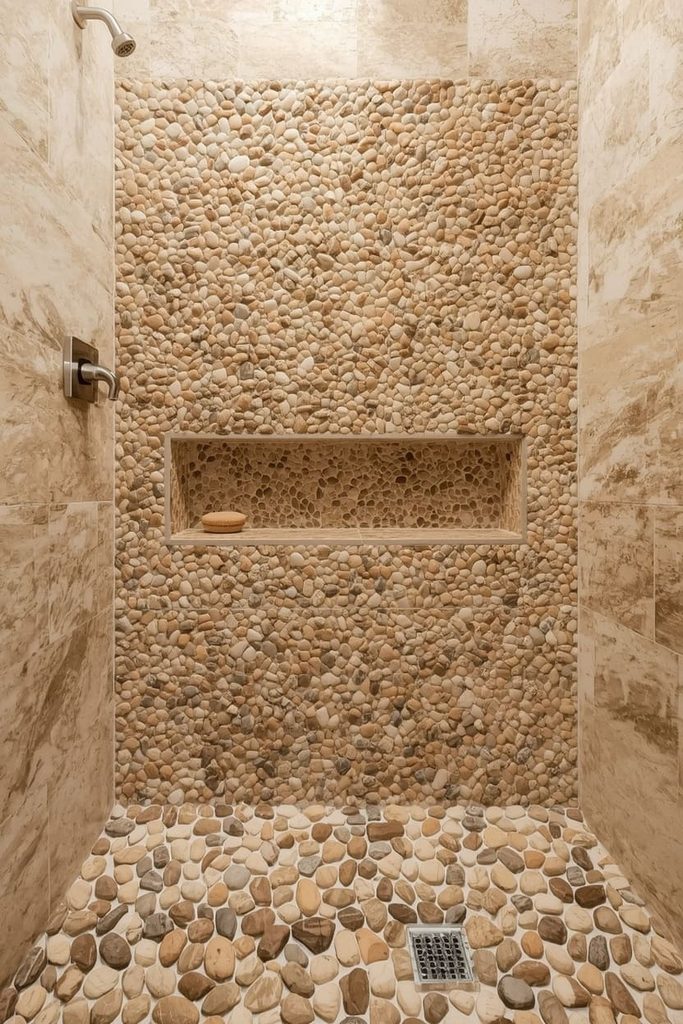
Stone brings texture that paint and tile alone can’t give you. It also photographs beautifully, which matters if this bathroom is going on your Pinterest board or your listing photos someday.
A pebble-tile shower floor in warm beige and brown tones is the classic version of this idea. It’s grippy underfoot and genuinely feels different from standard tile, almost like walking on a riverbed. Most people notice the texture before they notice the color.
If a full pebble floor is too big a project, start with a single stone accent, like a travertine soap dish, a marble tray on your vanity, or a stone-look wallpaper on one wall. Small stone touches add texture without asking you to redo any plumbing or flooring.
Stone works because it has natural color variation built in. No two pieces are exactly the same shade, and that variation is what keeps a brown bathroom from feeling flat or artificial. It’s the same reason wood grain works so well alongside it.
Wipe stone surfaces dry after each use. Natural stone stains more easily than tile if water sits on it too long, especially unsealed varieties like travertine. A quick wipe with a towel after your shower takes ten seconds and saves you a resealing job down the line.
Balance the Brown With Greenery
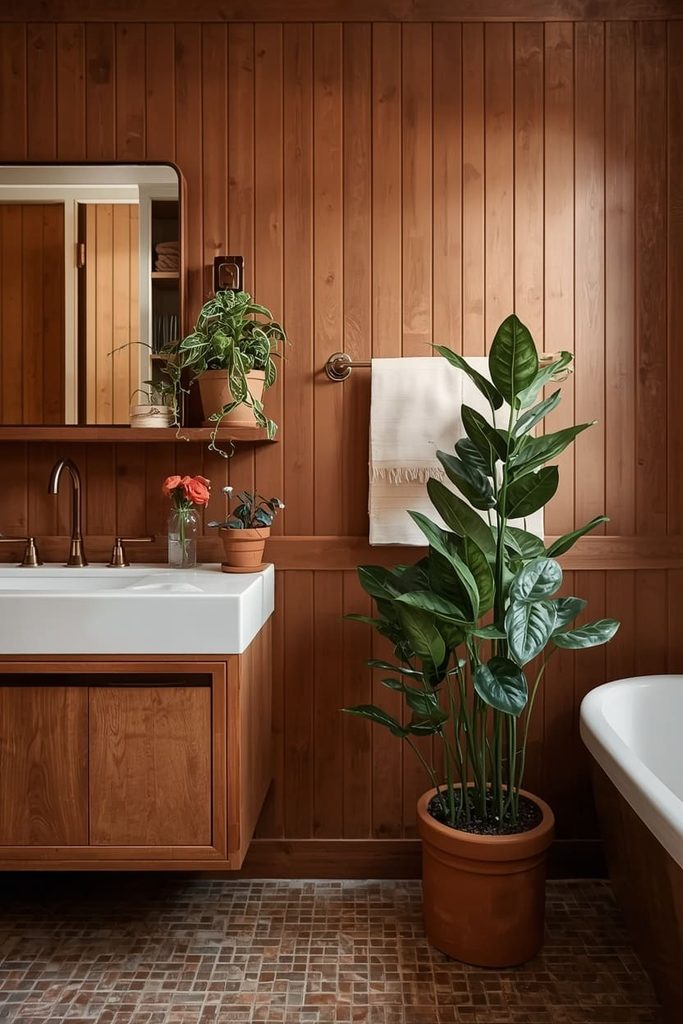
Brown bathrooms can tip into feeling heavy or dark if you stop at just wood, tile, and paint. Plants are the fix. A little green against a lot of brown is what makes the whole room feel alive instead of cave-like.
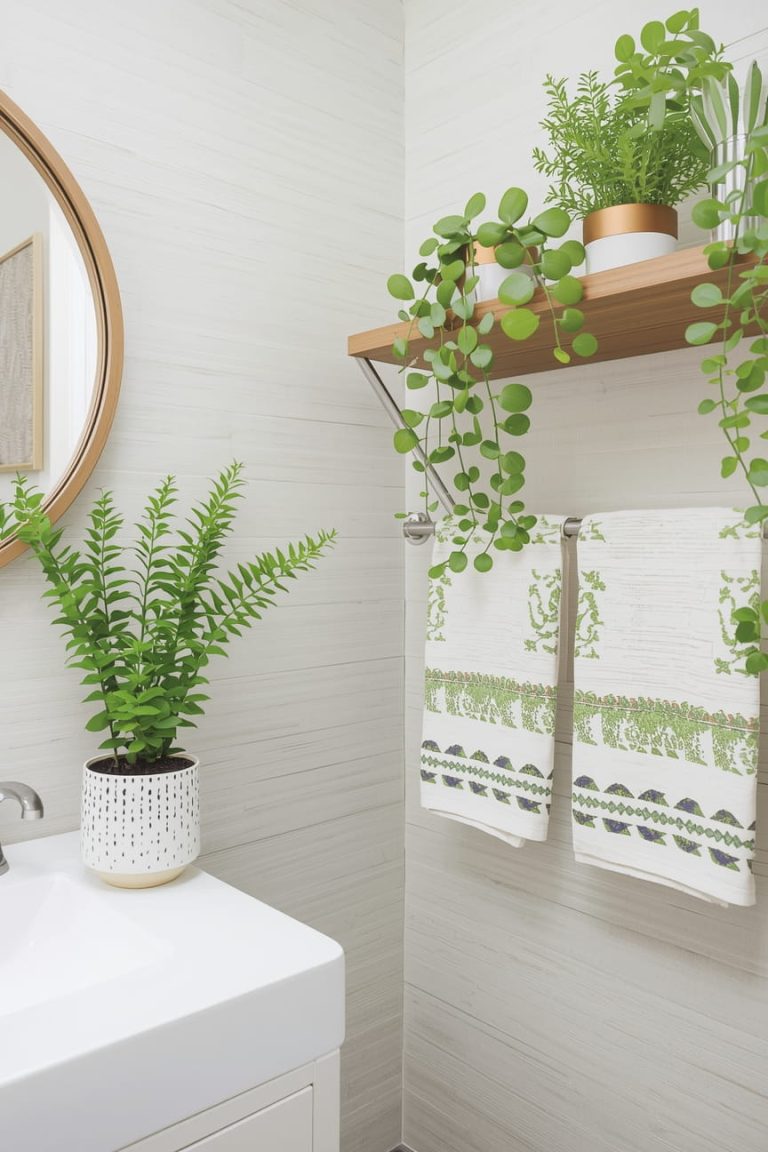
Pick plants that actually tolerate bathroom humidity and lower light, since most bathrooms don’t get direct sun. Pothos, snake plants, and ZZ plants all handle steam and shade well, and they’re forgiving if you forget to water them for a week or two.
Put one on a floating wood shelf next to your mirror and a taller one in a corner near the tub. Height variation matters here. A single plant on the counter reads as an afterthought, while plants at different heights make the room feel layered and lived-in.
Use terracotta planters to double down on the earthy palette instead of white ceramic ones. The unglazed clay finish ties directly back into the same warm tones you’re already using on your walls or tile, and it ages beautifully as it develops a natural patina.
If your bathroom has zero natural light, don’t force real plants to survive there. A few well-chosen faux plants in the right pots will still soften the space without the guilt of watching something die every few weeks. Nobody can tell from three feet away anyway.
Frequently Asked Questions
Does brown make a small bathroom look darker? It can, but only if you go too dark or skip contrast. Stick to mid-tone browns like mocha or camel instead of near-black espresso, and pair them with white trim, a large mirror, and good lighting. Small brown bathrooms actually read as cozy rather than cramped when you get the balance right.
What colors go with brown in a bathroom? Warm white, cream, and sage green are the easiest pairings. Terracotta and rust deepen the warm palette further. For contrast, navy or deep teal towels against a brown wall create a rich, grounded look without clashing.
Is brown a passing trend or a lasting neutral? Brown has been used in interiors for decades, long before it resurfaced on Pinterest. Unlike some trend colors, it pairs with almost any wood tone or metal finish you already own, which makes it a safer long-term choice than most trend colors.
Can I do a brown bathroom on a tight budget? Yes. Paint one wall, swap your shower curtain and towels, and add a wood-frame mirror. Those three changes alone cost under $150 in most cases and deliver most of the visual impact of a full renovation.
What’s the easiest first step if I’m not ready to commit? Buy a brown or terracotta bath mat and shower curtain first. They’re both under $40 and easy to return if the color doesn’t work in your space. Living with the color for a week or two tells you more than any paint chip ever will.
Will a brown bathroom hurt my home’s resale value? Not if you keep the base neutral. A brown accent wall or brown textiles are easy for future buyers to change. A full room of dark brown tile is a bigger commitment, so if resale is a concern, lean on paint and textiles over permanent tile changes.
That mocha wall I painted three years ago is still there. I’ve swapped the towels twice, added a terracotta planter, and changed the mirror once. The bones of the room never got old. That’s the thing about brown. It doesn’t shout for attention, it just makes a room feel like somewhere you actually want to be. Pick one idea from this list, start there, and see how the room feels before you touch anything else.

Jenny is a passionate writer specializing in home decor, design, and styling. With years of experience in transforming spaces, she shares expert tips on creating beautiful, functional homes. From interior design trends to DIY decor ideas, Jenny’s work helps homeowners craft spaces that reflect their unique style. Whether it’s a cozy living room, a modern kitchen, or a serene bedroom, her articles offer practical advice and inspiration to elevate any home.