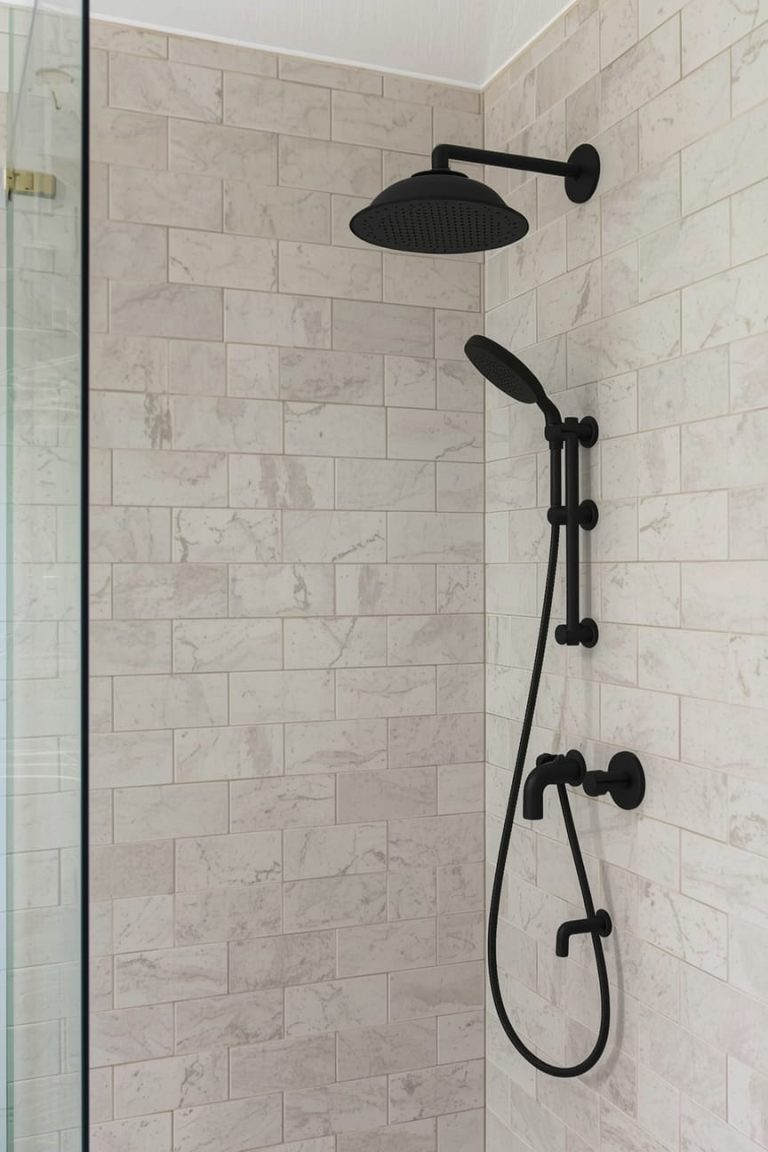
My old rental had no laundry room. None. The washer lived in the bathroom, wedged between the sink and the door, and every load felt like a puzzle. I’d bang my elbow on the dryer knob just brushing my teeth.
Eventually I redid the layout, and it stopped being a daily annoyance. The washer didn’t move much. But where it sat, and how the door swung around it, changed everything.
If your bathroom is doing double duty as a laundry room, you’re not alone. Here are 5 layouts that actually work in a tight space, plus five products that make the setup easier.

5 Products That Make This Easier
- Stackable washer and dryer combo unit — a vertically stacked pair designed to fit a footprint as narrow as 24 inches wide.
- Bi-fold louvered closet doors — swap a swinging door for a folding one so the washer closet doesn’t need floor clearance to open.
- Washing machine drain pan — catches leaks before they reach your bathroom floor, which matters most when the unit sits near a shower or sink.
- Over-the-washer wire shelf — adds vertical storage above the unit without needing extra floor space.
- Portable washing machine on a rolling cart — a compact unit you can wheel out of the way when you need the floor space back.
Stack the Washer and Dryer Into a Slim Closet Nook
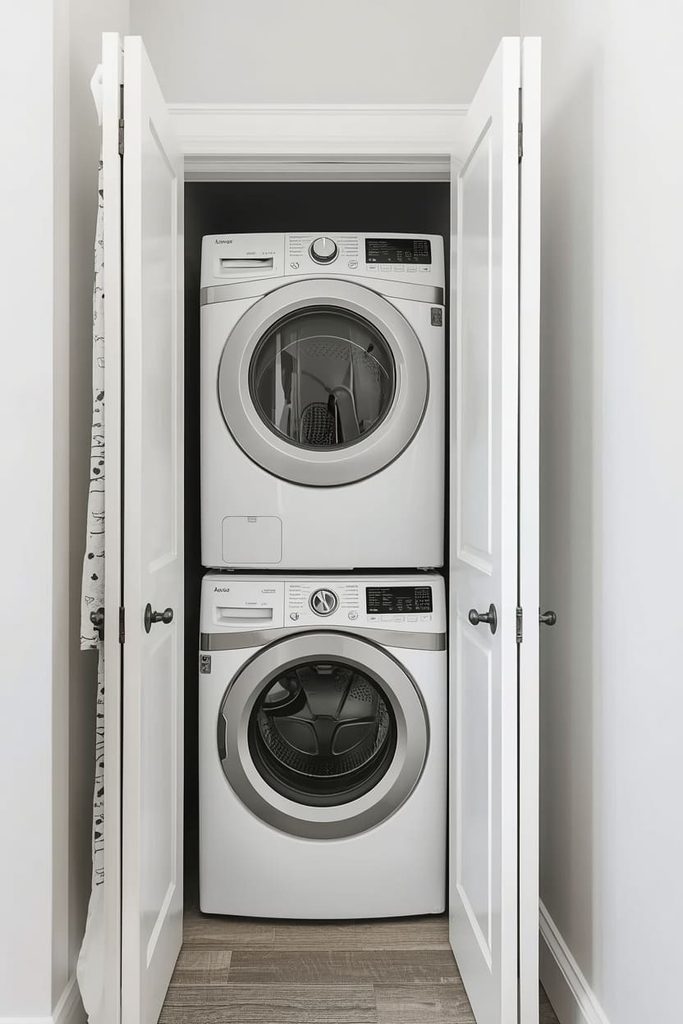
The direct answer: a stacked washer-dryer unit fits into a footprint as small as 24×30 inches, which makes it the easiest way to add laundry to a tiny bathroom without touching your existing layout.
Look for a closet, an unused corner, or even a deep linen cabinet you can convert. You’ll need a 240-volt outlet (for electric dryers), a cold and hot water hookup, a drain line, and a dryer vent that runs to an exterior wall. Stacked units typically need at least 6 inches of clearance behind them for hoses and venting.
Frame the opening with a bi-fold or pocket door instead of a hinged one. A hinged door needs 24 to 30 inches of swing space, which a tiny bathroom usually can’t spare.
This layout keeps the washer completely separate from your shower and sink zone, which lowers the risk of water damage and keeps the rest of the room feeling like a bathroom, not a laundry closet.
Place a Compact Washer Under the Sink Counter
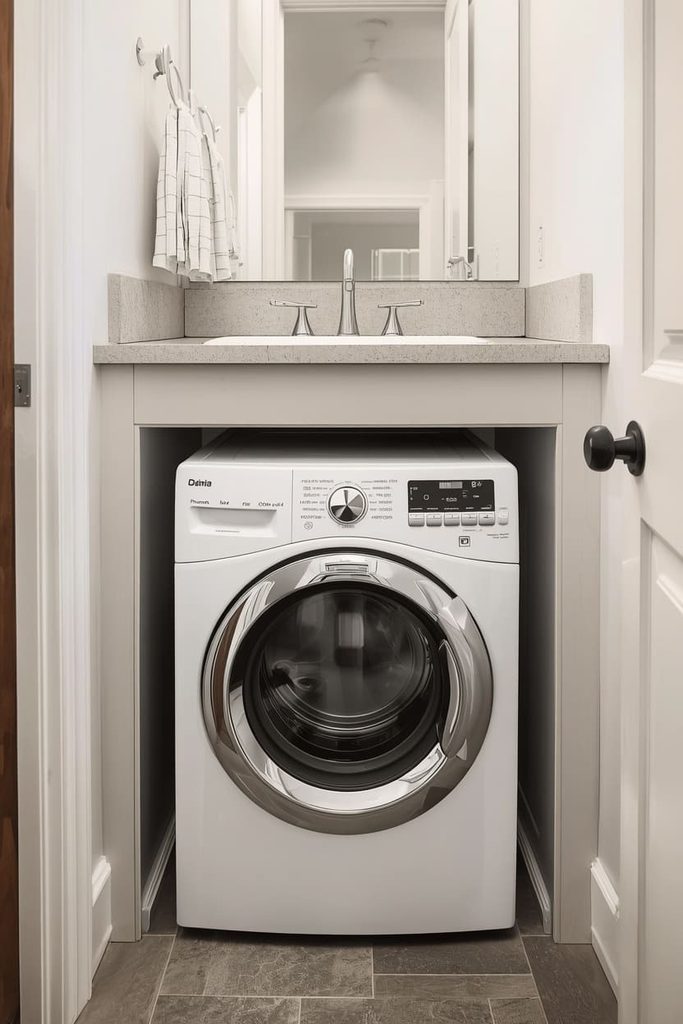
The direct answer: a slim 24-inch-wide washer can slide directly under a raised bathroom counter, turning unused under-sink space into a laundry spot without adding square footage.
Raise your sink counter to a minimum height of 34 to 36 inches, which is standard counter height and enough to slide a compact washer underneath. You’ll need a countertop-mounted or wall-mounted sink so the plumbing doesn’t interfere with the washer’s footprint, plus a water line and drain routed to the same wall.
Choose a washer without an external dryer vent requirement, such as a ventless combo unit, since running duct work under a sink counter is difficult. Ventless units use condensation drying instead of exterior venting.
This layout works best in bathrooms where the sink already sits on an exterior or plumbing wall, since it keeps water and drain lines close together and avoids a second plumbing run across the room.
Position the Washer Opposite the Shower, Not Beside It
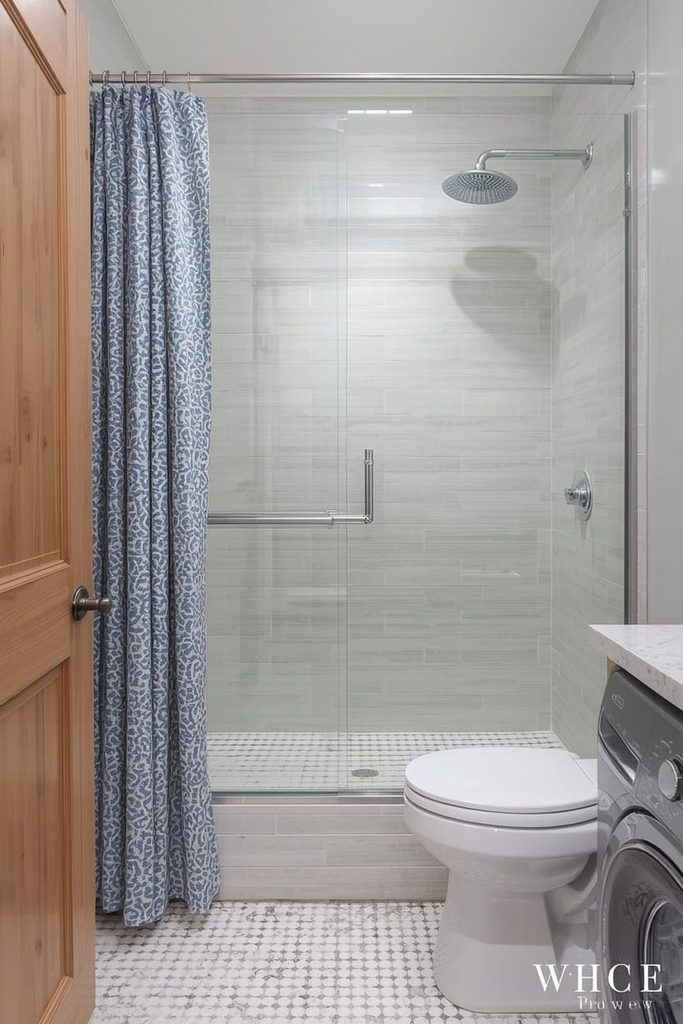
The direct answer: placing the washer on the wall directly across from the shower — instead of next to it — keeps water spray away from the electrical connection and gives you a clear walking path down the middle.
Measure your shower’s splash zone first. Most shower curtains or doors contain spray within about 2 feet. Position your washer at least 3 feet from the shower’s edge, ideally against the opposite wall, so the water source and the electrical appliance are never sharing the same wet zone.
You’ll need a GFCI-protected outlet near the washer regardless of placement, since bathrooms require ground-fault protection by code in most areas. Keep the washer’s water and drain lines running along the same wall as the shower’s plumbing if possible, which reduces the amount of pipe you need to run.
This layout also keeps your toilet and sink zone dry and separate, since the washer and shower become the two “wet” zones on opposite sides of the room.
Hide the Washer Behind a Cabinet Door That Matches Your Vanity
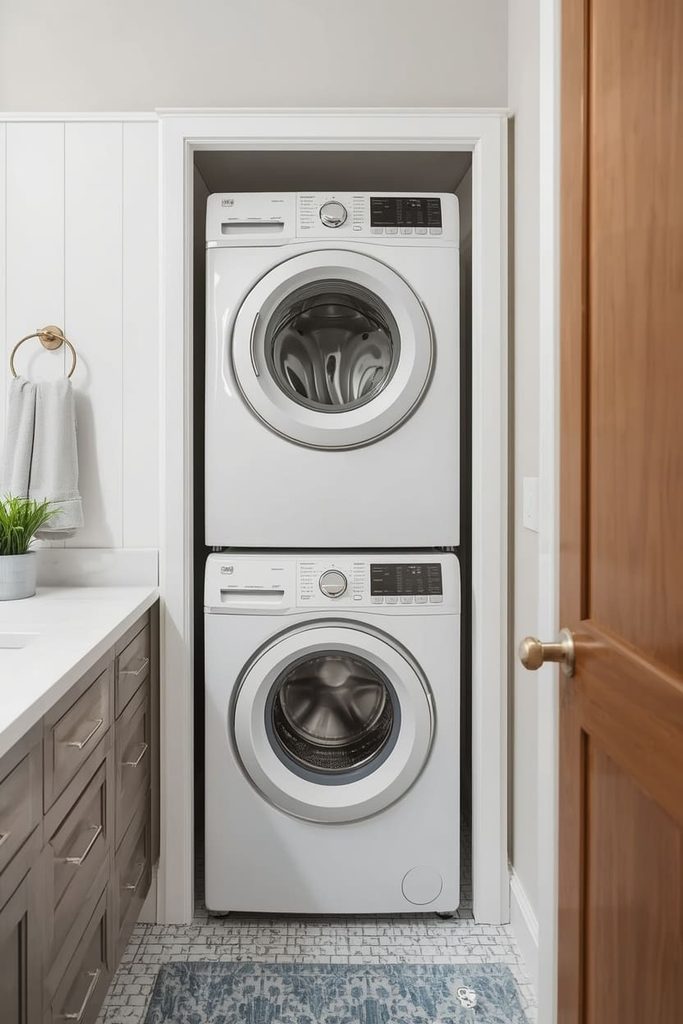
The direct answer: building a cabinet enclosure around the washer, finished to match your vanity, disguises the appliance completely and makes the bathroom feel like one cohesive space instead of a laundry room with a sink in it.
Build or buy a cabinet frame sized to your washer’s dimensions, typically 24 to 27 inches wide and at least 34 inches tall for a single unit, taller for a stacked pair. Leave a 1-inch gap around the unit for airflow, and cut a vent panel into the cabinet door if you’re using a unit that requires exterior venting.
Match the cabinet’s door style and finish to your existing vanity so the two read as one built-in unit. Use furniture legs or a toe-kick base that matches your vanity’s style for a seamless look.
This idea works in any tiny bathroom layout, since it’s a finishing touch you can add to a washer that’s already stacked, placed under a counter, or positioned across from the shower.
Use a Portable Washer That Rolls Out of the Way
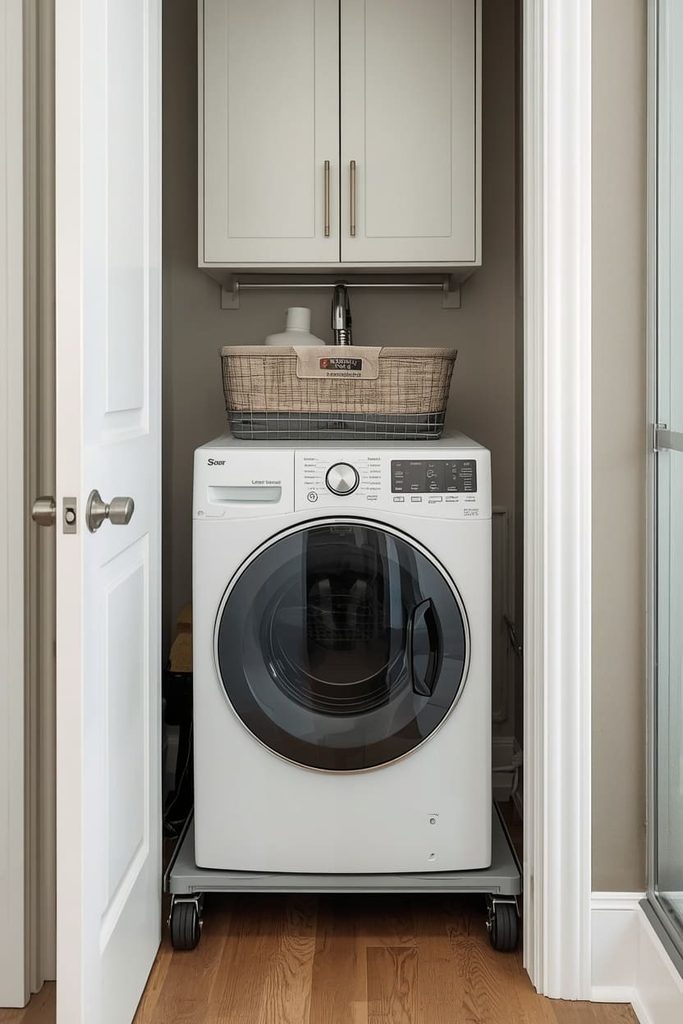
The direct answer: a portable washer on a wheeled cart connects temporarily to your sink faucet and rolls into a closet or corner when you’re not doing laundry, which works well if you don’t have room for a permanent hookup.
Portable washers typically need a faucet adapter that connects to your sink, plus a drain hose that empties into the sink or tub. Choose a unit under 20 inches wide so it fits through a standard doorway and tucks into a corner without blocking the door swing.
Store it on a rolling cart or dolly rated for at least 50 pounds, since compact washers full of water are heavier than they look. Keep a folded towel nearby for the inevitable drip when you disconnect the hose.
This layout is the easiest to reverse, which makes it a good option if you’re renting and can’t install permanent plumbing for a washer.
FAQs
Do I need a permit to add a washing machine to my bathroom? In most areas, yes, if you’re adding new plumbing or a 240-volt electrical line. Check with your local building department before you start.
Can a washing machine go in a bathroom without a dryer vent? Yes. Ventless washer-dryer combo units use condensation drying instead of an exterior vent, which makes them a good fit for interior bathrooms.
How much clearance does a stackable washer and dryer need? Plan for at least 6 inches behind the unit for hoses and venting, and 1 inch on each side for airflow, on top of the unit’s actual footprint.
Is it safe to put a washing machine near a shower? Yes, as long as it’s on a GFCI-protected outlet and positioned away from direct water spray, ideally on the opposite wall from the shower.
What’s the smallest washing machine that still fits a full load? Compact washers around 24 inches wide typically hold 2 to 2.5 cubic feet, enough for a standard load, though smaller than a full-size unit.
I’ve lived with more than one of these setups, and every single one beat hauling laundry down three flights of stairs. Pick the layout that fits your walls and your budget, and you’ll wonder why you waited so long to fix it.

Jenny is a passionate writer specializing in home decor, design, and styling. With years of experience in transforming spaces, she shares expert tips on creating beautiful, functional homes. From interior design trends to DIY decor ideas, Jenny’s work helps homeowners craft spaces that reflect their unique style. Whether it’s a cozy living room, a modern kitchen, or a serene bedroom, her articles offer practical advice and inspiration to elevate any home.