For two years, the corner of my dining room was basically a black hole. It started as a “temporary” spot for mail and ended up swallowing shopping bags, a yoga mat, and at one point, an entire box of holiday decorations I never unpacked.
Every time I walked past it, I felt this little twinge of guilt — like the room was judging me. Then one rainy Saturday, with nothing better to do, I finally sat down and actually looked at that corner instead of avoiding it.
Turns out, it wasn’t a hopeless space. It just needed the right idea. If you’ve got a corner like mine, here are 7 ways to turn it into the best part of your dining room — plus a few products that made my own redo so much easier.
Top 5 Products to Help You Transform Your Dining Corner
- Corner Banquette Bench with Storage — a space-saving seating solution that tucks neatly into an L-shaped corner while hiding clutter underneath the cushioned seat.
- Round Pedestal Dining Table (36–42″) — a compact, leg-free table that fits snugly against a corner without the awkward bump of traditional table legs.
- Floating Corner Wall Shelves (Set of 3) — an easy, rental-friendly way to add display space and warmth to an empty corner without taking up floor room.
- Round Wall Mirror (24″) — an instant trick for making a small or dark corner feel twice as open and bright.
- Adjustable Pendant Light Fixture — a simple plug-in or hardwired option that adds cozy, focused light right where your corner needs it most.
The 7 Ideas
Tuck In a Built-In Banquette for Cozy Bonus Seating
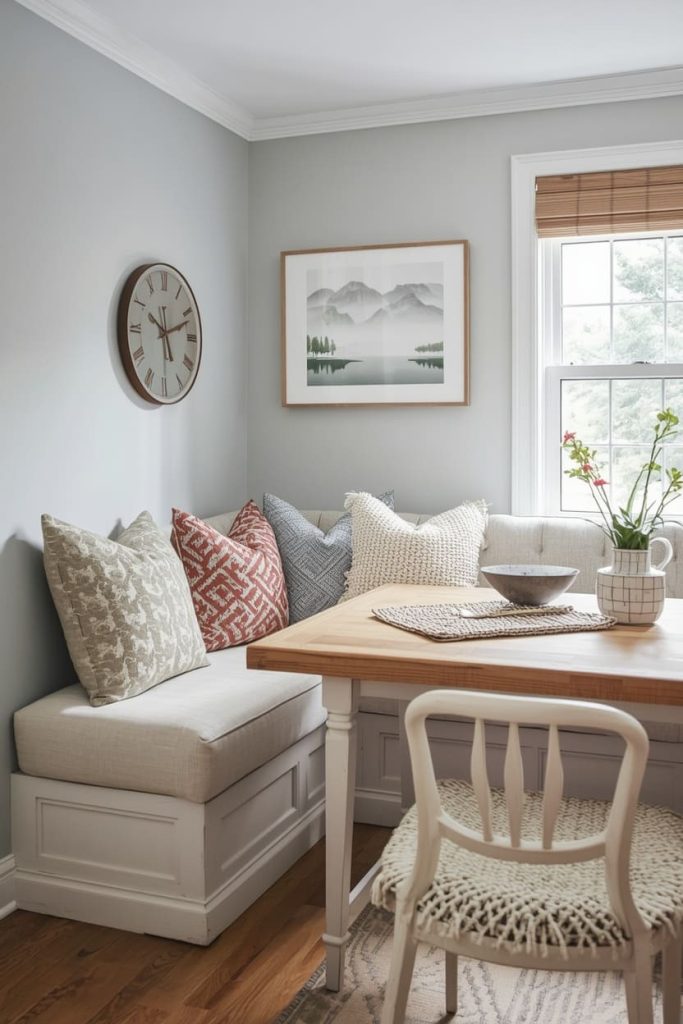
Honestly, this was the idea that changed everything for me. I’d always assumed banquettes were a “real renovation” thing — something you needed a contractor and a few thousand dollars for. But a freestanding corner bench did the same job without any construction at all.
I pushed it right into the L of my corner, added a couple of throw pillows, and suddenly that dead space became the coziest seat in the house. My kids fight over who gets to sit there now, which honestly tells you everything.
If you’re renting or just don’t want to commit to anything permanent, look for a banquette with legs instead of a built-in base — it’s easier to move later, and it won’t damage your floors.
Swap In a Round Table to Soften the Space
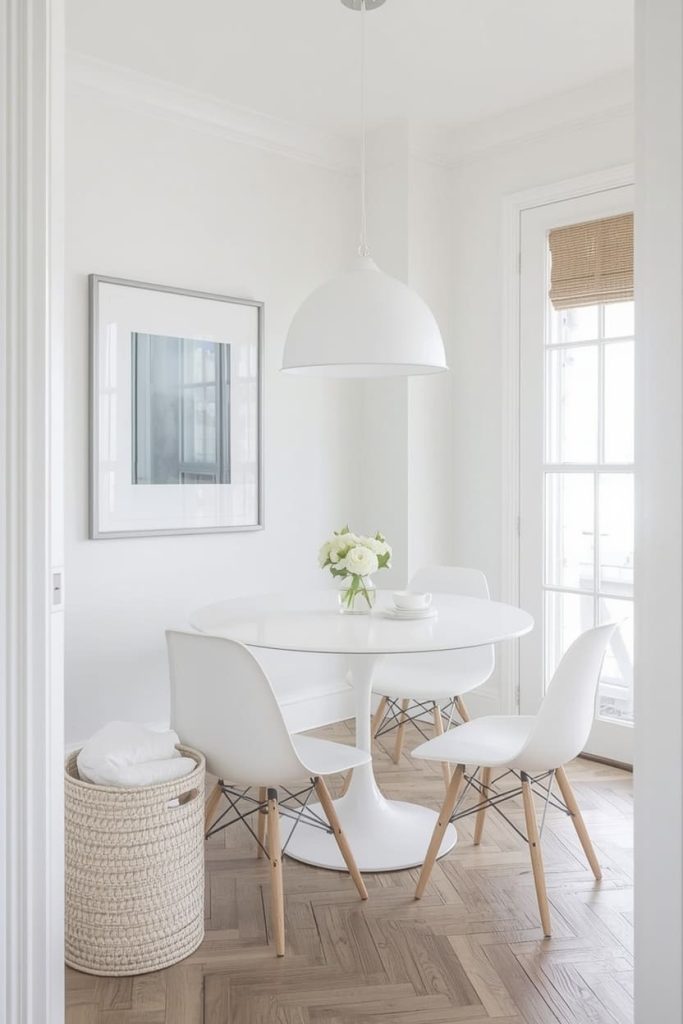
Square and rectangular tables are notorious corner-killers. Their straight edges fight with the angles of the room, and you end up with these dead triangular gaps that nothing fits into.
When I switched to a round table, the whole room felt less boxy almost instantly. There were no sharp corners poking into walkways, and I could actually push it further into the corner without losing a chair’s worth of legroom.
A pedestal-style base helps even more here — no table legs means no awkward knee-bumping when you’re trying to squeeze into that corner seat.
Build a Gallery Wall to Give the Corner a Focal Point
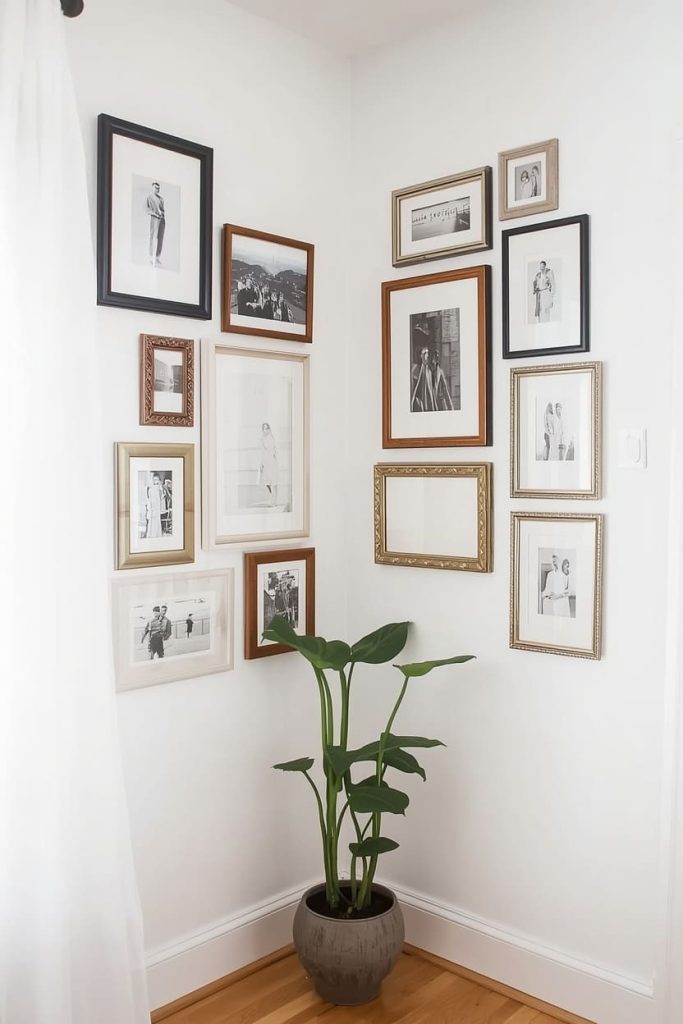
Empty corners often feel awkward simply because there’s nothing telling your eye where to look. A gallery wall fixes that fast.
I grabbed a mix of frames from my own storage — some empty, some with photos — and arranged them in a loose grid that wrapped slightly around the corner angle. It didn’t need to be perfectly symmetrical; in fact, the slightly imperfect layout made it feel more like my space.
If you’re nervous about commitment, start with removable adhesive hooks. You can rearrange everything as many times as you need before settling on a final layout.
Add Floating Shelves for Display Space Without Bulk
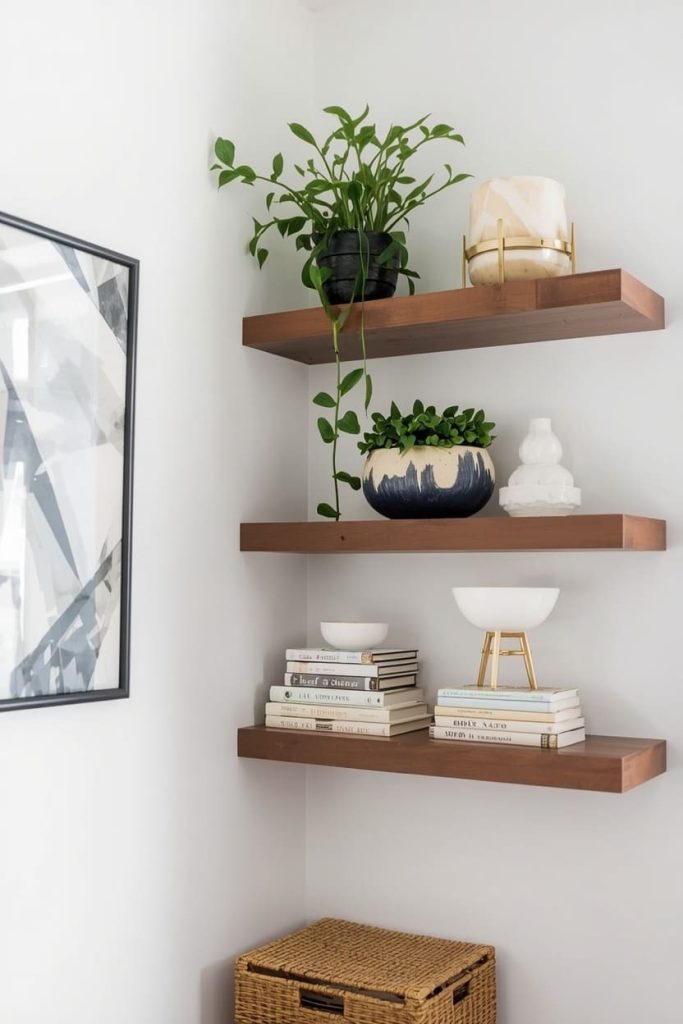
Sometimes a corner doesn’t need furniture — it just needs a reason to exist. Floating shelves were my answer when I didn’t have room for another bulky piece but still wanted the space to feel intentional.
I staggered three shelves up the corner wall and styled them with a few plants, a stack of cookbooks, and one or two decorative bowls. It turned a forgotten gap into something that actually looks curated, like I planned it that way from day one (I didn’t).
This is also one of the easiest rental-friendly upgrades, since most floating shelves come with damage-free mounting options now.
Bring in a Bar Cart for a Multi-Functional Corner Nook
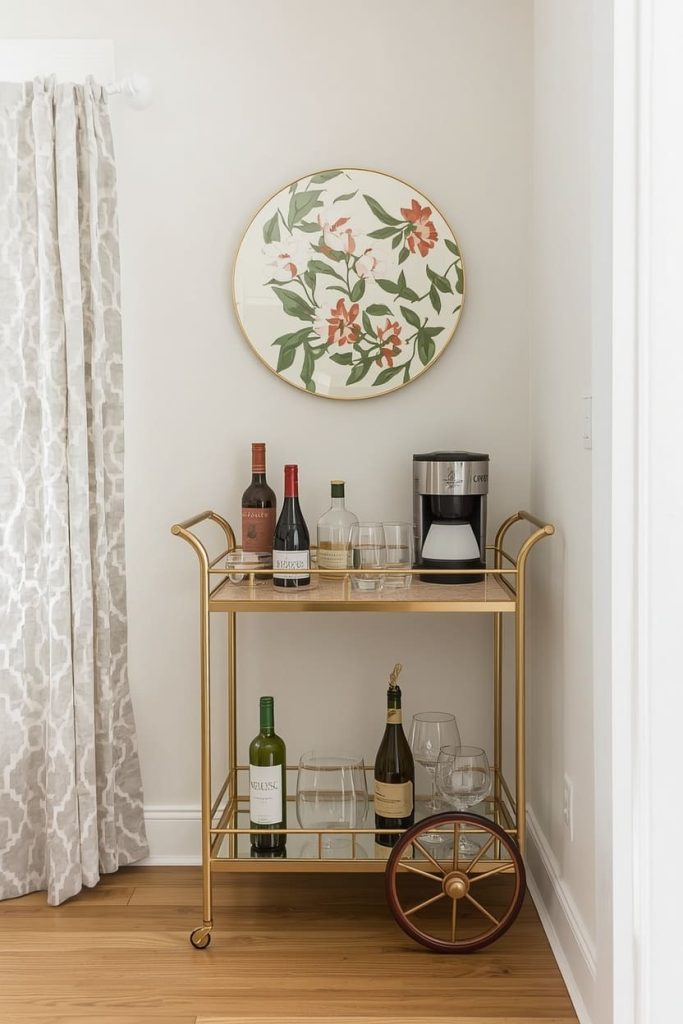
This idea surprised me the most. I wasn’t trying to build a “bar area” — I just needed somewhere to put extra glasses and a few bottles that were cluttering my kitchen counter.
A slim bar cart slid perfectly into my corner and instantly made the space feel more finished, almost like a little vignette. It’s functional during dinner parties and just pretty to look at the rest of the time.
If your corner doubles as a coffee station instead, the same idea works — just swap the wine glasses for mugs and a coffee maker.
Use a Round Mirror to Make the Corner Feel Bigger
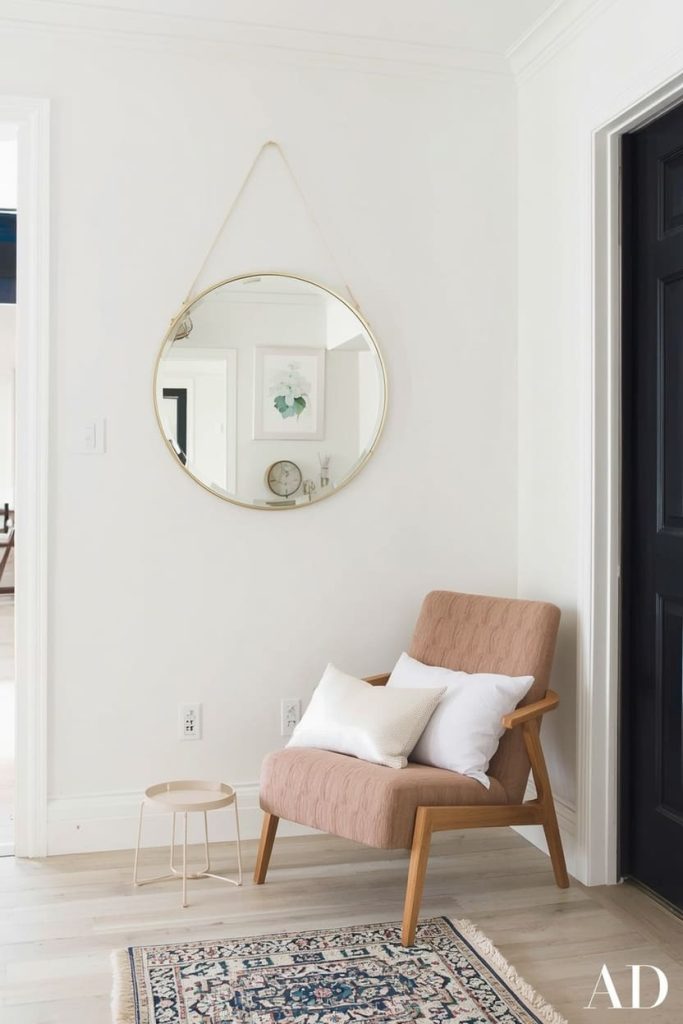
I was skeptical about this one until I tried it myself. My dining corner sat far from the window and always felt a little dim and closed-in, no matter how I arranged the furniture.
A round mirror, hung at eye level, reflected light from across the room straight into that corner. It didn’t just brighten things up — it visually doubled the depth of the space, which made the whole dining room feel less cramped.
Round mirrors specifically work better than square ones in tight corners, since there are no hard edges competing with the angle of the walls.
Layer in a Pendant Light to Anchor the Space
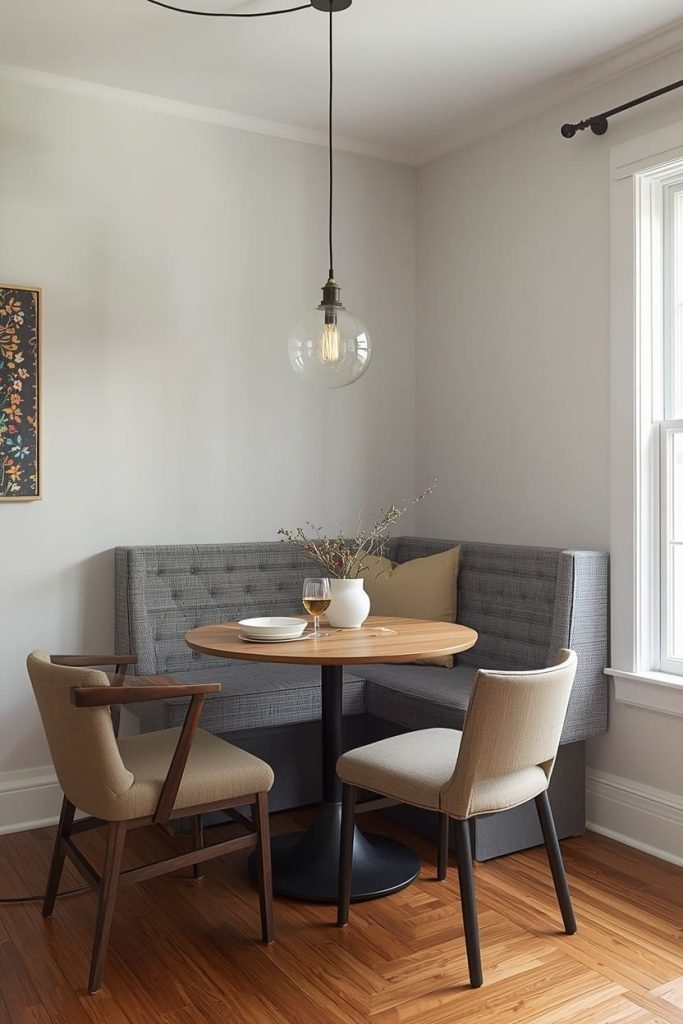
A dining corner without its own light source can feel like an afterthought, even if everything else about it looks great. Overhead room lighting alone often leaves corners dim and shadowy.
I added a simple pendant light directly above my corner table, and it immediately made the area feel like its own defined zone rather than just a leftover patch of the dining room. It’s a small change, but it’s the kind of detail that makes guests ask where you got it.
If you’re not able to hardwire a fixture, plug-in pendant lights are a great rental-friendly workaround — you just route the cord along the wall or ceiling with adhesive clips.
Frequently Asked Questions
What’s the best furniture size for a small dining corner?
Look for pieces scaled to the space — a round table under 42 inches and a bench rather than individual chairs usually work best. Measure your corner first, including walkway clearance, before buying anything.
Can I update a dining corner without spending a lot of money?
Absolutely. Floating shelves, a gallery wall, and a mirror are some of the most budget-friendly options, and many can be done for under $100 total. Start with one element and build from there.
What if I’m renting and can’t drill into the walls?
Stick with freestanding furniture, removable adhesive hooks, and plug-in lighting. Almost every idea on this list has a rental-friendly version that won’t risk your deposit.
How do I choose a table shape for an awkward corner?
Round or oval tables almost always work better than square ones, since they eliminate the sharp angles that clash with a corner’s natural shape. It also makes the flow around the table feel more open.
Do I need a contractor to add a banquette?
Not at all. Freestanding corner benches give you the banquette look without any construction, and they’re easy to move if you change your mind later.
How do I make a small corner feel less cramped?
A round mirror, a pendant light, and lighter-colored decor all help visually expand a tight space. Avoid bulky furniture and stick to pieces that are scaled appropriately for the corner’s actual size.
Final Thoughts
That rainy Saturday turned into one of my favorite home projects, mostly because it didn’t feel like a project at all — just small, manageable changes that added up fast. Your dining corner doesn’t need a renovation or a big budget to go from forgotten to favorite. Pick one idea from this list, start there, and see how quickly the rest falls into place.

Jenny is a passionate writer specializing in home decor, design, and styling. With years of experience in transforming spaces, she shares expert tips on creating beautiful, functional homes. From interior design trends to DIY decor ideas, Jenny’s work helps homeowners craft spaces that reflect their unique style. Whether it’s a cozy living room, a modern kitchen, or a serene bedroom, her articles offer practical advice and inspiration to elevate any home.