Two Halloweens ago I spent a full weekend on a peyote stitch spider web cuff. I miscounted my rows twice, ripped out an entire section, and started over at 11pm on a Saturday.
When I finally finished it, I wore it every October since. That’s the trade-off with seed bead work. It takes real hours. But nothing else gives you that level of finished detail.
If you’re past the pony bead stage and want Halloween patterns that actually reward the time you put in, here are five ideas worth the thread and needle work.
What’s Actually in My Beading Kit
- Miyuki Delica 11/0 Seed Bead Assortment — Uniform-cut delicas in a range of colors, which matters for pictorial patterns where consistent bead shape keeps your rows straight.
- The Beadsmith FireLine 6lb Thread, Crystal — Braided thread strong enough to hold up through hundreds of passes on a peyote or brick stitch cuff without fraying.
- The Beadsmith English Beading Needles, Size 12 — Fine, long needles sized for 11/0 and 15/0 beads, built for repeated passes through tight peyote and brick stitch rows.
Peyote Stitch Spider Web Cuff
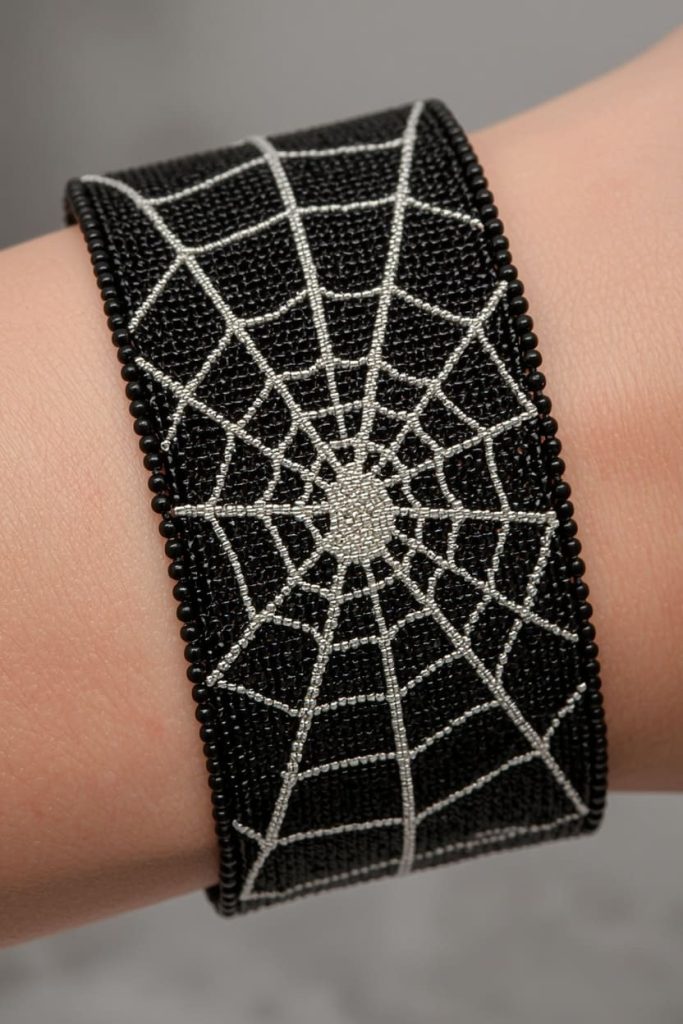
This is a flat, even-count peyote cuff built around a radiating spider web motif, and it’s the piece I’d point an intermediate beader toward first.
You’re working in black and a single accent color, usually white or silver, mapped onto a peyote chart with the web lines radiating from one corner. Expect somewhere around 15-20 rows across a standard cuff width, using 11/0 delicas for a clean, tight weave. Budget 4-6 hours depending on your row speed and how many times you have to backtrack.
Mine took closer to 8 hours because of my miscounts, but the finished piece has held up through three Halloweens now without a single loose bead.
Brick Stitch Pumpkin Motif Bracelet
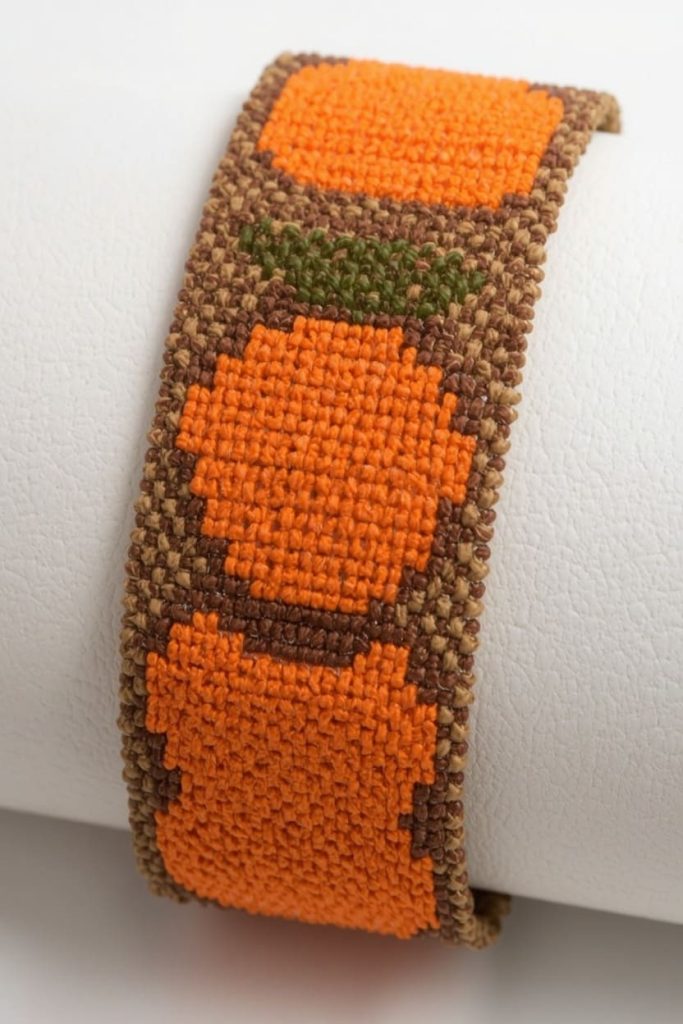
This one uses brick stitch to build a small, recognizable pumpkin shape as a focal panel, flanked by simpler solid-color sections on either side.
Brick stitch handles curved, rounded shapes better than peyote does, which is exactly why it works for a pumpkin. Chart your pumpkin in orange with a few darker orange or brown beads for shading, then a green or brown stem accent at the top. The focal panel alone runs maybe 20-25 rows depending on size, plus however much plain brick stitch you add on either side to reach full wrist length.
I like this one for craft fair pieces specifically. The pumpkin shape reads clearly even from a few feet away, which matters if you’re selling.
Loom-Woven Bat Silhouette Bracelet
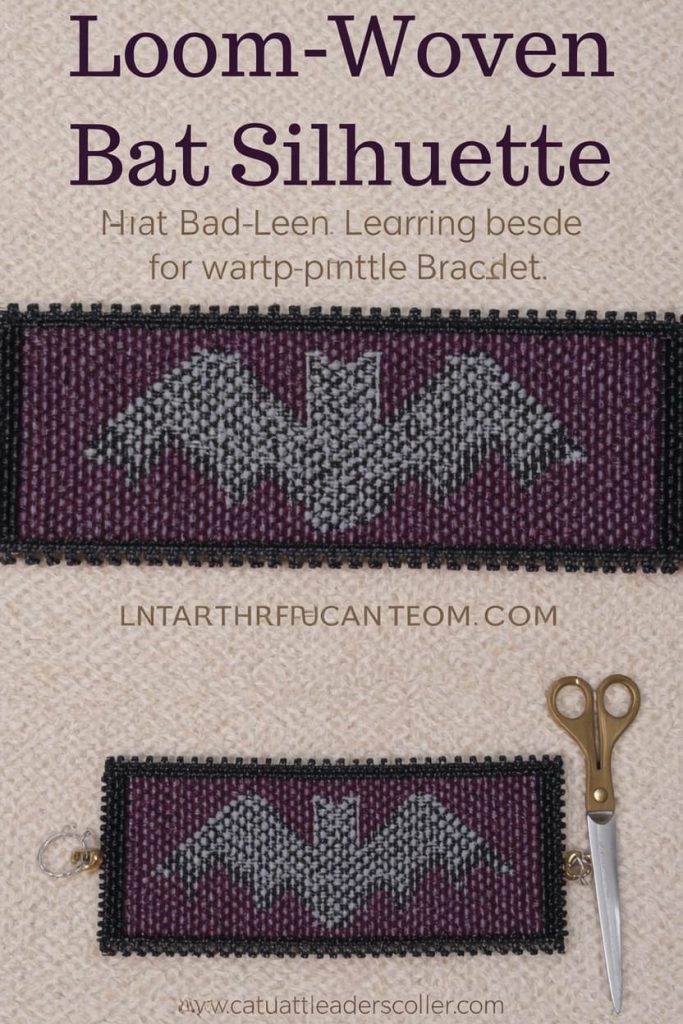
This bracelet uses a bead loom to weave a bat silhouette against a solid background, and it’s the most straightforward technique on this list once your loom is warped correctly.
Warp your loom with enough threads for your chosen width, then weave a solid black or deep purple background with a bat shape worked in a contrasting color, usually a muted gray or dark red. Loom work moves faster than off-loom stitching once you’re set up, so a bat motif cuff like this typically runs 3-4 hours including warping time.
Loom pieces also finish flatter and stiffer than peyote or brick stitch, which some beaders prefer for a cuff-style Halloween bracelet that holds its shape on the wrist.
Right Angle Weave Cobweb Cuff
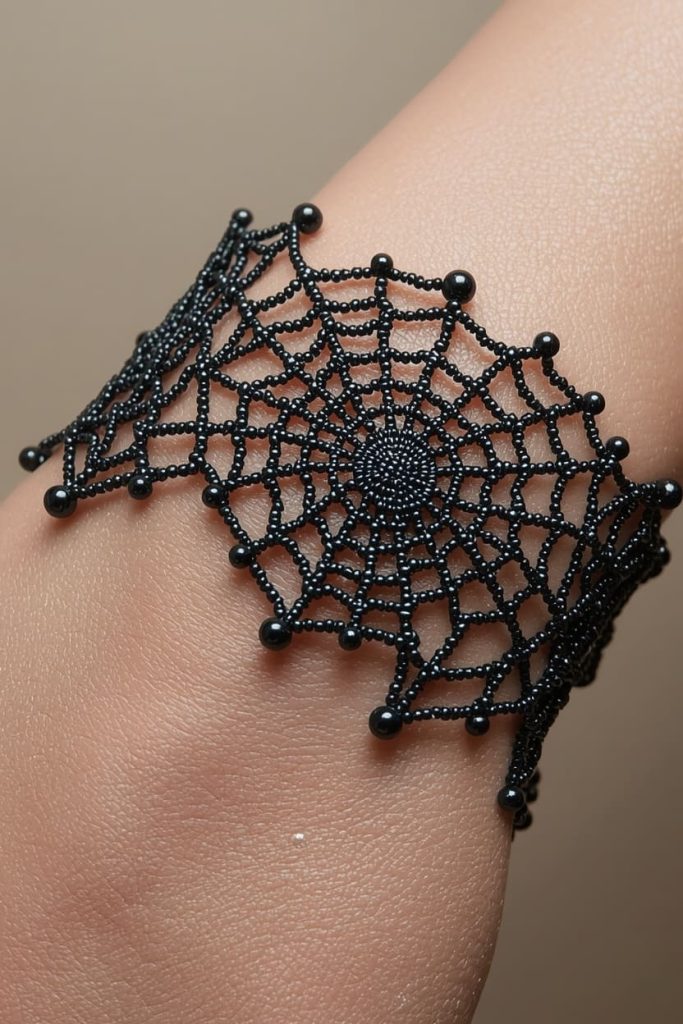
This one uses right angle weave to build an open, lattice-style cuff that mimics a cobweb texture rather than a pictorial spider web.
RAW gives you more structural flexibility than peyote, so the cuff has visible negative space between units instead of a solid woven surface. Work it in black or dark gray 11/0s, and consider dropping in a few clear or AB-finish beads scattered through the lattice to catch light like dew on a web. This is a slower technique per row than peyote, so expect closer to 6-8 hours for a full cuff.
This is the piece that gets the most compliments when I wear it, mostly because the open weave looks nothing like a typical bead-and-string bracelet.
Fringe-Accented Bat and Moon Bracelet
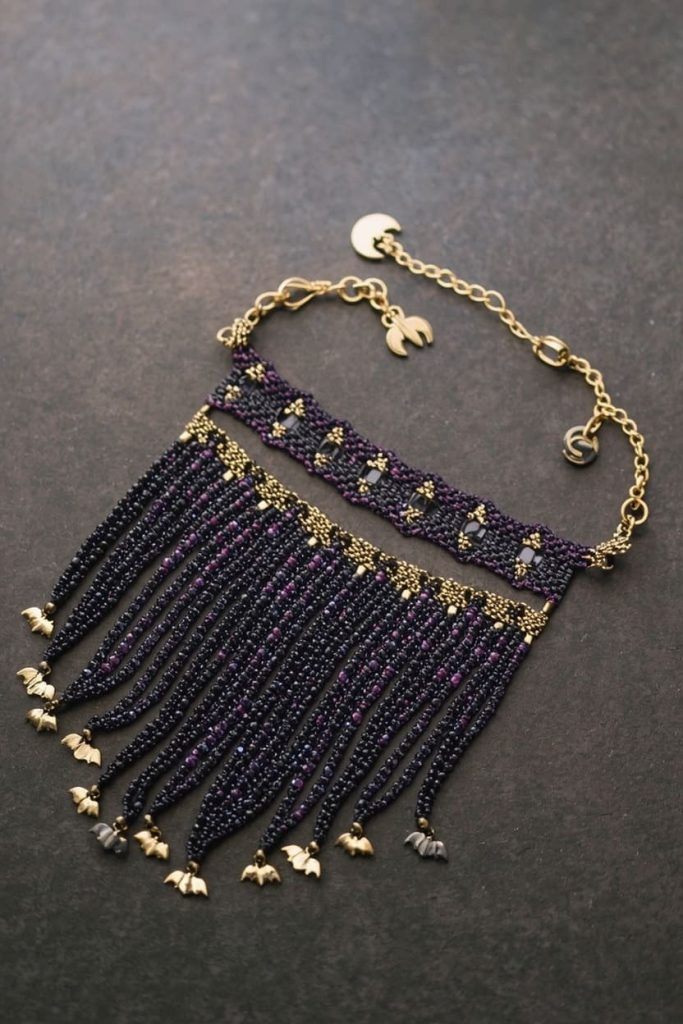
This bracelet pairs a simple peyote or brick stitch band with a short fringe drop featuring bat and moon-shaped accent beads or charms along the bottom edge.
Keep your base band simple, a solid black or deep purple peyote strip, so the fringe does the visual work. Attach fringe strands at even intervals using 11/0s stopped with a small bat or moon charm bead at the end of each drop. This one’s faster than the others on this list, closer to 3-4 hours, since the band itself is minimal and most of your time goes into evenly spaced fringe.
This is the bracelet I recommend to beaders who want a Halloween piece but don’t have a full weekend to commit to a dense pictorial panel.
Frequently Asked Questions
What seed bead size works best for pictorial Halloween patterns?
11/0 is the standard size for detailed pictorial work like pumpkins, bats, or spider webs, since it gives you enough pixel-like resolution to render a recognizable shape without the piece becoming oversized. 15/0 works for finer detail but slows your row count down significantly on a full cuff.
Delica-style cylinder beads specifically help here too, since their uniform shape keeps pictorial rows straighter than round seed beads do.
What’s the best stitch to learn if I’m moving from stringing into pattern work?
Peyote stitch is usually the easiest entry point into pictorial pattern work, since even-count peyote charts read similarly to cross-stitch and there’s enormous pattern availability already charted for it. Brick stitch is a natural next step once you’re comfortable with peyote, especially for shapes with curved edges like a pumpkin.
Both stitches use the same core skill of following a row-by-row chart, so time invested in one transfers well to the other.
What thread should I use for a seed bead Halloween cuff?
FireLine or a comparable braided thread holds up best for anything with heavy stitch repetition, like peyote or brick stitch cuffs that see a lot of wear. Nymo works fine for lighter pieces or loom work, but it’s more prone to fraying on dense off-loom patterns over time.
Thicker cuffs with lots of thread passes benefit most from FireLine’s strength, since you’re passing through the same beads multiple times as you build rows.
Where can I find charted patterns for Halloween seed bead designs?
Etsy and pattern-specific sites sell charted PDF patterns for pumpkin, bat, and spider motifs, often for just a few dollars each. Beading forums and Ravelry-style communities also share free charts seasonally, though quality and accuracy vary more than paid patterns.
If you can’t find the exact motif you want, most pictorial peyote or brick stitch charts can be adapted from cross-stitch patterns, since the grid logic is nearly identical.
Can I sell handmade seed bead Halloween bracelets, and what should I charge?
Yes, and seed bead pieces typically command a higher price point than pony or clay bead bracelets because of the time investment involved. Price by estimating your hours at a fair hourly rate plus materials, rather than pricing to match cheaper bead bracelet listings, since your labor here is the real cost driver.
Craft fairs specifically tend to reward detailed pictorial work like the pumpkin or bat cuffs, since buyers can see the skill difference in person.
How do I clean and store finished seed bead bracelets?
Wipe pieces with a soft, dry cloth rather than submerging them in water, since prolonged moisture can weaken thread over time even with FireLine. Store finished cuffs flat in a padded box or fabric pouch rather than hanging, to avoid stressing the thread at any single point.
If a piece will see regular wear, periodically check high-tension spots like clasps or fringe attachment points for early thread wear before it becomes a full break.
Start with the peyote stitch spider web cuff if you want the clearest entry point into pictorial pattern work. It’s dense enough to be satisfying, but the chart logic carries over directly into every other technique on this list.

Jenny is a passionate writer specializing in home decor, design, and styling. With years of experience in transforming spaces, she shares expert tips on creating beautiful, functional homes. From interior design trends to DIY decor ideas, Jenny’s work helps homeowners craft spaces that reflect their unique style. Whether it’s a cozy living room, a modern kitchen, or a serene bedroom, her articles offer practical advice and inspiration to elevate any home.