The first time my dryer buzzed on top of my washer, my whole closet shook. Cabinet doors rattled. A shampoo bottle actually fell off a shelf.
Nobody warned me that stacked units come with problems a side-by-side machine never has.
I spent months googling fixes that were really just generic small-space tips, none of which touched the actual issues. Vibration. Vent clearance. A dryer door I could barely reach.
If you’re dealing with a stacked unit and feel like every “small laundry” article online is recycling the same shelf-and-curtain advice, this one’s different.
These 7 ideas are specific to stacking two machines on top of each other, and they solved problems I didn’t even know had solutions.
Table of Contents
- 5 Amazon Products Made for Stacked Unit Problems
- Install a Stacking Kit Before You Do Anything Else
- Add Anti-Vibration Pads to Stop the Shaking at the Source
- Respect Vent Clearance Instead of Fighting It
- Solve the Reach Problem With a Stool, Not a Struggle
- Use the Dead Corner Space a Stacked Unit Creates
- Add a Retractable Line for Hang-Drying Above the Unit
- Keep a Lint Log Taped Inside the Door
- Frequently Asked Questions
- Final Thoughts
5 Amazon Products Made for Stacked Unit Problems
- Whirlpool/Universal Stacking Kit with Bracket — the metal frame that locks your dryer to your washer, preventing shifting and reducing vibration during spin cycles.
- Anti-Vibration Washer Pads — rubber pads placed under the washer’s feet that absorb shaking, which matters more in stacked units since vibration travels upward.
- RYNO Retractable Ceiling-Mounted Clothesline — a pull-down drying line that mounts overhead, giving you hang-dry space without needing floor room beside the unit.
- Folding Step Stool with Handle — a compact stool that helps you safely reach the top-loading dryer door without climbing on the machine itself.
- Slim Rolling Spice Rack Cart — a narrow, tiered cart originally designed for kitchens that slides into the dead corner space next to a stacked unit.
Install a Stacking Kit Before You Do Anything Else
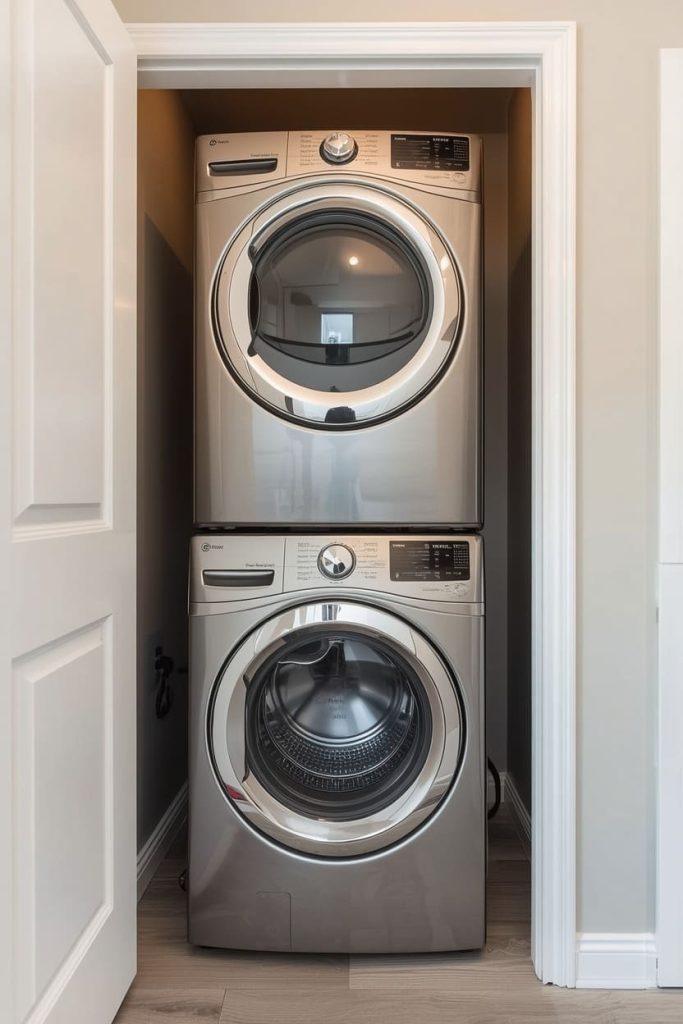
I didn’t know stacking kits existed until my dryer started sliding slightly during heavy loads. A stacking kit is a metal bracket that physically locks your dryer to the top of your washer, and it’s not optional if your machines didn’t come pre-stacked from the manufacturer.
Without one, the vibration from your washer’s spin cycle transfers straight into your dryer above it, which is why stacked units shake so much more than side-by-side setups. I bought a universal kit made for my washer’s brand, and installation took about twenty minutes with a screwdriver. The shaking stopped almost completely.
This matters for more than just noise. A dryer that shifts over time can pull away from its vent connection, which creates a fire hazard nobody wants in a small closet. If you rent, check with your landlord first, since some buildings require a specific kit model for insurance reasons.
If your unit already came pre-stacked from the store, you likely have a kit installed, but it’s worth checking the bolts periodically since they can loosen with use. This isn’t a decorating idea. It’s the single most important thing I fixed, and everything else on this list works better because of it.
Add Anti-Vibration Pads to Stop the Shaking at the Source
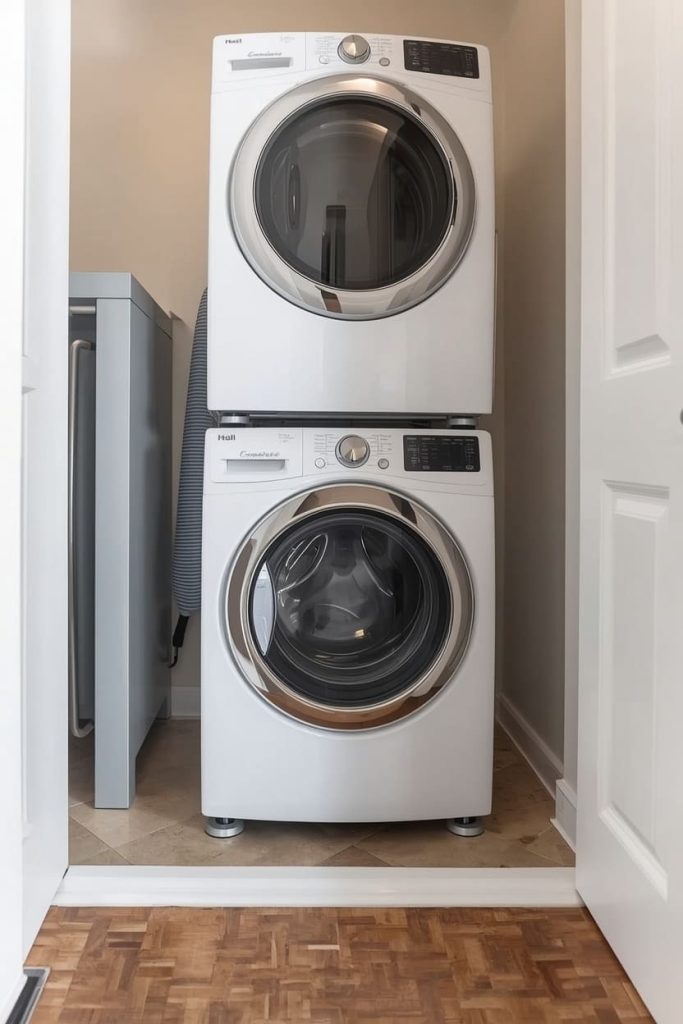
Even with a stacking kit installed, my washer still transferred a low hum through the floor every time it spun. Anti-vibration pads solved what the stacking kit couldn’t. These are small rubber squares that sit directly under each foot of your washer, absorbing movement before it has a chance to travel upward into the dryer.
I noticed the difference immediately. My apartment has thin walls, and my downstairs neighbor had mentioned hearing my laundry before. After adding the pads, the noise dropped enough that I stopped worrying about it entirely. Installation took less than five minutes since the pads simply slide under the machine’s existing feet.
This fix matters specifically for stacked units because the vibration has nowhere to dissipate. In a side-by-side setup, machines sit independently on the floor. In a stacked setup, any movement in the washer physically shakes the dryer sitting on top of it, which shakes your shelves, your closet door, and anything stored nearby.
If you’ve ever had a bottle fall off a shelf during a spin cycle, this is why. Pads cost very little and require zero tools, making them one of the easiest fixes for a problem that’s unique to stacking two machines together.
Respect Vent Clearance Instead of Fighting It
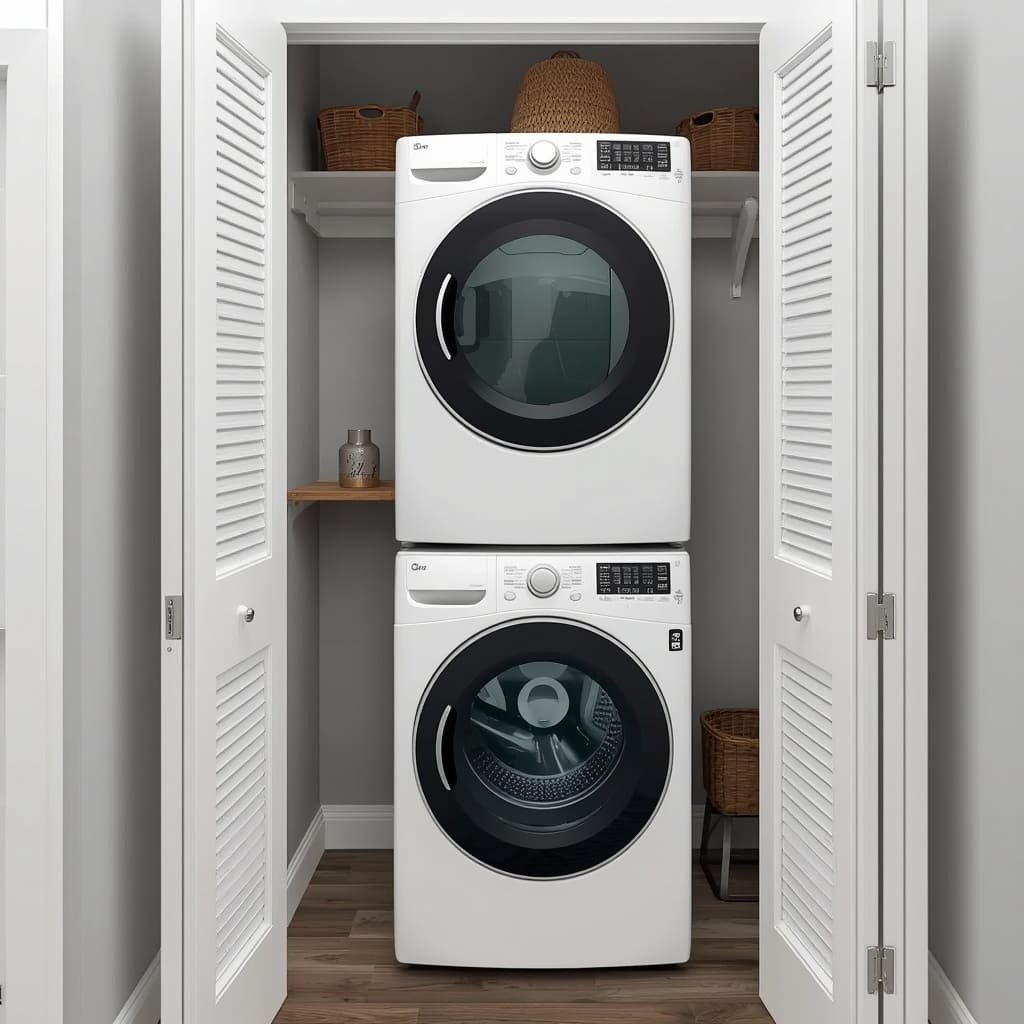
I made the mistake of pushing a storage shelf too close to the back of my dryer, not realizing it was blocking part of the vent path. Stacked units need clear airflow behind and above the dryer, and small closets make it tempting to use every available inch, including space you shouldn’t.
Most stacked dryers need at least a few inches of clearance behind the vent hose to avoid kinking or restricting airflow. A blocked or crushed vent doesn’t just reduce drying efficiency. It builds up lint and heat in a small enclosed space, which is a real fire risk.
Once I understood this, I stopped trying to add storage directly behind my unit and focused on the sides and door front instead, where airflow isn’t a factor. I also started checking my vent hose every few months to make sure nothing had shifted or gotten pinched from items stored nearby.
If your closet has a door, make sure it has a vent or louvers built in, since stacked units in fully enclosed closets need somewhere for heat to escape. If yours doesn’t, a louvered door replacement is a relatively small investment that solves a genuine safety issue, not just an organizational one.
Solve the Reach Problem With a Stool, Not a Struggle
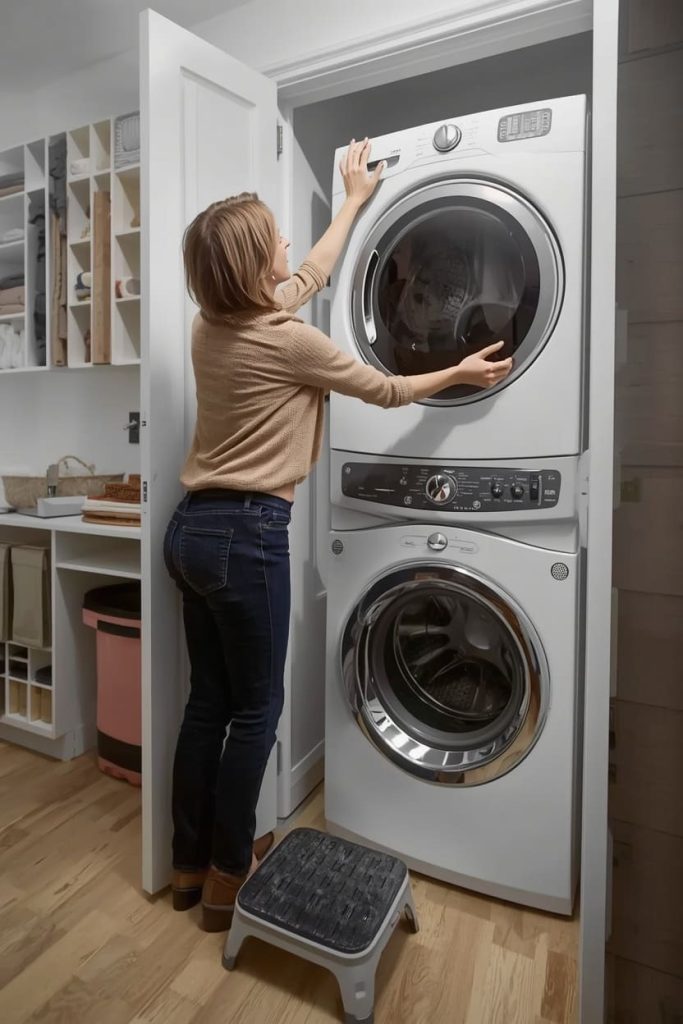
Nobody mentions this until they’re stacking a queen-size comforter and stretching onto their toes to reach the dryer door. Top units in a stacked configuration sit noticeably higher than a standalone machine, and over time, that extra reach adds up.
I started using a small folding step stool every time I did laundry. It sounds almost too simple to matter, but it changed how I interacted with my dryer completely. I could see inside the drum properly instead of guessing by feel. I stopped straining my shoulder pulling out heavy, wet items from an awkward angle.
Look for a stool with a non-slip base and a handle, since you’ll likely be holding laundry in one hand while stepping up with the other. Folding versions tuck away easily in a laundry closet that has no room to spare.
This isn’t about convenience alone. Reaching into an elevated dryer repeatedly, especially with wet, heavy loads, is a real strain risk over time. A stool costs very little and takes up almost no storage space, but it changes your entire relationship with the top unit in a stacked setup.
Use the Dead Corner Space a Stacked Unit Creates
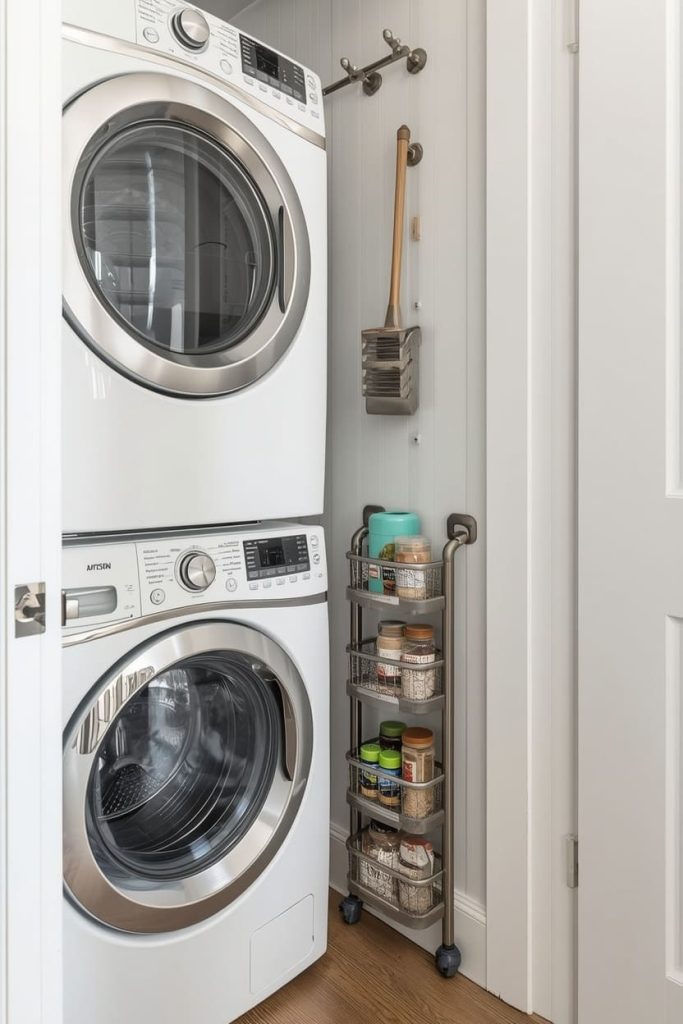
Stacking two machines vertically often leaves an oddly shaped gap where the unit meets an adjacent wall, a space too narrow for furniture but too specific for generic shelving. I ignored this corner for months before realizing a slim kitchen spice rack fit it almost perfectly.
These narrow, tiered carts are designed to slide into gaps beside refrigerators, which happens to be nearly identical to the leftover space beside a stacked laundry unit. Mine held small bottles, a scrub brush, and a folded microfiber cloth I use to wipe down the dryer door.
The advantage over a standard laundry cart is the width. Spice racks are built specifically for gaps as narrow as three or four inches, which most laundry-branded carts don’t accommodate. Since it’s on wheels, I can pull it out completely when cleaning, then push it back into the exact dead space it was built for.
If your gap is on the wall side instead of a walkway side, a slim wall-mounted spice rack works the same way without needing wheels at all. Either option turns an oddly shaped leftover space into something genuinely useful, instead of a strip of dust nobody addresses.
Add a Retractable Line for Hang-Drying Above the Unit
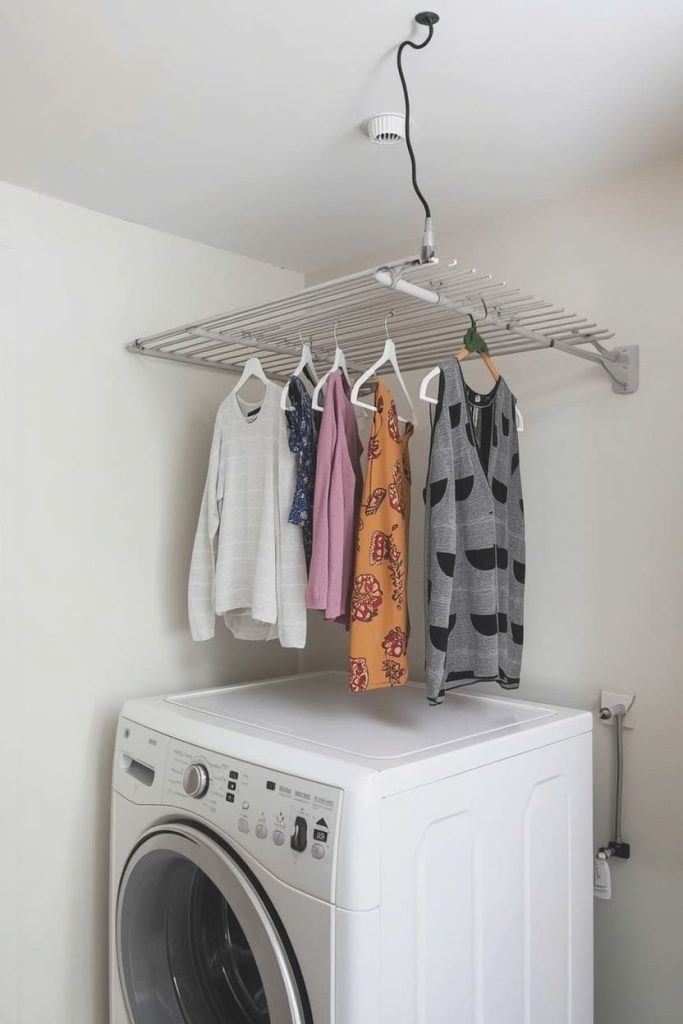
Stacked units leave no floor room for a standing drying rack, which was a real problem for the delicate items I couldn’t put in the dryer. A ceiling-mounted retractable clothesline solved this without taking up a single inch of floor space.
The line mounts to the ceiling above my unit and pulls down when I need it. I clip damp items directly onto it, let them air dry, then retract the whole line back up out of the way when I’m done. It sounds like a small fix, but it solved a problem no shelf or cart ever could, since hang-drying items simply don’t need floor space at all.
Installation required a few small screws into the ceiling, which is worth checking with your landlord about first if you’re renting. Some retractable models use tension mounts instead, gripping between two walls without any screws, which is a better option if you can’t drill.
This idea works specifically because stacked units already claim your entire floor footprint. Instead of fighting for a few inches somewhere else, hanging your solution overhead uses space that was never competing with anything in the first place.
Keep a Lint Log Taped Inside the Door
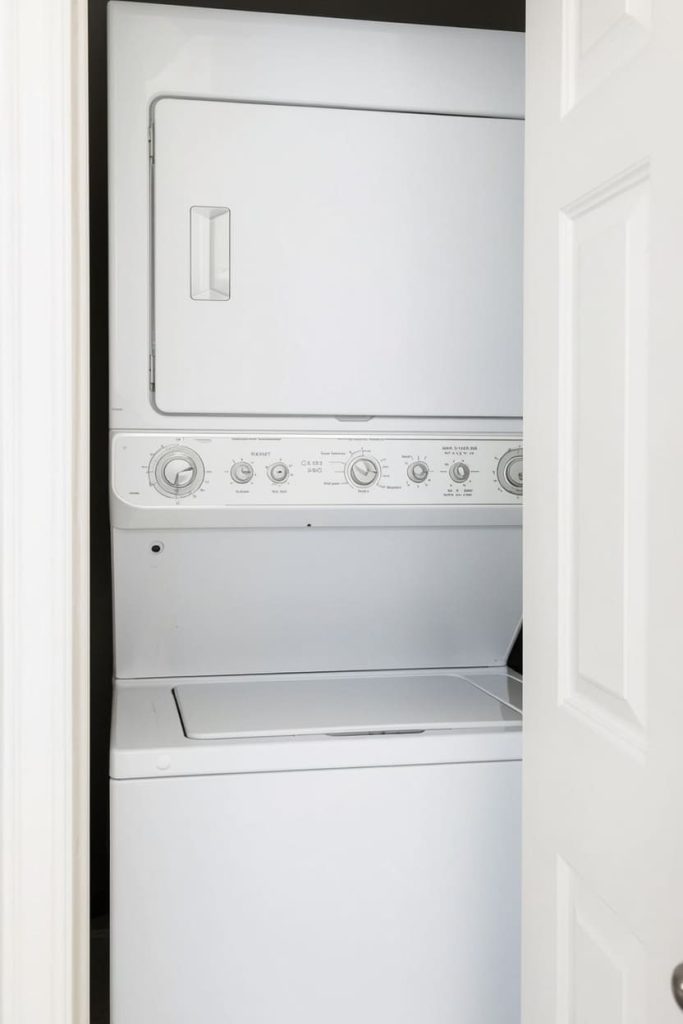
This one isn’t glamorous, but it solved a real problem specific to stacked units, where the dryer’s lint trap sits at an awkward height and is easy to forget. I started taping a tiny notepad inside my closet door to log when I last cleaned the lint trap and vent.
Because the top unit in a stacked configuration is harder to access, it’s also easier to neglect. I noticed I was cleaning my lint trap less often than I used to with a standalone dryer, simply because it required more effort to reach. A simple log reminded me to stay consistent, since lint buildup in a stacked unit is a bigger fire risk given the reduced airflow clearance around it.
I check the box after every third or fourth load, then do a deeper vent check monthly. It takes thirty seconds and costs nothing beyond a scrap of paper and a piece of tape.
This idea won’t show up in most small-space laundry articles because it’s not about storage or style. It’s about the maintenance habits that stacked units specifically require, simply because the top unit is less convenient to reach and easier to forget.
Frequently Asked Questions
Do I really need a stacking kit if my machines seem stable? Yes, even machines that seem stable can shift slightly over time, which can pull your dryer’s vent connection loose. A stacking kit locks the two machines together and is considered a safety essential, not an optional upgrade.
How do I reduce noise and vibration from a stacked unit? Anti-vibration pads under the washer’s feet and a properly installed stacking kit both reduce shaking significantly. Together, they address vibration at its source instead of just muffling the sound afterward.
Is it safe to store items directly behind my stacked dryer? No, the space behind a stacked dryer needs clearance for proper vent airflow, and blocking it increases fire risk from trapped heat and lint. Keep that specific area clear and store items on the sides or door front instead.
How do I dry delicate items without floor space for a drying rack? A ceiling-mounted retractable clothesline hangs items without using any floor space at all, which works well since stacked units already claim the entire footprint below them. It retracts flat against the ceiling when not in use.
Can I make stacked-unit upgrades if I’m renting? Yes, anti-vibration pads, tension-mounted drying lines, and rolling carts all require no drilling or permanent changes. Just confirm with your landlord before installing anything that involves screws, like a stacking kit or ceiling mount.
Final Thoughts
A stacked laundry unit comes with its own set of problems, and generic small-space advice only gets you so far. Start with the stacking kit and vibration pads, since those solve the issues you can’t see until something shakes loose. Everything else gets easier once your setup is actually stable.

Jenny is a passionate writer specializing in home decor, design, and styling. With years of experience in transforming spaces, she shares expert tips on creating beautiful, functional homes. From interior design trends to DIY decor ideas, Jenny’s work helps homeowners craft spaces that reflect their unique style. Whether it’s a cozy living room, a modern kitchen, or a serene bedroom, her articles offer practical advice and inspiration to elevate any home.