I walked downstairs one Saturday morning with a laundry basket on my hip and stopped at the bottom of the stairs.
My washer and dryer sat next to the furnace, under a bare bulb, on cold concrete. It wasn’t a room. It was a corner nobody had finished yet.
I remember thinking, “I do laundry down here five days a week. It shouldn’t feel like a punishment.”
That thought sent me down a rabbit hole of basement-specific fixes, since everything I’d tried from main-floor laundry articles didn’t account for moisture, low ceilings, or the echo of a washer on concrete.
Here’s what I found, starting with the products that solved the most stubborn problems first.
Table of Contents
- Top 5 Products for a Basement Laundry Room
- Why Basement Laundry Rooms Need Different Solutions
- Controlling Moisture Before It Becomes a Mold Problem
- Working Around Low Ceilings and Exposed Ductwork
- Lighting a Windowless Laundry Corner
- Dressing Up Exposed Pipes Instead of Hiding Them Completely
- Reducing Washer and Dryer Noise in an Echoey Room
- Combining Laundry With a Fold Station and Storage Zone
- Budget vs. Higher-End Finished Looks
- Which Idea Is Right for Your Space?
- FAQs
Top 5 Products for a Basement Laundry Room
- hOmeLabs 4,500 Sq. Ft. Energy Star Dehumidifier – Pulls excess moisture out of the air before it turns into mildew smell or damp walls near your washer.
- RevoTile Interlocking Vinyl Floor Tiles – Waterproof, click-together flooring that goes over concrete without adhesive, which matters in a space prone to occasional dampness.
- Hyperikon LED Shop Light Fixture – Bright, flush-mount lighting built for windowless basement ceilings where natural light doesn’t exist.
- Duck Brand Foam Pipe Insulation Wrap – Wraps exposed pipes to reduce condensation drip and dress up an unfinished-looking ceiling.
- RESILIA Sound Dampening Rubber Mat – Sits under the washer to absorb vibration noise, which echoes more in a basement than on a carpeted main floor.
Why Basement Laundry Rooms Need Different Solutions
A basement isn’t just a smaller version of an upstairs laundry room. It’s a different environment. Concrete holds moisture. Low ceilings limit what you can build. No windows means your lighting plan has to do all the work. These seven ideas are built around those specific conditions, not generic small-space advice.
Controlling Moisture Before It Becomes a Mold Problem
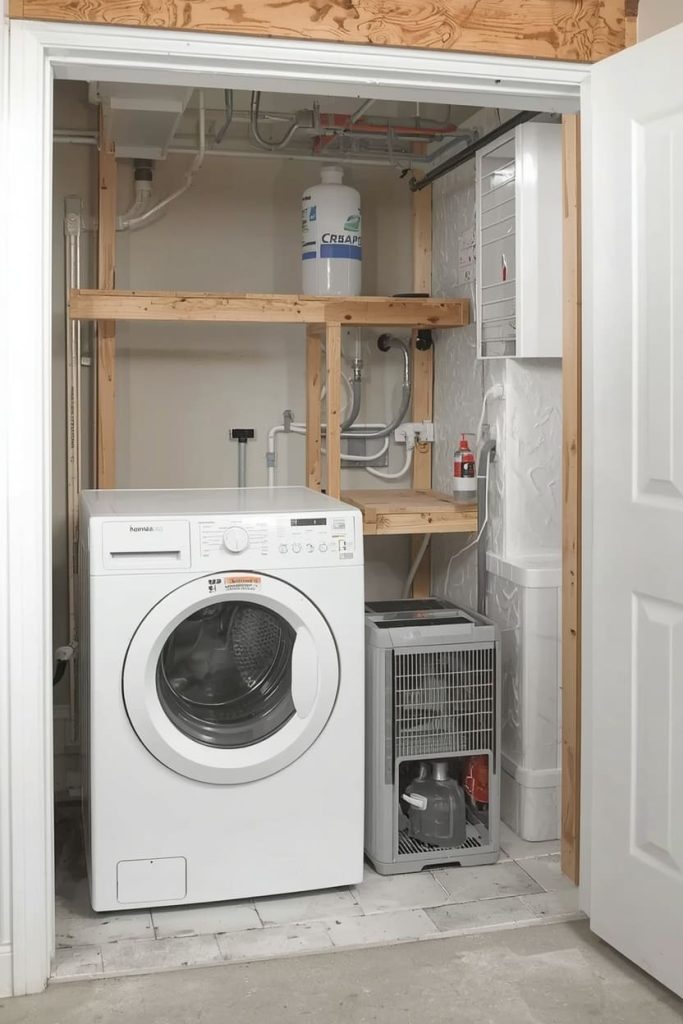
This works for any basement laundry area, especially ones near a sump pump, floor drain, or exterior wall where dampness collects.
Approach: Manage humidity proactively with a dedicated dehumidifier and a moisture barrier under any flooring you install.
Materials: A basement-rated dehumidifier (like the hOmeLabs unit above), a plastic vapor barrier if you’re finishing the floor, and a hygrometer to track humidity levels.
Steps:
- Place a hygrometer in the laundry area for a few days to get a baseline humidity reading. Aim to keep levels below 50%.
- Install a dehumidifier sized for your square footage, and set it to run automatically when humidity climbs above your target.
- If you’re adding flooring, lay a plastic vapor barrier directly on the concrete first.
- Check your dryer vent for leaks, since a poorly sealed vent adds warm, moist air back into the room.
Common mistake: Skipping the vapor barrier because the concrete looks dry. Moisture wicks up from below even when the surface looks fine, and it will damage flooring installed directly on top.
Working Around Low Ceilings and Exposed Ductwork
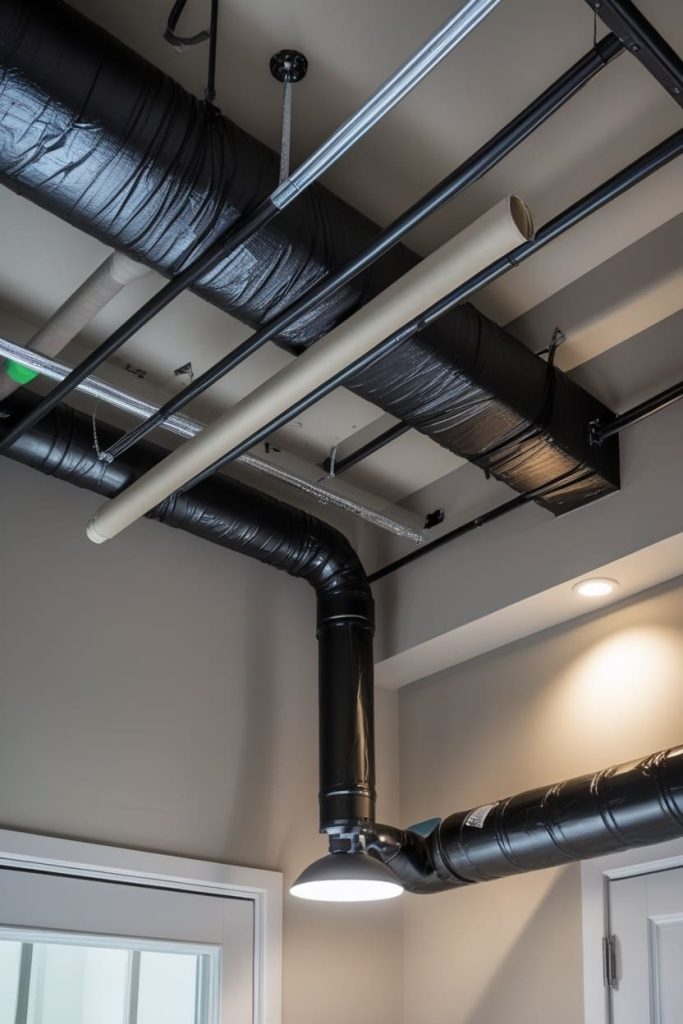
This works for basements with ductwork, pipes, or beams hanging low enough to limit headroom or make the space feel unfinished.
Approach: Instead of boxing everything in with drywall, which lowers the ceiling further, paint exposed elements a uniform dark color to make them recede visually.
Materials: Matte black or dark charcoal paint rated for metal and PVC surfaces, a small paint sprayer, and painter’s tape for surrounding areas.
Steps:
- Clean dust and cobwebs off ductwork, pipes, and beams before painting.
- Tape off any surrounding drywall or finished surfaces to protect them from overspray.
- Paint all exposed elements the same dark, matte color, including hangers and brackets.
- Add a flush-mount LED fixture below the ductwork line, since painted ducts absorb more light than raw metal.
Tip: Don’t mix colors between pipes, ducts, and beams. A single uniform color reads as an intentional design choice, while mismatched colors emphasize the clutter.
Lighting a Windowless Laundry Corner
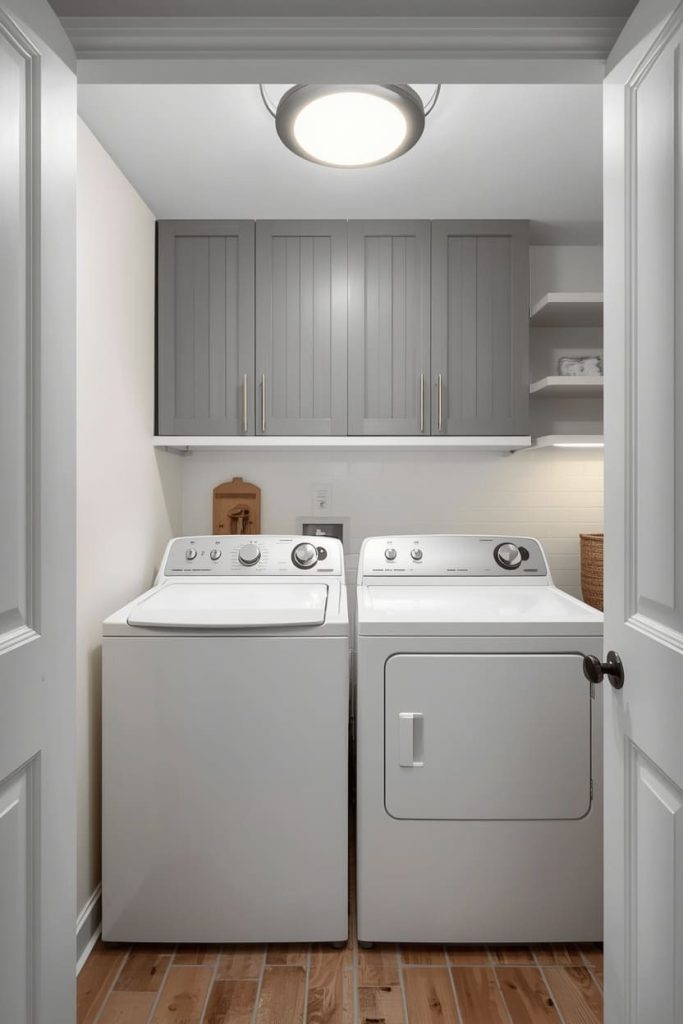
This works for any basement laundry area with no natural light, which is most of them.
Approach: Layer two light sources instead of relying on a single central fixture, which leaves corners and machine interiors dim.
Materials: A flush-mount LED shop light for overall room brightness, plus a smaller under-shelf or task light directly above the folding area.
Steps:
- Install the main LED shop light centered over the appliances, mounted flush to avoid clearance issues with low ceilings.
- Add a secondary task light above any folding counter or sink, since overhead light alone creates shadows on a work surface.
- Choose a bulb temperature around 4000–5000K, which reads as daylight-neutral rather than warm yellow or cold blue.
- Test the lighting at night, since basement rooms often look fine during the day but feel dim once it’s dark outside.
Common mistake: Choosing warm-toned bulbs (2700K) because they feel cozy elsewhere in the house. In a windowless room, warm light can make the space feel dimmer and more enclosed than it is.
Dressing Up Exposed Pipes Instead of Hiding Them Completely
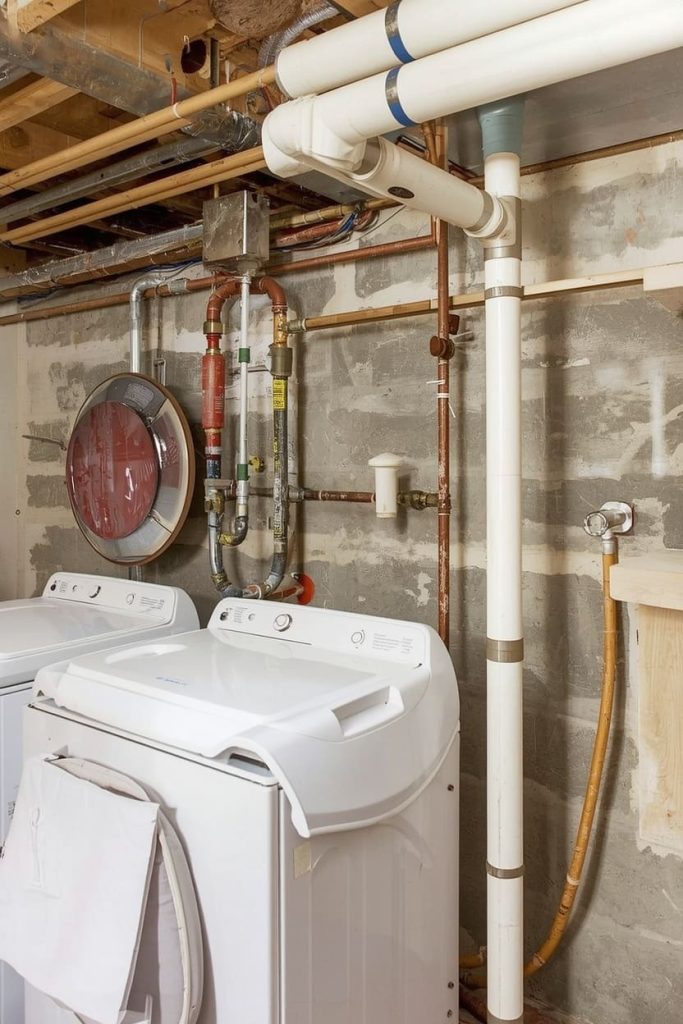
This works for basements where plumbing and shut-off valves run along the ceiling or walls near the laundry area, and full drywall enclosure isn’t in the budget.
Approach: Wrap and organize exposed pipes rather than boxing them in, keeping access available for future repairs.
Materials: Foam pipe insulation wrap (like the Duck Brand product above), zip ties or pipe hangers, and matching paint if needed.
Steps:
- Identify any shut-off valves or unions that need to stay accessible, and avoid wrapping over them.
- Insulate exposed cold-water pipes first, since these are the most common source of condensation drip.
- Bundle and secure loose pipe runs with hangers so they sit tighter against the ceiling instead of hanging at different levels.
- Paint any exposed metal brackets or hangers to match the ceiling or pipe wrap for a cleaner look.
Tip: Leaving access panels or visible unions unwrapped isn’t a design flaw. Plumbers need to reach these points, and a fully enclosed pipe run can turn a simple repair into a bigger job.
Reducing Washer and Dryer Noise in an Echoey Room
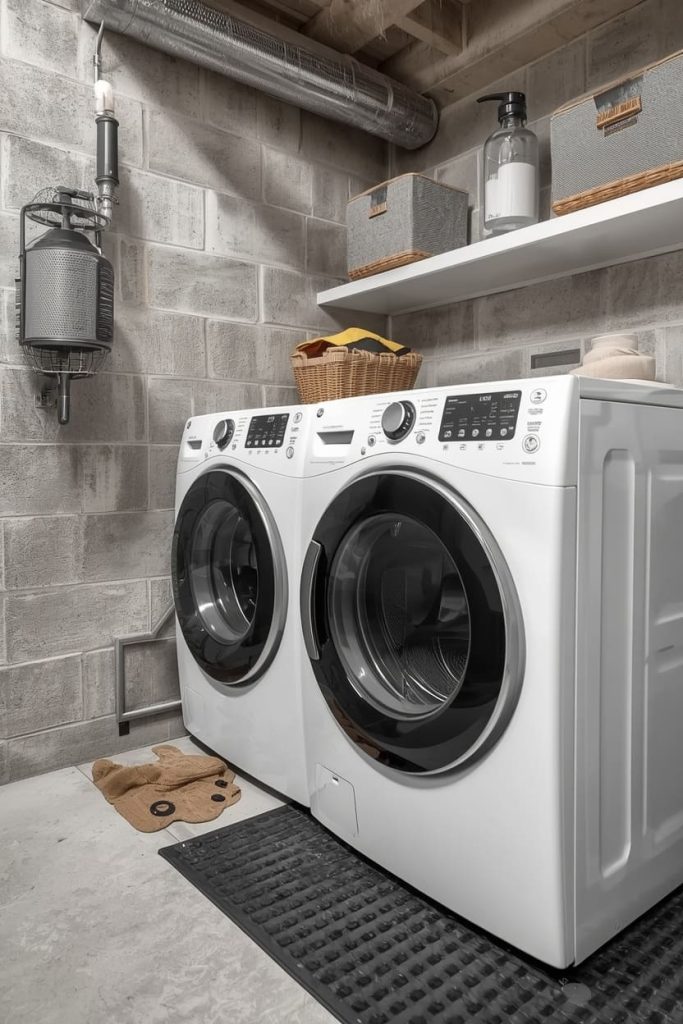
This works for basements with concrete floors and drywall or block walls, which reflect sound instead of absorbing it the way carpet and furniture do upstairs.
Approach: Add sound-dampening materials under and around the appliances rather than trying to soundproof the whole room.
Materials: A rubber anti-vibration mat under the washer (like the RESILIA mat above), rubber appliance feet, and an area rug nearby if the layout allows.
Steps:
- Place a rubber mat under the washer specifically, since it’s the appliance most likely to vibrate and “walk” during spin cycles.
- Add rubber anti-vibration feet under all four appliance legs for additional dampening.
- If there’s a fold station or walkway nearby, add a washable area rug to absorb reflected sound.
- Check that the washer is level. An unlevel washer vibrates significantly more than a properly leveled one, regardless of matting.
Common mistake: Assuming a louder basement laundry room means something is broken. Often it’s simply an unlevel machine on hard flooring, which a mat and releveling can fix without any repair calls.
Combining Laundry With a Fold Station and Storage Zone
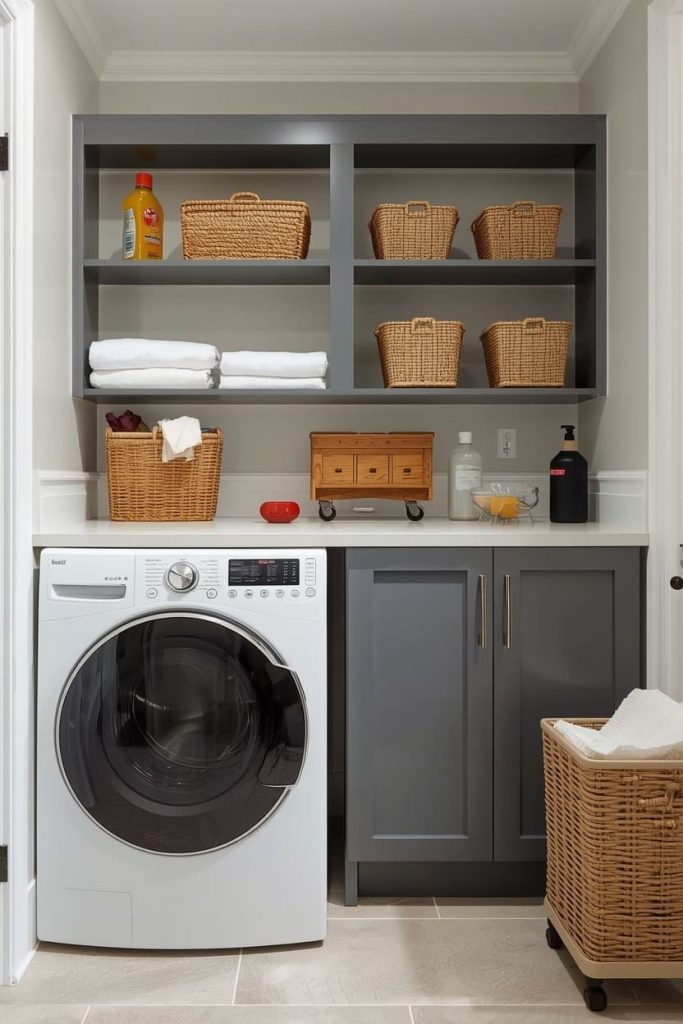
This works for basements with more square footage than a typical main-floor closet, where you can build out a full laundry zone instead of a single appliance corner.
Approach: Divide the area into three functional zones: washing, folding, and storage, laid out in an L-shape or straight run depending on available wall space.
Materials: A countertop surface for folding, open shelving or cabinets for storage, and a rolling cart for overflow or seasonal items.
Steps:
- Map out an L-shaped or straight-line layout using your existing appliance location as the anchor point.
- Install a folding countertop adjacent to the dryer, ideally at standard counter height (36 inches) for comfortable use.
- Add shelving above or beside the counter for detergent, baskets, and folded linens.
- Use a rolling cart (any basement-safe option with locking casters) for items that don’t have a fixed home yet, like seasonal bedding or cleaning supplies.
Tip: Leave at least 42 inches of clearance in front of the folding counter. Basements often have more square footage than people plan for, and it’s easy to under-utilize the space by building storage too close to the walkway.
Budget vs. Higher-End Finished Looks
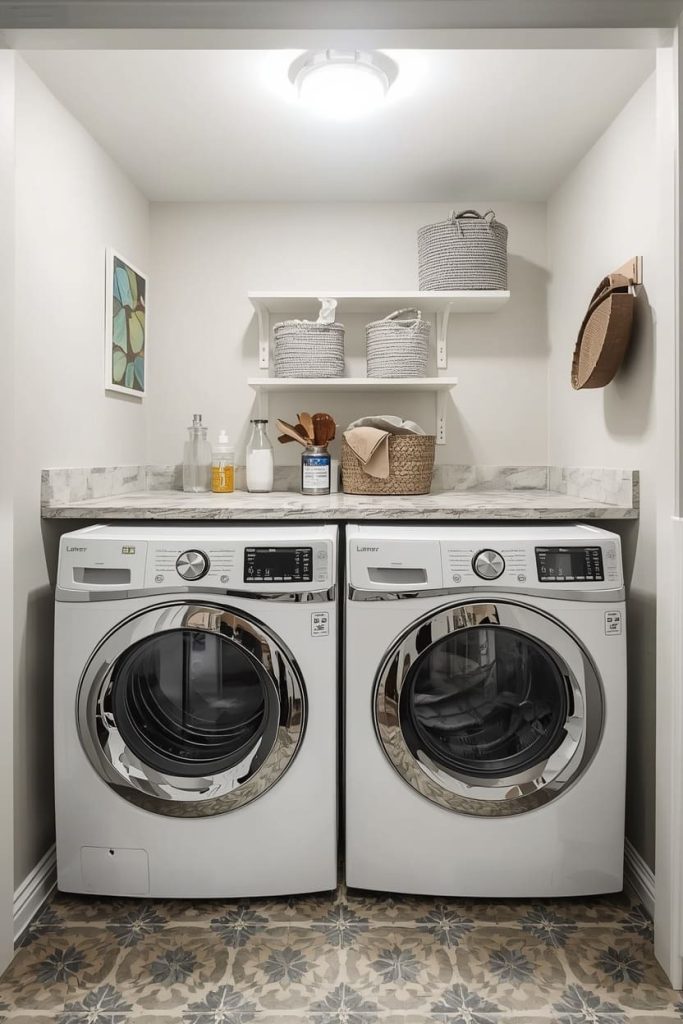
This works for readers trying to decide how much to invest, since basement laundry rooms can range from a simple cleanup to a fully finished room.
Budget approach: Focus on paint, lighting, and flooring tiles you can install yourself. Interlocking vinyl tiles, a coat of paint on exposed elements, and an LED shop light can transform the space for a few hundred dollars.
Higher-end approach: Frame and drywall the laundry area into its own enclosed room, add a solid-core door, and install cabinetry around the appliances.
Steps for the higher-end version:
- Frame a partition wall if you want the laundry area enclosed rather than open to the rest of the basement.
- Run electrical for proper lighting and any additional outlets before drywalling.
- Insulate the partition walls for sound control, especially if the room sits near a living or sleeping area.
- Finish with drywall, paint, flooring, and semi-custom or full-custom cabinetry around the appliances.
Common mistake: Skipping the sound insulation step in the walls when enclosing the room. An enclosed laundry room without insulation can actually feel louder than an open area, since the sound has nowhere to dissipate.
Which Idea Is Right for Your Space?
If moisture is your main concern, start with the dehumidifier and vapor barrier fix. If your ceiling feels low and cluttered, the paint-and-light approach solves that fast. If you have the square footage, build out the fold-and-storage zone before investing in a full enclosure. Save the framed, fully finished room for last, once you know how you actually use the space day to day.
FAQs
How do I prevent moisture and mold in a basement laundry room?
Keep humidity below 50% using a dedicated dehumidifier, and install a vapor barrier under any flooring you add. Also check your dryer vent regularly, since a poorly sealed vent releases warm, moist air directly into the room.
What’s the best flooring for a basement laundry room?
Waterproof interlocking vinyl tiles are a popular choice since they install directly over concrete without adhesive and handle occasional dampness well. Avoid carpet or unsealed wood, which absorb moisture and are harder to dry out if a leak occurs.
What kind of lighting works best in a windowless basement laundry room?
Use a flush-mount LED shop light for overall brightness, paired with a smaller task light over any folding or sink area. Choose a daylight-neutral bulb temperature around 4000–5000K rather than warm-toned bulbs, which can make a windowless room feel dimmer.
Do I need a floor drain in a basement laundry room?
It’s not always required, but it’s strongly recommended if your local code allows it, since it protects against washer supply line leaks and overflow. If you don’t have one, consider a washer overflow pan with a drain line as an alternative safeguard.
How do I stop my basement laundry room from echoing?
Add a rubber anti-vibration mat under the washer and rubber feet under all four appliance legs to reduce vibration noise at the source. An area rug near the folding station also helps absorb reflected sound in a room with concrete floors and hard walls.
What does a basement laundry room renovation typically cost?
Budget-friendly updates using flooring tiles, paint, and lighting can run $300–$800. A fully enclosed, framed, and finished laundry room with cabinetry typically runs $3,000–$8,000 depending on square footage and finish level.

Jenny is a passionate writer specializing in home decor, design, and styling. With years of experience in transforming spaces, she shares expert tips on creating beautiful, functional homes. From interior design trends to DIY decor ideas, Jenny’s work helps homeowners craft spaces that reflect their unique style. Whether it’s a cozy living room, a modern kitchen, or a serene bedroom, her articles offer practical advice and inspiration to elevate any home.