It started with a rental cottage on a weekend trip — mismatched chairs, a chipped blue pitcher full of wildflowers, and sunlight pouring across a table set with china that clearly didn’t match but somehow looked perfect together.
I remember sitting there over coffee thinking, why doesn’t my dining room feel like this? My own space was all matching sets and builder-grade everything — nice, but soulless. That trip planted a seed, and slowly, piece by piece, I started turning my plain dining room into something that actually felt like home.
If you’re chasing that same cozy, collected, cottage charm, here are 7 ideas that worked for me — plus a few products that made the transformation so much easier.
Table of Contents
- Top 5 Products to Help You Build a Cottage Dining Room
- The 7 Ideas
- Layer in Vintage China for an Inherited, Collected Look
- Choose a Farmhouse Table With Real Character
- Mix Dining Chairs Instead of Buying a Matching Set
- Hang Botanical or Floral Wallpaper for Old-Cottage Warmth
- Add a Vintage-Inspired Pendant Light as the Room's Centerpiece
- Bring the Outdoors In With Fresh or Dried Florals
- Display Linens, Baskets, and Textiles for Texture
- Frequently Asked Questions
- Final Thoughts
Top 5 Products to Help You Build a Cottage Dining Room
- Floral or Gingham Tablecloth — an instant, affordable way to bring softness and pattern to your table without committing to anything permanent.
- Vintage-Style Pendant Light Fixture — a warm, antique-inspired light that adds old-world charm and makes the whole room feel collected over time.
- Rattan or Wicker Dining Chairs — natural texture and a relaxed, lived-in feel that pairs beautifully with wood tables and vintage decor.
- Wall-Mounted Plate Rack — a charming way to display your favorite dishes as decor, turning everyday china into part of the room’s character.
- Botanical or Toile Wallpaper (Peel-and-Stick) — a rental-friendly way to add pattern and old-cottage warmth to an accent wall or even a single panel.
The 7 Ideas
Layer in Vintage China for an Inherited, Collected Look
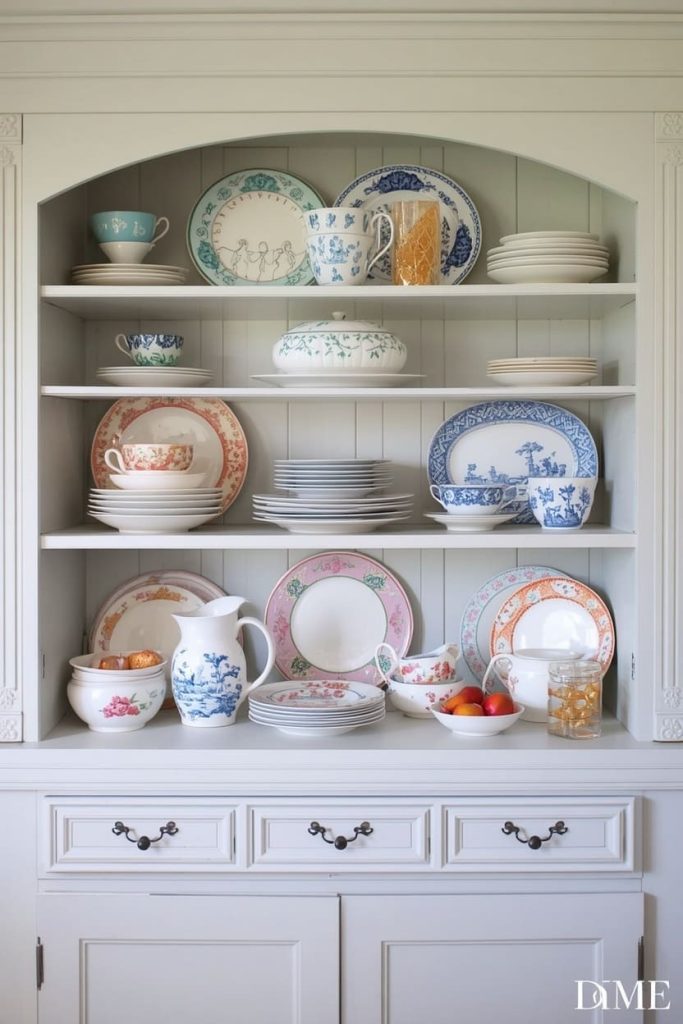
Nothing says cottage dining room quite like a hutch full of mismatched china. I started with three plates from my grandmother’s set, then slowly added pieces from thrift stores and estate sales over the next year.
The trick is to let the pieces not match perfectly. A pink floral plate next to a blue toile one next to a plain cream saucer — that’s what makes it feel collected rather than purchased all at once. It tells a story, even if half the story is “I found this for two dollars at a yard sale.”
Open shelving or a glass-front hutch is the best way to actually display this collection instead of hiding it in a cabinet. The china becomes part of your decor, not just your dinnerware.
Choose a Farmhouse Table With Real Character
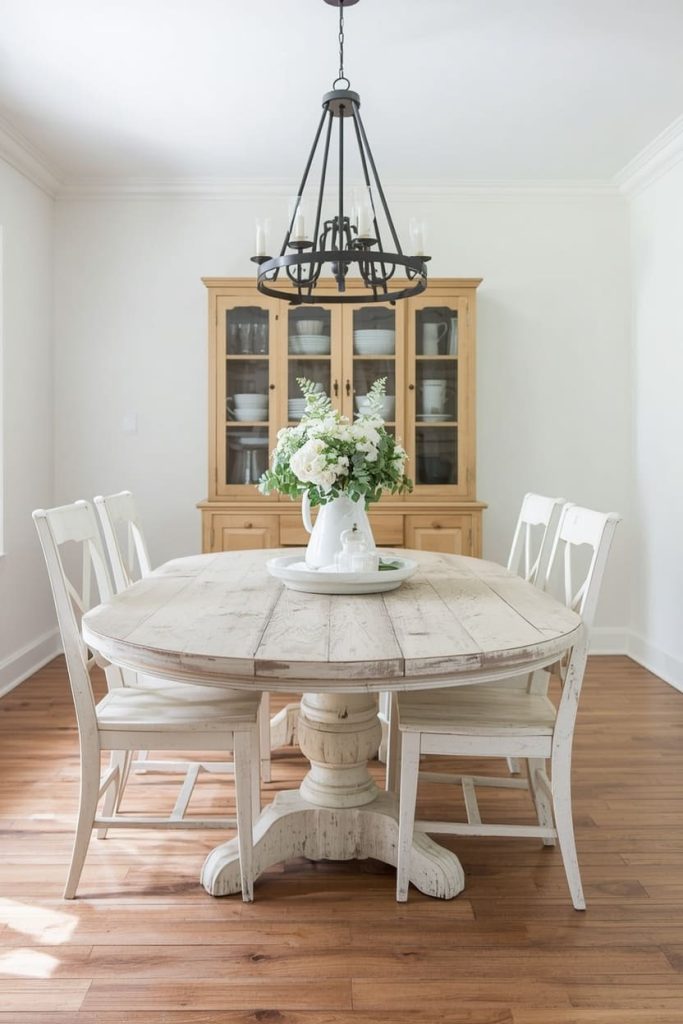
A brand-new, perfectly finished table never quite fits the cottage look — what you want is something with a little history, even if it’s history you create yourself.
I found my table secondhand, with a few scratches and water rings already on it, and honestly, I love it more because of them. If you can’t find a vintage piece, a distressed or whitewashed wood finish gets you most of the way there, and a few intentional dings from daily use will do the rest over time.
Round or oval farmhouse tables tend to feel especially cottage-appropriate, since they soften the room and encourage that long, lingering Sunday dinner energy the whole style is built around.
Mix Dining Chairs Instead of Buying a Matching Set
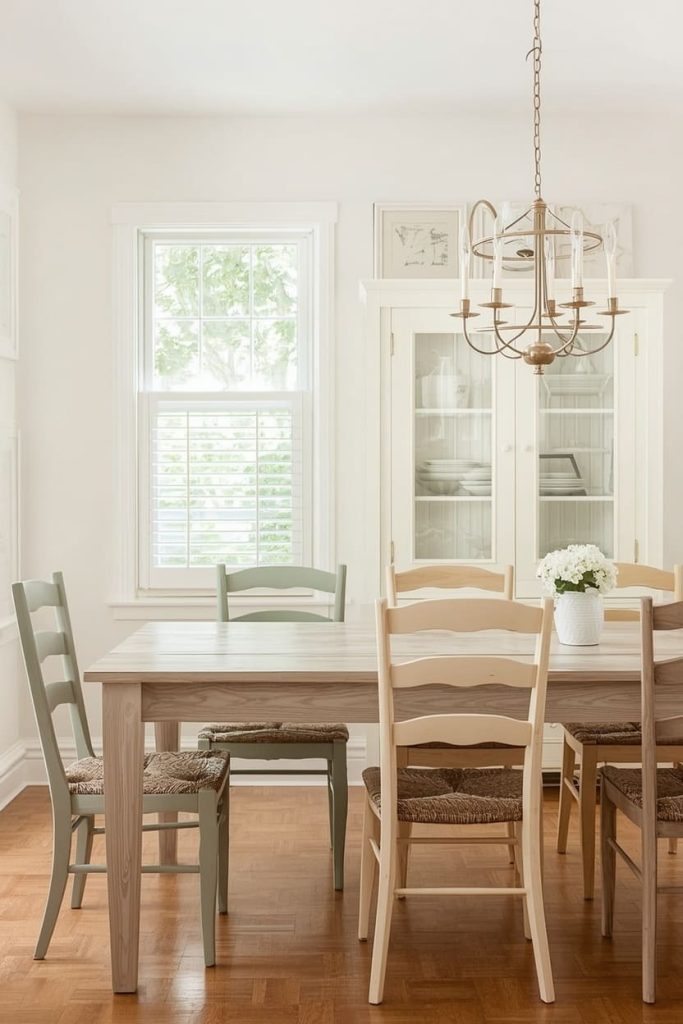
This was the change that made my dining room finally feel “done,” even though technically nothing matched. I paired two wicker chairs at the ends of my table with four wooden ladder-back chairs along the sides, and the mismatch is genuinely the best part of the room.
Cottage style leans into the idea that furniture was gathered over time, not ordered as a set. If you’re nervous about mixing, keep one element consistent — like wood tone or chair height — and let the rest vary.
Painted chairs are another great option here. A soft sage or buttery yellow chair tucked among natural wood ones adds a pop of color without overwhelming the space.
Hang Botanical or Floral Wallpaper for Old-Cottage Warmth
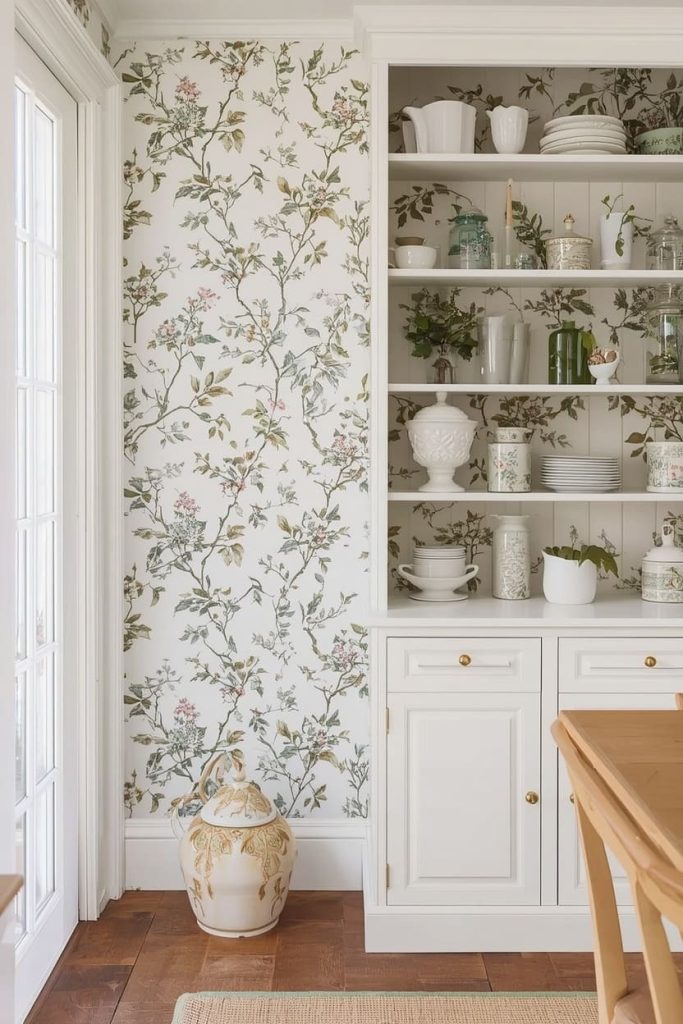
I was terrified of wallpaper for years — too permanent, too risky, too “what if I hate it in six months.” Peel-and-stick botanical wallpaper changed my mind completely.
I used it on just one wall, behind my hutch, and it instantly gave the room that layered, English-cottage feeling without overwhelming the whole space. Small floral prints, toile patterns, or trailing greenery all work beautifully here.
If a full wall still feels like too much commitment, try wallpapering just the back panel of a built-in shelf or hutch instead. You get the charm with a fraction of the risk.
Add a Vintage-Inspired Pendant Light as the Room’s Centerpiece
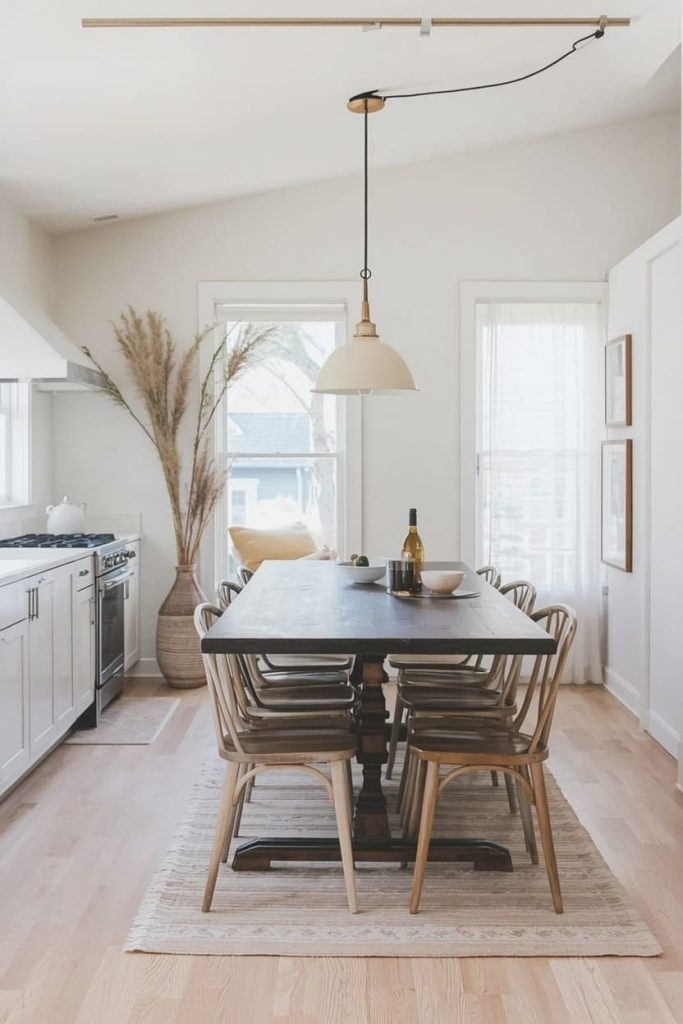
Lighting makes or breaks the cottage feeling more than people realize. A sleek, modern fixture can undo all the cozy work you’ve put into the rest of the room in an instant.
I swapped my builder-grade fixture for a vintage-style pendant with a warm brass finish and a softly frosted glass shade, and the whole room suddenly felt golden, even in the late afternoon. It’s a small swap, but it’s often the first thing guests notice.
If rewiring isn’t an option, plug-in pendant fixtures give you the same look without an electrician, and the cord can be hidden along the ceiling with simple clips.
Bring the Outdoors In With Fresh or Dried Florals
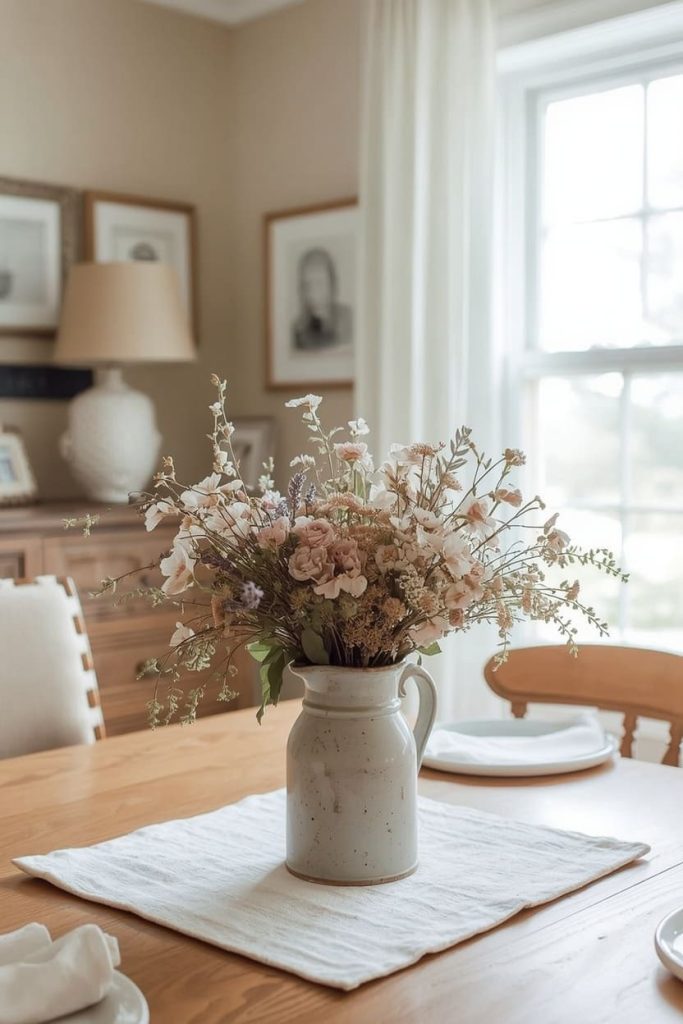
A cottage dining room without flowers always feels slightly unfinished to me. It doesn’t need to be elaborate — a simple jar of wildflowers or a bundle of dried lavender does more work than you’d expect.
I keep a rotating arrangement on my table depending on the season: garden roses in summer, dried eucalyptus in fall, even just greenery clipped from my own yard. It costs almost nothing and changes the entire feeling of the room week to week.
If fresh flowers aren’t realistic for your schedule, high-quality dried or faux botanicals in a vintage pitcher or jug give you the same charm with zero maintenance.
Display Linens, Baskets, and Textiles for Texture
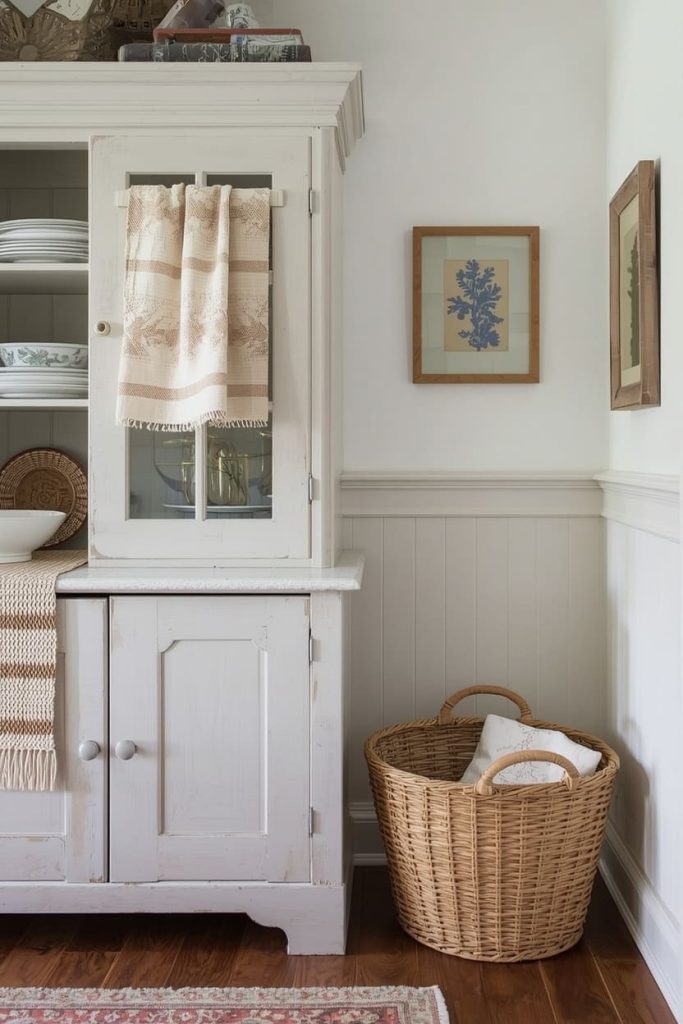
Cottage style is as much about texture as it is about color. Smooth, hard surfaces feel cold and modern, while layered textiles instantly warm a room up.
I added a woven runner under my centerpiece, hung a vintage tea towel on the hutch door, and tucked a wicker basket in the corner for extra napkins and placemats. None of it was expensive, but together it makes the room feel soft and gathered rather than staged.
Look for natural materials here — linen, cotton, rattan, jute — since they photograph and feel far more “cottage” than synthetic textures.
Frequently Asked Questions
How do I get a cottage look without spending a lot of money?
Thrift stores, estate sales, and Facebook Marketplace are goldmines for vintage china, chairs, and decor at a fraction of retail prices. Start with one or two secondhand pieces and build the room slowly rather than buying everything new at once.
Can I do cottage style in a small or modern dining room?
Absolutely — focus on smaller touches like a floral tablecloth, vintage lighting, and a few collected decor pieces rather than full architectural changes. Cottage style is more about layering and warmth than square footage.
How do I mix patterns without it looking chaotic?
Stick to a cohesive color palette, even if the patterns themselves vary. Florals, gingham, and toile all work well together as long as they share similar tones.
Where can I find good vintage pieces if I don’t live near antique shops?
Online marketplaces, estate sale apps, and even Amazon’s vintage-inspired (not necessarily vintage) decor options are great starting points. Many “new” cottage-style pieces are designed to look aged and collected.
Is cottage style the same as farmhouse style?
They overlap, but cottage style tends to be softer and more romantic, with florals, pastels, and vintage china, while farmhouse style leans more rustic and neutral. Many dining rooms (mine included) blend both.
How do I keep a cottage dining room from feeling cluttered?
Choose a few standout pieces — like your china display or pendant light — and let everything else stay simple. Cottage style is layered, but it should still feel intentional, not overcrowded.
Final Thoughts
That weekend in a rented cottage gave me a feeling I didn’t even know I was missing, and slowly recreating it in my own dining room has been one of the most rewarding parts of decorating my home.
You don’t need a full renovation or a big budget to get there — just a few collected pieces, a little patience, and a willingness to let things not quite match. Start with one idea from this list, and watch how quickly the rest of the room starts to feel like it was gathered with love.

Jenny is a passionate writer specializing in home decor, design, and styling. With years of experience in transforming spaces, she shares expert tips on creating beautiful, functional homes. From interior design trends to DIY decor ideas, Jenny’s work helps homeowners craft spaces that reflect their unique style. Whether it’s a cozy living room, a modern kitchen, or a serene bedroom, her articles offer practical advice and inspiration to elevate any home.