I almost walked right past it — a scratched-up mahogany sideboard tucked behind a box of old linens at an estate sale, priced at twenty dollars because nobody else wanted it.
Something about the carved detailing on the doors stopped me. I bought it on a whim, refinished it over a weekend, and the moment I slid it into my dining room, everything else suddenly looked too new, too matchy, too forgettable by comparison.
That sideboard kicked off a years-long love affair with vintage dining rooms — one chair, one chandelier, one lucky find at a time. If you’re ready to start your own collection, here are 7 ideas that have shaped my space, plus a few products that make the hunt a little easier.
Top 5 Products to Help You Build a Vintage Dining Room
- Crystal or Wrought-Iron Chandelier — an elegant, antique-inspired centerpiece that instantly sets the tone for old-world charm and glamour.
- Vintage-Style Wallpaper (Damask or Floral Print) — a richly patterned wall treatment that gives modern walls the depth and history of an older home.
- Antique-Finish Wall Mirror — a weathered, ornate frame that adds character and bounces light beautifully around a vintage-styled room.
- Mismatched-Style Dining Chair Set — chairs designed with varied silhouettes and finishes to mimic that collected-over-decades look without years of hunting.
- Vintage-Inspired China or Glassware Set — patterned dishware that brings instant heirloom charm to your table, even if it’s brand new.
The 7 Vintage Dining Room Ideas
Mix Antique Chairs for a Collected-Over-Time Look
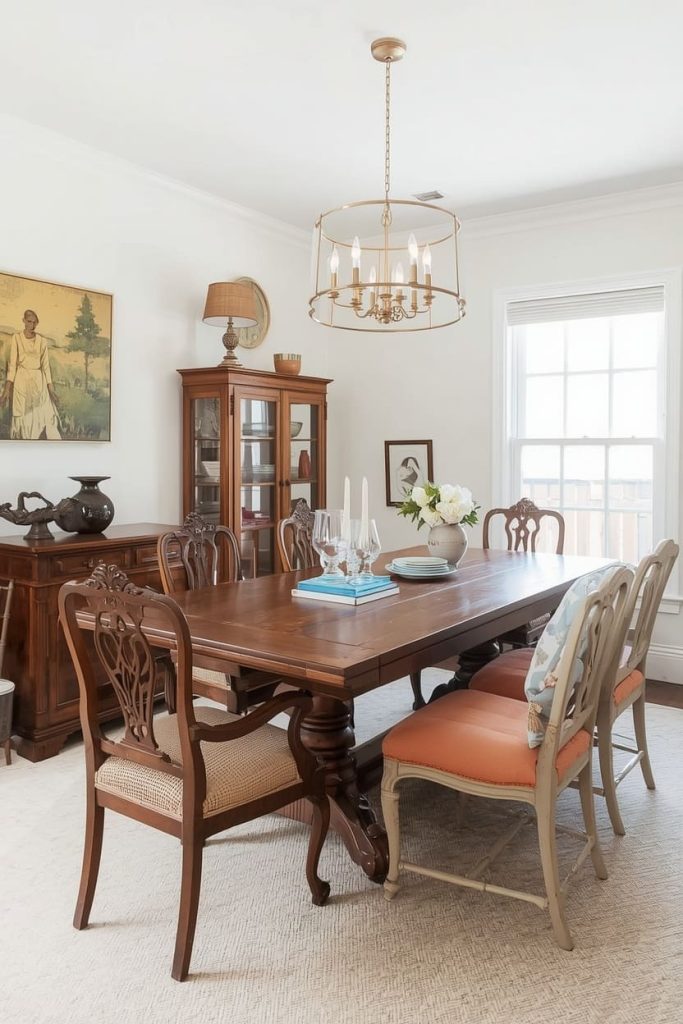
If there’s one rule I live by in my dining room, it’s this: never buy a matching chair set. The whole magic of vintage style comes from pieces that look like they arrived in your home across different decades, not from the same delivery truck.
I have two carved wooden chairs from a flea market, two upholstered ones I reupholstered myself, and a bench at one end that used to live in someone’s entryway. None of them match, and that’s exactly the point — it makes the room feel like it has history, even the parts I invented.
When you’re sourcing, look for chairs with similar heights or wood tones so they relate to each other, even if the styles differ. That small thread of consistency keeps “eclectic” from tipping into “chaotic.”
Hunt for a Statement Chandelier With Real Character
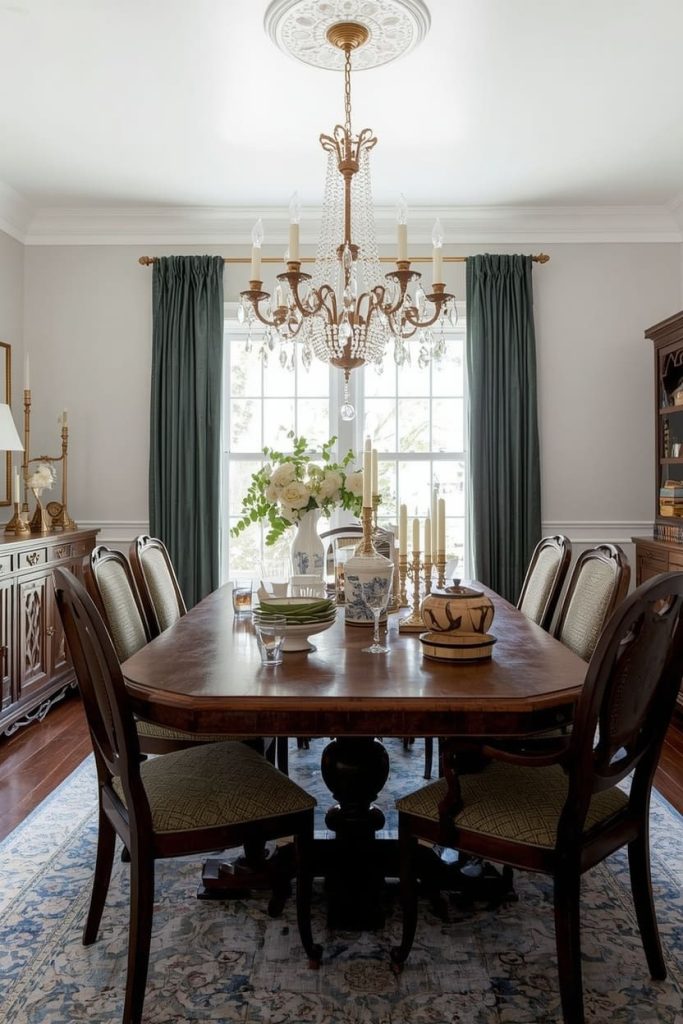
A vintage dining room lives or dies by its lighting, and nothing does more heavy lifting than a great chandelier. A flat, modern flush-mount fixture just can’t compete with the drama of crystal or aged wrought iron.
I found mine at a salvage shop, slightly tarnished and missing one crystal, and I genuinely think the imperfections make it better. It catches the evening light in a way that feels like it’s been hanging there for a hundred years, not five.
If antique shopping isn’t realistic for your timeline, plenty of new fixtures are designed specifically to replicate that aged, old-world look. Just look for warm metal finishes — brass, bronze, aged iron — over anything bright or polished.
Layer In a Sideboard or Buffet for Storage and Story
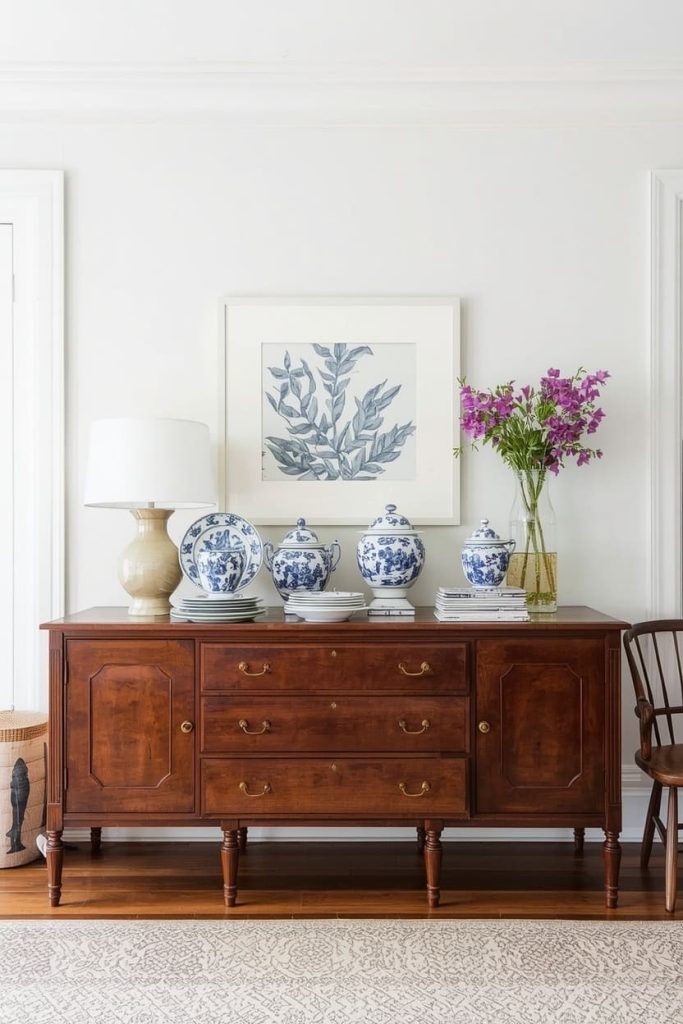
That mahogany sideboard I mentioned earlier didn’t just solve a storage problem — it became the anchor piece of my whole room. Every vintage dining room benefits from a piece like this, something with weight, history, and a little bit of mystery about where it’s been.
I use mine to display my growing china collection on top while hiding linens and serving pieces inside. It’s both functional and the first thing guests comment on when they walk in.
When shopping for one, don’t be afraid of pieces that need a little love. A sticky drawer or a worn finish is often just cosmetic, and a weekend of cleaning and waxing can bring real character back to life.
Mix Patterns and Eras With Vintage Wallpaper
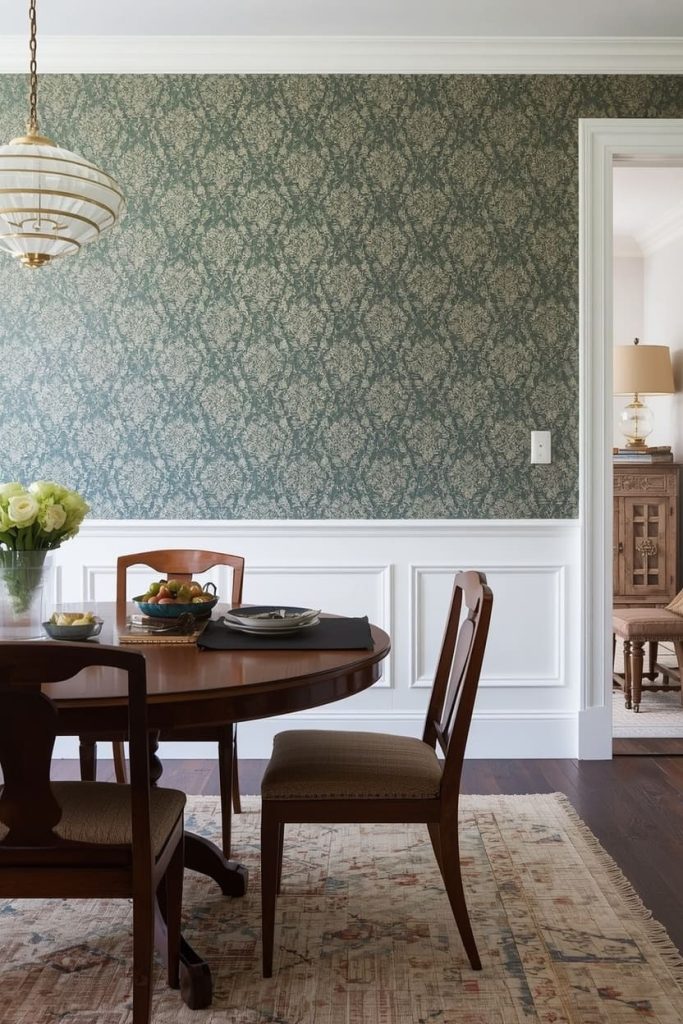
I avoided wallpaper for years, worried it would feel dated in the wrong way. Then I tried a damask print on one wall of my dining room, and it was like the room finally exhaled.
Vintage wallpaper does something paint simply can’t — it gives a newer home instant depth and history. I went with a deep green damask that echoes the kind of pattern you’d find in an old formal dining room, and it makes my collected furniture pieces feel like they belong together.
If full-wall wallpaper feels intimidating, try it inside a built-in hutch or on just the lower half of the wall paired with wainscoting. You get the impact without the commitment.
Display China and Glassware Like the Treasures They Are
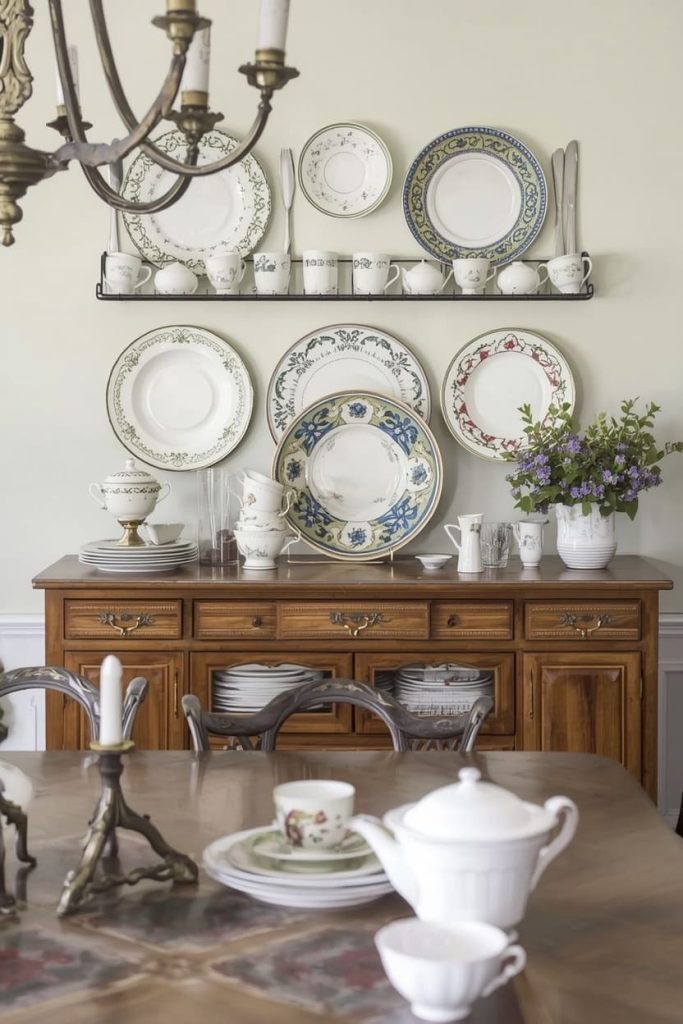
For a long time, my “good” china lived in a box, saved for occasions that never seemed to come. Once I started displaying it instead, my whole dining room felt richer, even on an ordinary Tuesday.
I keep mismatched plates leaning on a wall-mounted rack, stack teacups inside my sideboard’s glass doors, and let a few pieces just sit out on the table as everyday decor. Vintage china wasn’t meant to be hidden — it was meant to be used and seen.
If you’re just starting your collection, single pieces from thrift stores are often more affordable than full sets, and they mix beautifully with whatever you find next.
Choose a Color Palette That Feels Nostalgic, Not Trendy
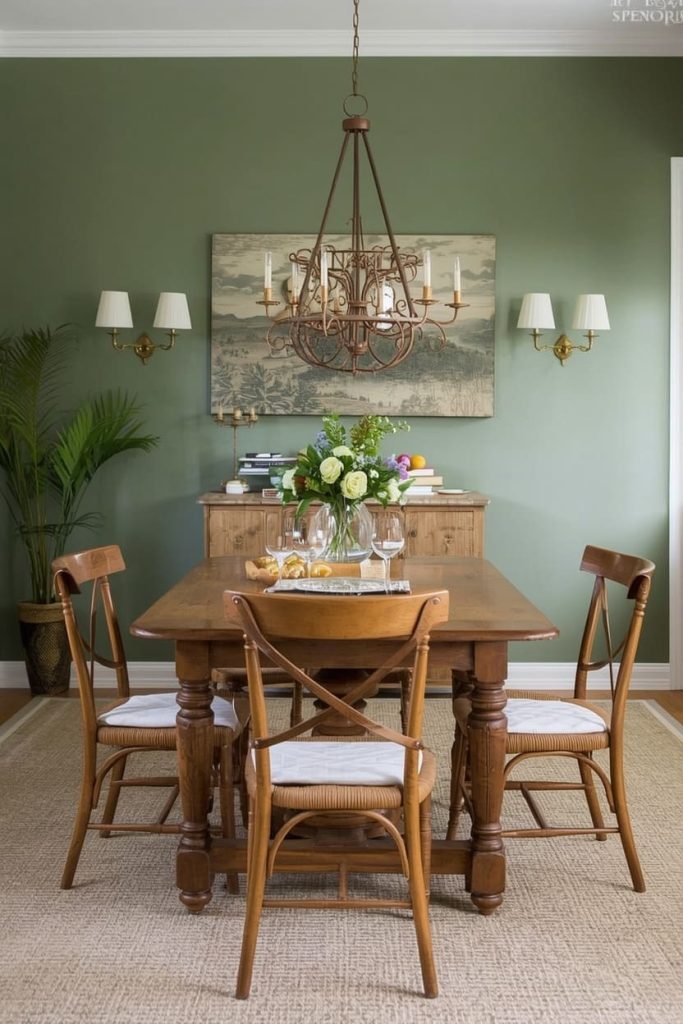
Vintage dining rooms have a color language all their own — deep greens, dusty blues, warm taupes, jewel-toned accents. These shades feel collected from another era rather than pulled from this season’s catalog.
I painted my walls a soft sage and let my furniture’s natural wood tones do most of the talking. The color doesn’t shout for attention; it just sets a quiet, warm backdrop for everything else in the room.
Avoid anything too crisp or cool-toned if you’re going for genuine vintage warmth. Even white works better here in a creamy, slightly aged version rather than a stark, modern white.
Reclaim and Repurpose Unexpected Pieces
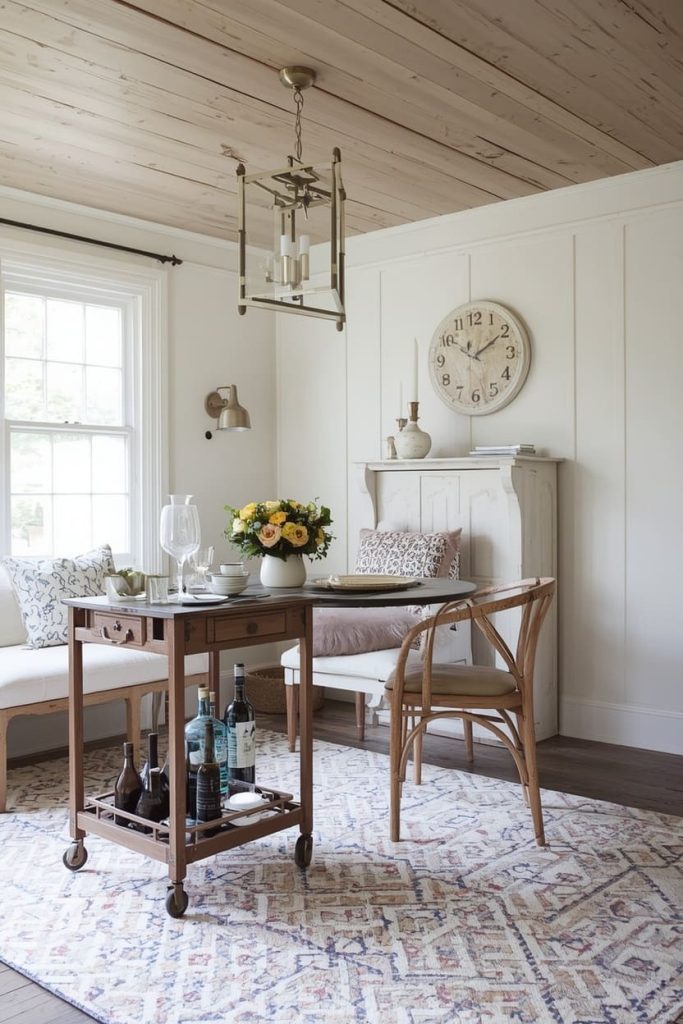
Some of my favorite pieces in my dining room were never meant to be dining room furniture at all. An old factory cart became my bar cart. A church pew, sanded and refinished, became extra seating along one wall.
This is where vintage style gets genuinely fun — looking at salvaged, reclaimed, or repurposed items and imagining a new life for them in your space. It also tends to be far more affordable than shopping for “real” antique dining furniture.
Estate sales, architectural salvage yards, and even online marketplaces are full of unexpected finds if you’re willing to look past their original purpose.
Frequently Asked Questions
Where’s the best place to find vintage dining room pieces?
Estate sales, antique malls, flea markets, and online marketplaces like Facebook Marketplace or Etsy are all great starting points. Building a collection takes time, so treat it as an ongoing hobby rather than a one-time shopping trip.
How do I mix different eras without it looking messy?
Keep one consistent thread — like wood tone, color palette, or scale — running through your pieces, even as styles vary. That small bit of cohesion lets eclectic pieces feel curated instead of random.
Is vintage dining room decor expensive?
It can be, but it doesn’t have to be. Thrifted and salvaged pieces are often far cheaper than new furniture, and the patience required to find them is usually the real cost, not the price tag.
How do I take care of antique wood furniture?
Avoid harsh cleaners and direct sunlight, which can dry out and fade old wood finishes over time. A simple furniture wax or polish a few times a year keeps most antique pieces looking their best.
Can I get a vintage look with new furniture?
Absolutely. Many retailers now make pieces specifically designed to mimic aged finishes, ornate details, and antique-inspired silhouettes. Mixing a few real vintage finds with these newer pieces is often the easiest way to start.
What if I live in a modern home — can vintage style still work?
Yes, vintage dining rooms can soften and add character to even the most modern spaces. Start with one or two statement pieces, like a chandelier or sideboard, rather than trying to overhaul the entire room at once.
Final Thoughts
That twenty-dollar sideboard taught me that the best vintage dining rooms aren’t bought all at once — they’re built slowly, through finds that mean something and pieces that carry a little bit of history with them.
You don’t need a big budget or a packed antique mall nearby to get started; you just need patience and an eye for character. Pick one idea from this list, start the hunt, and let your dining room collect its story one piece at a time.

Jenny is a passionate writer specializing in home decor, design, and styling. With years of experience in transforming spaces, she shares expert tips on creating beautiful, functional homes. From interior design trends to DIY decor ideas, Jenny’s work helps homeowners craft spaces that reflect their unique style. Whether it’s a cozy living room, a modern kitchen, or a serene bedroom, her articles offer practical advice and inspiration to elevate any home.