When I moved into my first apartment, the dining area was essentially a wide hallway between the kitchen and the living room. I bought a rectangular table because that is what dining rooms have, right?
Within a week, I was squeezing sideways past the corners every single morning, apologizing to my own furniture. A friend suggested I swap it for a round table, and I almost dismissed the idea as too simple.
But that swap changed the entire feel of my home. No sharp corners to navigate, no awkward dead ends, just a space that suddenly breathed. If you are wrestling with a small dining room right now, these 7 ideas will show you exactly how to make a round table work beautifully for you.
Top 5 Round Dining Tables and Accessories on Amazon Right Now
- Finch Augusta 42-Inch Round Pedestal Dining Table — A solid wood pedestal table with a single center base that eliminates corner legs entirely, making it the best choice for anyone who wants maximum legroom in a tight space.
- Stone & Beam Inclination Upholstered Dining Chair (Set of 2) — A compact, armless upholstered chair with a slim profile that tucks neatly under a round table and works beautifully for small dining rooms that need seating without visual bulk.
- nuLOOM Rigo Hand-Woven Jute Round Rug, 6-Foot — A natural jute round rug that grounds a dining table without overwhelming a small room, ideal for open-concept spaces that need soft zone definition underfoot.
- Brightech Sparq Rattan Pendant Light — A small-scale woven rattan pendant that hangs perfectly over a 36 to 42-inch round table and adds warmth and texture without overpowering a compact dining nook.
- Tiptiper Folding Dining Chairs (Set of 4) — Slim, modern folding chairs that store flat against a wall or inside a closet when not in use, the smartest buy for renters or anyone who hosts occasionally but needs everyday floor space back.
The 7 Round Table Ideas For Your Small Dining Room
Choose a Pedestal Base Round Table to Eliminate the Corner Problem
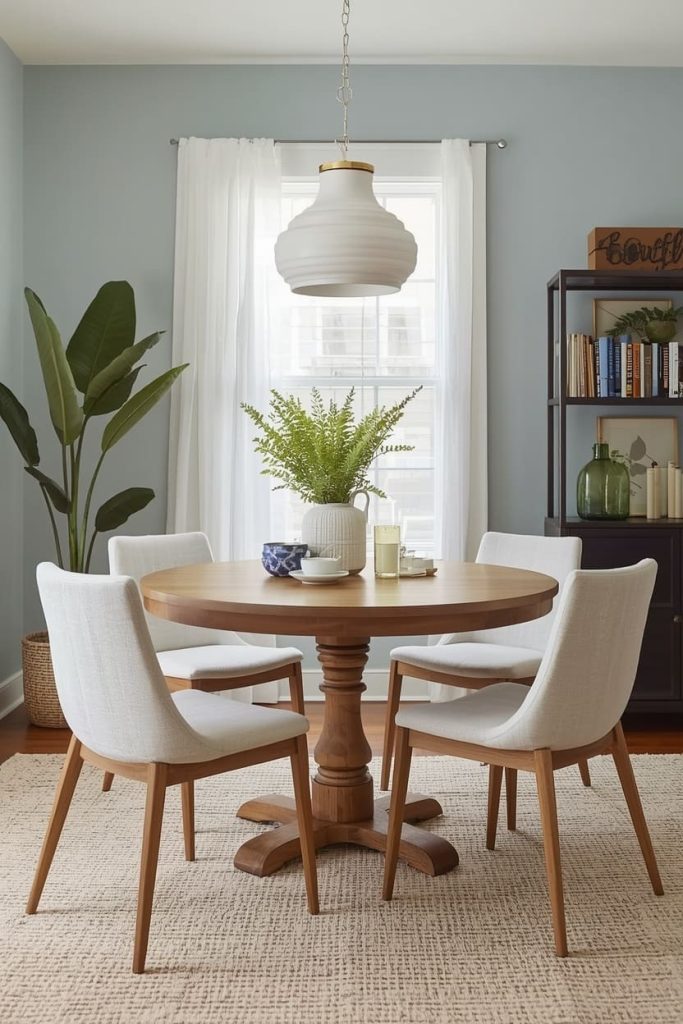
The single biggest mistake people make when buying a round table for a small space is choosing one with four legs.
It sounds counterintuitive — four legs feels sturdy and familiar — but those four corner legs eat floor space aggressively and make it harder to pull chairs in and out cleanly. A pedestal base round table solves this completely.
With a single central column supporting the tabletop, every inch around the perimeter becomes usable seating and legroom. You can squeeze in an extra chair on a busy night without anyone fighting a table leg.
You can pull your chair all the way in and actually feel comfortable. And visually, the absence of corner legs makes the floor feel more open, which tricks the eye into reading the room as larger than it is.
For a dining room under 10×10 feet, look for a pedestal table between 36 and 42 inches in diameter. That size seats four comfortably and leaves at least 36 inches of clearance on all sides — the minimum you need to push a chair back and stand up without hitting a wall.
This idea works for everyone, but it is especially valuable for renters and apartment dwellers where every square foot counts.
Push Your Round Table Into a Corner or Against a Wall to Reclaim the Room
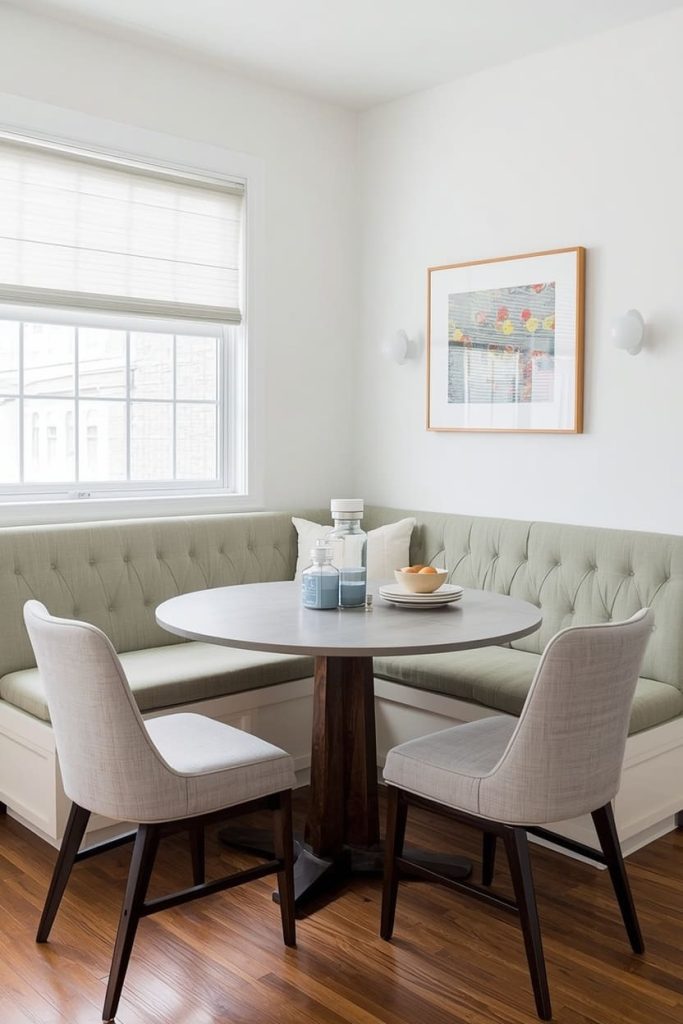
Most people center their dining table in the room out of habit, but in a small space, centering a round table often wastes the most valuable real estate you have.
Pushing your table toward a wall or into a corner is one of the most underrated space-saving moves I have ever tried, and it transformed my dining nook from cramped to genuinely functional.
When you place a round table against a wall, you immediately free up a large portion of the floor for movement, which makes the entire room feel less cluttered. You lose one seating position on the wall side, but you gain so much livability in return.
To make the wall side comfortable, add a built-in bench, a cushioned window seat, or a simple upholstered banquette along that wall — suddenly you have cozy booth-style seating that feels intentional rather than like a compromise.
If you push the table into a corner, two walls do the work of two chair positions, and you only need chairs for the remaining open sides. This works especially well in L-shaped kitchen-dining combos and studio apartments.
Use a round table no larger than 36 inches in diameter for a corner placement to keep the surrounding flow comfortable.
Use a Round Rug to Define Your Dining Zone Without Blocking the Room
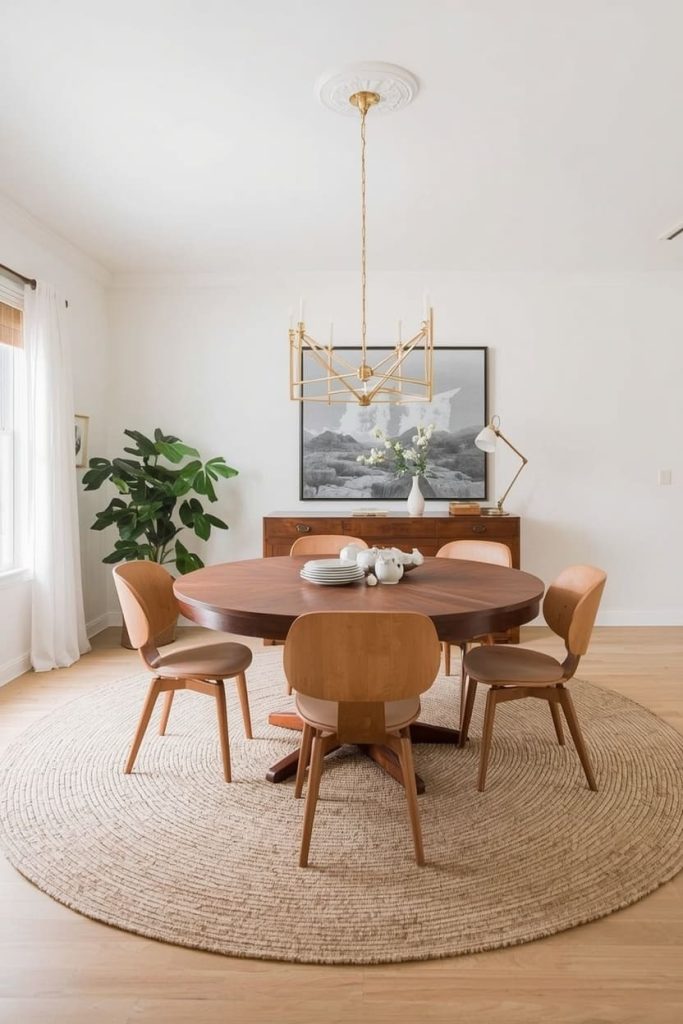
In an open-concept home, the dining area often floats awkwardly between the kitchen and the living room with nothing to anchor it. A rectangular rug in a small space tends to chop the room into sections and highlight how little floor space there is.
A round rug does the opposite — it defines the dining zone softly, keeps the eye moving, and makes the overall space feel more cohesive and considered.
The key is choosing the right size. Your rug needs to be large enough that all chair legs sit on it even when the chairs are pulled out for sitting — that means adding at least 24 inches to the diameter of your table.
For a 42-inch round table, you want a rug that is at least 6 feet in diameter, with 8 feet being ideal if your room allows it. Going too small is the most common rug mistake in dining rooms, and it makes the setup look unfinished.
Choose a low-pile rug so chairs slide easily without catching. Natural fibers like jute or sisal add warmth without visual weight. This idea works brilliantly for open-concept homes, renters who want to define a dining area without renovation, and anyone whose dining and living spaces share one continuous floor.
Scale Your Lighting Fixture to the Table, Not the Room
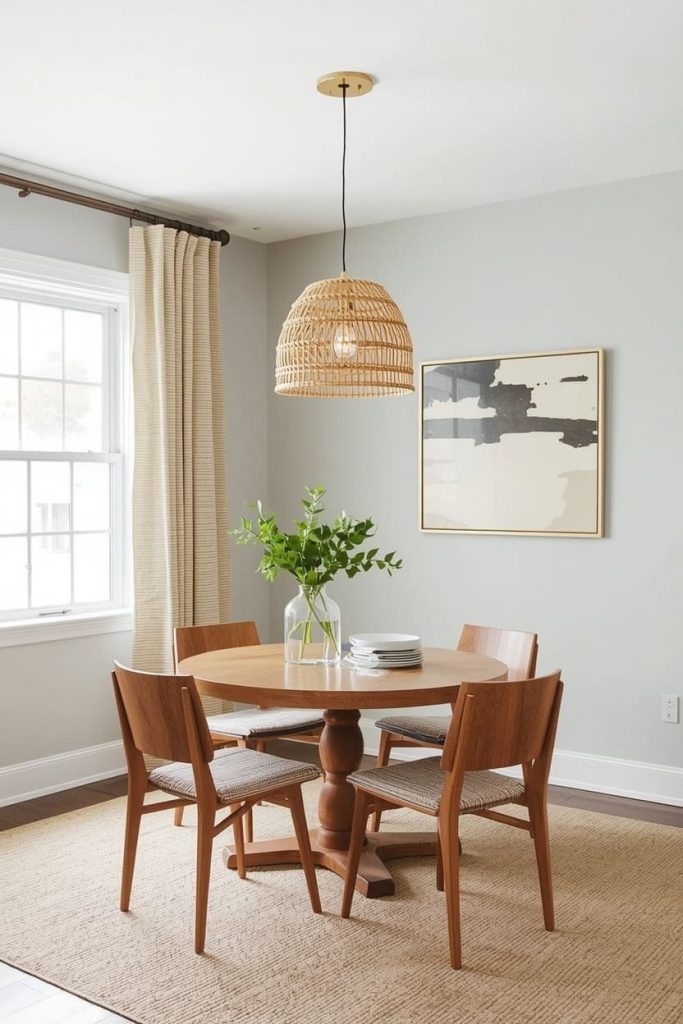
Lighting is where most small dining rooms quietly fall apart. People either install a fixture that is far too large — because it looked reasonable in the showroom — or they skip a proper pendant altogether and rely on recessed lighting that flattens the space entirely.
When you have a round table, your lighting fixture has one job: frame that table and create a warm, intimate focal point.
For a round table between 36 and 48 inches in diameter, your pendant or chandelier should measure roughly 12 to 20 inches in diameter — significantly smaller than what you would hang over a large rectangular table. Hang it so the bottom of the fixture sits 30 to 34 inches above the tabletop. This height keeps the light intimate without blocking sightlines across the table.
A single rattan, linen, or glass pendant in a modest scale looks effortlessly right over a small round table. Avoid multi-arm chandeliers with wide spreads — they visually compete with the table rather than complement it.
If your ceiling is low, a flush-mount with a warm bulb is a smarter choice than forcing a pendant that hangs too close to head height. This idea matters most in dining nooks, apartment dining areas, and any room where the ceiling height is 8 feet or under.
Mix Armless Chairs With a Bench or Window Seat to Maximize Seating
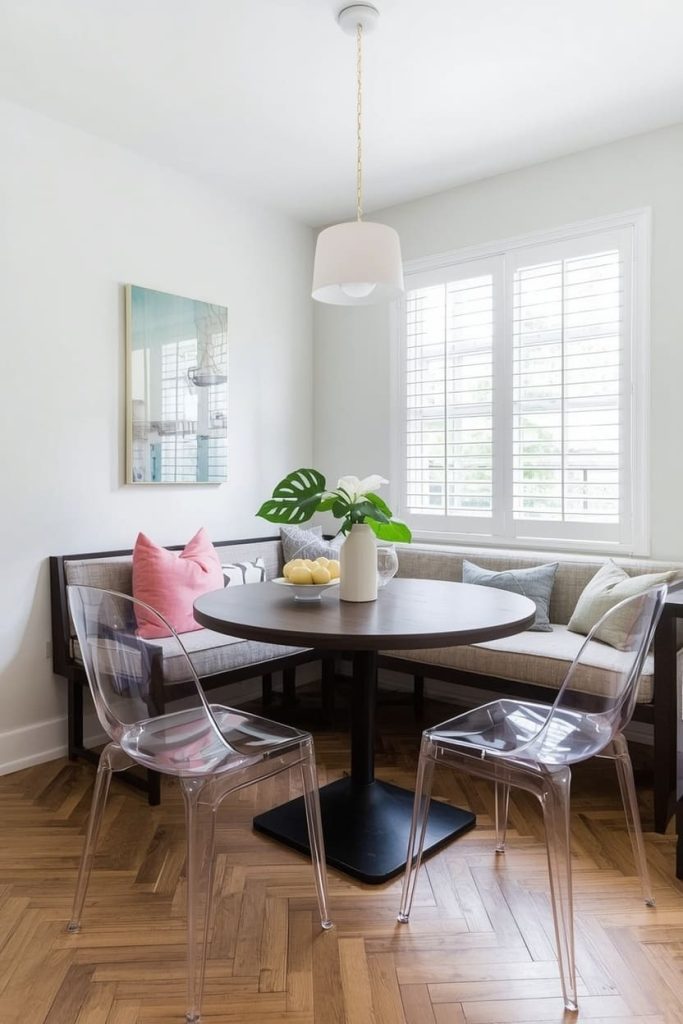
Seating selection is where small dining rooms either succeed or collapse entirely. Oversized chairs with thick arms and high backs around a small round table look suffocating — too much furniture competing for the same limited space.
The smarter approach is mixing seating types to get the most people around the table without the room feeling stuffed.
Armless dining chairs are your best friend here. They slide fully under the table when not in use, visually disappear against the table base, and allow more chairs to fit around the perimeter without crowding.
Pair two or three armless chairs with a small upholstered bench tucked against a wall, and you gain flexible seating that works for everyday meals and hosting nights equally well.
Ghost chairs — clear acrylic armless chairs — are worth considering if your room skews small and dark, because their transparency means they take up physical space without taking up visual space. For a 42-inch round table, you can comfortably fit four armless chairs, or three chairs plus a two-person bench.
This approach works beautifully for couples who occasionally host, families in starter homes, and renters who need seating that stores easily.
Keep the Surrounding Decor Minimal to Let the Table Breathe
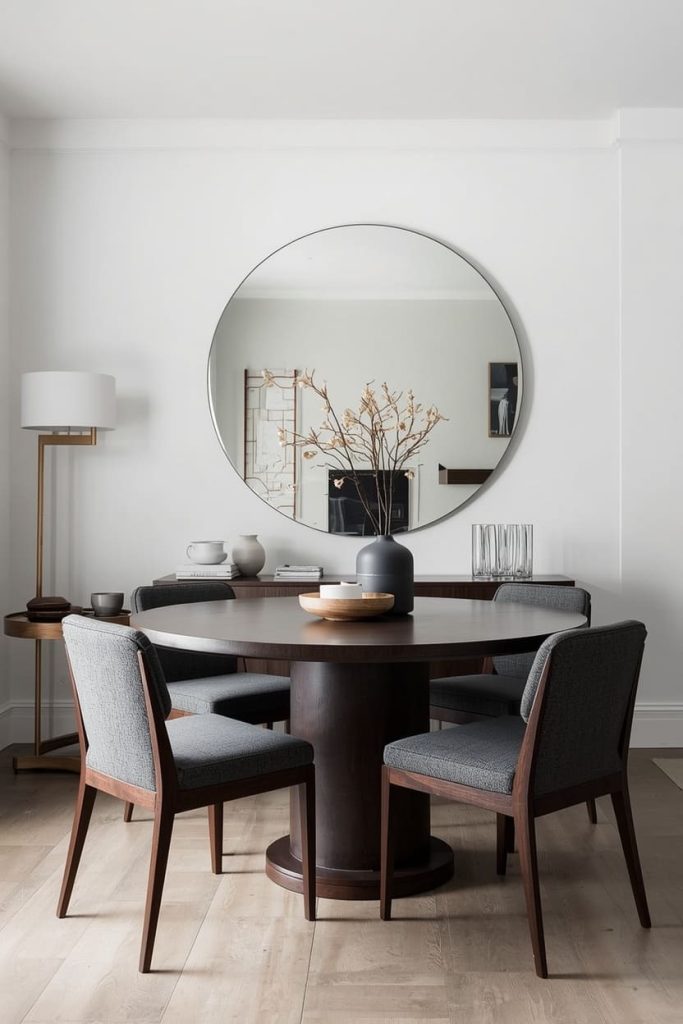
A round table in a small dining room does a lot of heavy lifting on its own — it softens the space, improves flow, and creates natural conversation around it.
But if you crowd the surrounding walls and floor with too much furniture and décor, you cancel out every benefit the round table brings. The goal is to let the table be the clear focal point with room to breathe around it.
This means resisting the urge to fill every wall with shelving, sideboards, and art. In a small dining room, one functional piece of furniture against one wall — a slim console table, a narrow sideboard, or a simple floating shelf — is enough storage and styling surface.
Keep the other walls relatively clear or anchor them with a single large mirror, which bounces light and makes the room read as twice its actual size.
On the table itself, keep the centerpiece low and simple. A small vase with stems, a candle, or a wooden bowl reads as intentional without blocking sight lines or making the table feel cluttered before a single plate lands on it.
This idea benefits every small dining room, but it is especially impactful if your space is under 100 square feet and every piece of furniture competes for attention.
Add a Mirror Strategically to Double the Visual Space
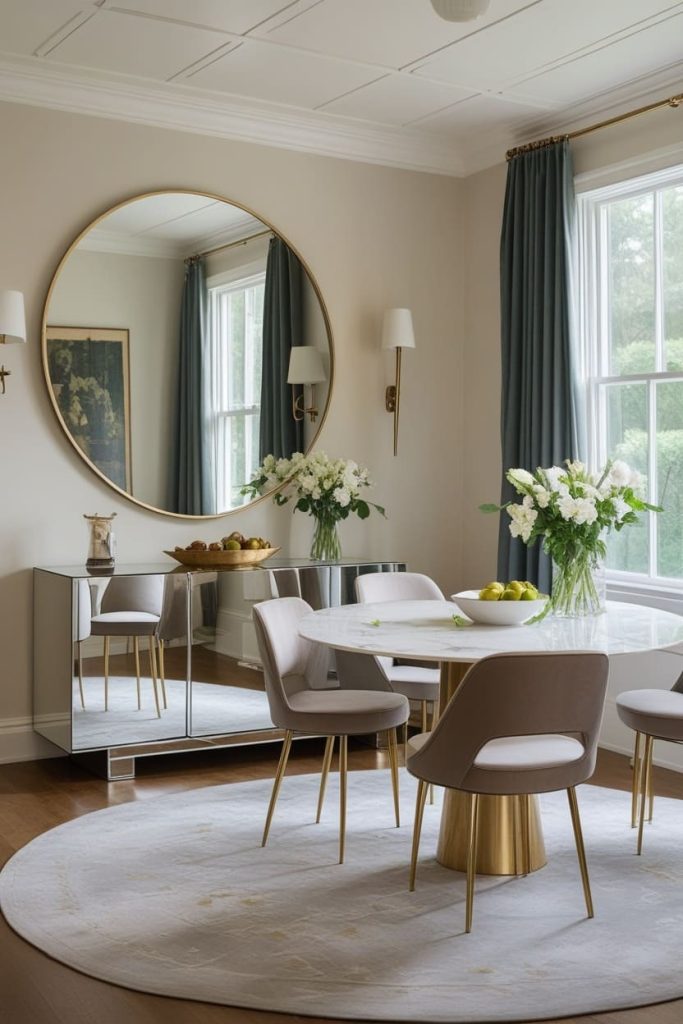
Of all the tricks I have used in small dining rooms, hanging a large mirror is the one that generates the most comments from guests. People walk in and feel like the room is bigger than it actually is — and that reaction happens every time, without fail.
A mirror reflects both light and depth, and in a small dining room anchored by a round table, the effect is genuinely dramatic.
The placement matters as much as the mirror itself. Hang it on the wall that faces your primary light source — a window, a pendant light, or a lamp on a sideboard — so it bounces that light back into the room rather than reflecting a dark corner.
A round mirror above a sideboard creates a pleasing echo of the round table below it and adds a design layer that feels considered. A large rectangular leaner mirror propped against a wall works well in slightly larger small dining rooms where you want maximum reflected depth.
Avoid mirrored furniture like mirrored sideboards or cabinets — they tend to feel dated and create a fractured, busy reflection. One clean, well-placed mirror does more work than a roomful of mirrored surfaces.
This idea is particularly powerful in interior dining rooms with no windows, basement dining areas, and any space that feels dark or enclosed regardless of the time of day.
Frequently Asked Questions About Small Dining Rooms With Round Tables
What size round table fits in a small dining room?
For a room under 10×10 feet, a round table between 36 and 42 inches in diameter is the sweet spot — it seats four people comfortably while leaving enough clearance around the perimeter for chairs to pull out and people to move freely. You need a minimum of 36 inches between the table edge and the nearest wall or piece of furniture. If your room is closer to 8×8 feet, scale down to a 30 to 36-inch table to preserve that essential circulation space.
Are round tables better than rectangular tables for small spaces?
In most small dining rooms, yes — round tables outperform rectangular ones for several practical reasons. They have no corners to navigate around, which immediately improves the flow of a tight space. They also allow everyone at the table to see and speak to each other equally, which makes meals feel more connected. The main trade-off is that rectangular tables seat more people along their length, so if you regularly host large groups, a drop-leaf rectangular table might offer more flexibility.
What chairs work best with a round table in a small room?
Armless chairs are the strongest choice for small dining rooms because they tuck fully under the table and take up significantly less visual space than armed chairs. Chairs with slim metal legs in black or brass read as lighter and less bulky than thick wooden legs. Clear acrylic ghost chairs are excellent if the room skews dark, since their transparency prevents them from registering as visual weight. Avoid upholstered chairs with thick cushions and wide seats — they can add 4 to 6 inches of extra depth per chair, which adds up fast around a small table.
What size rug should I use under a round dining table?
Your rug should extend at least 24 inches beyond the edge of your table on all sides, so that chair legs remain on the rug even when pulled out. For a 42-inch round table, that means a minimum 6-foot round rug, with a 7 or 8-foot rug being ideal. Going too small is the most common mistake — a rug that only sits under the table base with chair legs constantly slipping off looks unfinished and makes the seating feel disjointed from the table.
How do I make a small dining room feel bigger?
The most effective strategies combine light, reflection, and restraint. Hang a large mirror on the wall opposite your main light source to bounce light and create perceived depth. Choose furniture with slim, open legs rather than solid bases. Keep the color palette light and cohesive — walls, rug, and furniture in the same tonal family make the eye move smoothly rather than stopping at contrasts. Finally, remove anything from the room that does not serve a clear function — in a small dining room, every piece of furniture and décor competes for the same limited visual real estate.
Your small dining room is not a problem to be solved — it is a space waiting for the right decisions. Pick one idea from this list and act on it this week. Measure your room tonight. Order that round pedestal table you have been eyeing.
Pull your current table toward the wall and see how the room feels. Small changes in a small space produce outsized results, and you are far closer to a dining room you love than you probably think.

Jenny is a passionate writer specializing in home decor, design, and styling. With years of experience in transforming spaces, she shares expert tips on creating beautiful, functional homes. From interior design trends to DIY decor ideas, Jenny’s work helps homeowners craft spaces that reflect their unique style. Whether it’s a cozy living room, a modern kitchen, or a serene bedroom, her articles offer practical advice and inspiration to elevate any home.