I still remember the dinner party that changed how I think about lighting forever. I had spent hours cooking, setting the table perfectly, even folding the napkins into little swans — and yet something felt deeply off all night.
The conversation felt flat. The food looked washed out. Everyone left earlier than expected. The next morning, I realized the culprit: my dining room was lit like a hospital waiting room.
One harsh overhead bulb, no warmth, no dimension. That experience sent me down a rabbit hole of dining room lighting research, and what I discovered genuinely transformed my space — and my dinner parties.
Here are the 7 ideas that made the biggest difference.
Top 5 Dining Room Lighting Picks on Amazon Right Now
- Kira Home Harlow 22″ Chandelier — A stunning black farmhouse chandelier with candelabra-style bulbs that works beautifully over a rectangular table in rustic, transitional, or industrial-style dining rooms.
- Brightech Sparq LED Pendant Light — A sleek, minimalist pendant with warm-toned LED output that’s perfect for modern or Scandinavian dining spaces where you want clean lines without sacrificing coziness.
- Rattan Woven Pendant Light by Stone & Beam — A natural woven rattan shade that casts gorgeous dappled light, ideal for boho, coastal, or eclectic dining rooms that need texture and character.
- Linea di Liara Effimero Flush Mount — A dimmable, frosted globe flush mount that delivers soft, even light — a lifesaver for renters or low-ceiling dining areas who still want something stylish.
- Westinghouse Lighting Pendant with Edison Bulb — An adjustable-height industrial pendant with an exposed Edison bulb that suits loft-style or open-concept dining spaces and installs in under 30 minutes.
The 7 Lighting Ideas To Bring Life Back To Your Dining Room
Layer Your Lighting for a Warm, Inviting Glow
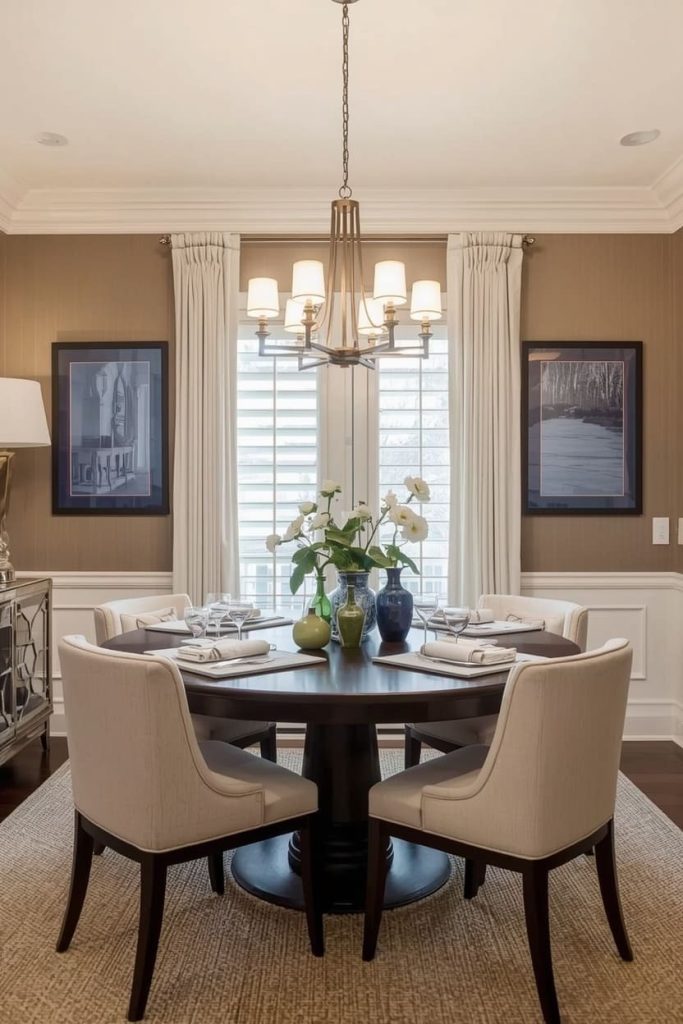
If there is one concept that separates a beautifully lit dining room from a flat, lifeless one, it is layering. Most people rely on a single overhead fixture and call it done — but that approach creates harsh shadows and leaves your room looking one-dimensional.
Layering means combining three types of light: ambient (your main overhead source), task (focused light for the table), and accent (decorative or mood-setting light around the room).
Here is how you can do it practically. Start with a chandelier or pendant over the table as your anchor light. Then add a floor lamp in the corner or a sideboard with table lamps to create secondary warmth. Finally, consider LED strip lighting under a buffet cabinet or inside a glass cabinet to add depth. You do not need to spend a fortune — even two inexpensive plug-in sconces on either side of a window or mirror can completely change the atmosphere.
This idea works for every dining room, but it is especially transformative in larger, open-concept spaces where a single overhead fixture simply cannot do the heavy lifting alone.
Go Bold With a Statement Chandelier Over Your Dining Table
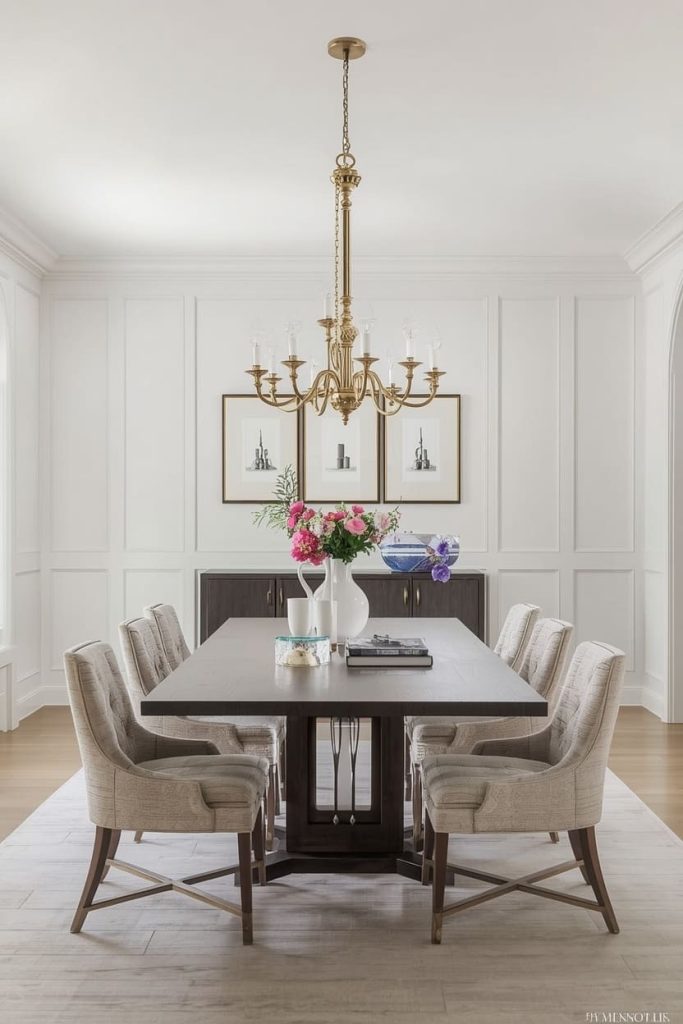
Your dining table is the centerpiece of the room, and the light above it should feel intentional and confident. A statement chandelier is one of the fastest ways to establish a design personality in your dining space.
Whether you love modern drama, rustic charm, or glamorous maximalism, there is a chandelier style that speaks your language.
When choosing yours, size matters more than most people realize. A fixture that is too small will look like an afterthought, and one that is too large will overwhelm the room.
A reliable rule: add the length and width of your dining room in feet, then convert that number to inches — that is roughly the ideal chandelier diameter. For a 12×14 foot room, you are looking at a 26-inch fixture.
Hang it so the bottom sits 30 to 36 inches above the tabletop. This idea works best for dining rooms with ceilings of at least 8 feet, and it is the single upgrade I recommend if you want maximum visual impact for a reasonable investment.
Use Dimmer Switches to Control the Mood at Every Meal
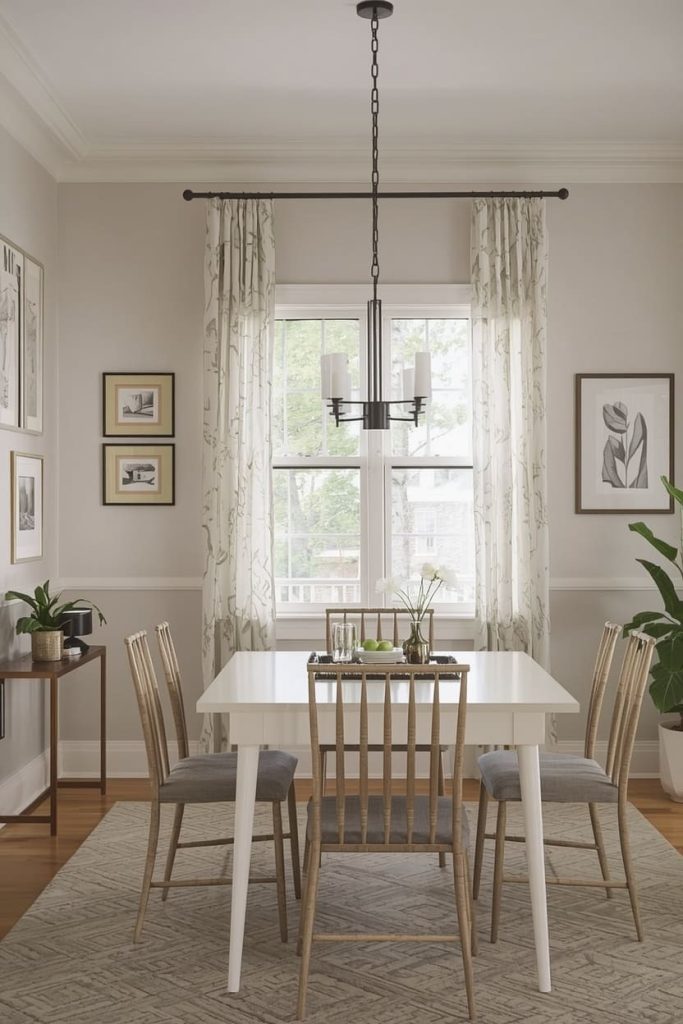
Installing a dimmer switch is hands down the highest-return upgrade you can make to any dining room.
For less than $20 and about 15 minutes of your time, you gain the ability to shift your dining room from bright and energetic during a family Sunday lunch to soft and intimate during a date night dinner. That kind of flexibility is something no single light fixture can give you on its own.
Most modern dimmer switches are compatible with LED and incandescent bulbs, but you do need to check compatibility before purchasing — look for dimmers labeled “LED compatible” and pair them with dimmable bulbs.
If you rent and cannot touch the wiring, smart bulbs like Philips Hue or LIFX work with an app to give you the same dimming control without rewiring anything. You can even set scenes and schedules. I made the switch to a smart dimmer two years ago, and I genuinely use it every single day.
This upgrade works for every dining room, full stop — there is no situation where dimming control is not an improvement.
Hang a Rattan or Woven Pendant for Effortless Texture
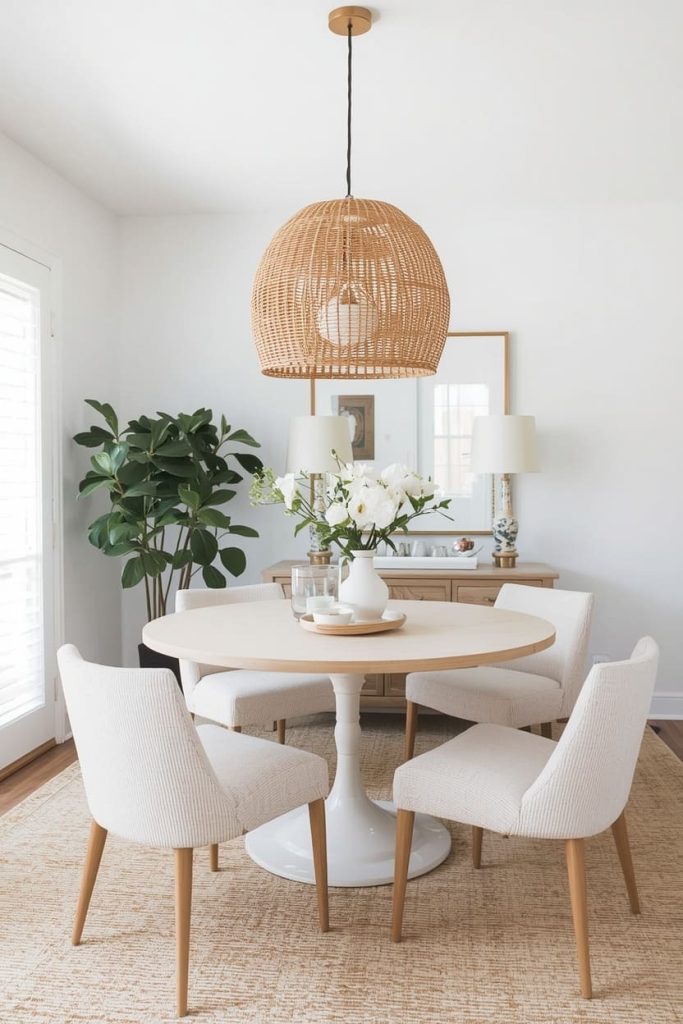
If your dining room feels a little sterile or too polished, a natural woven pendant light might be exactly what it needs.
Rattan, jute, bamboo, and seagrass shades have exploded in popularity because they do something that metal and glass fixtures simply cannot — they add organic texture and warmth to a room while casting the most beautiful, dappled light patterns across your walls and ceiling.
You do not have to commit to a full boho aesthetic to pull this off. Woven pendants work surprisingly well in minimalist, coastal, Japandi, and even transitional dining rooms — the key is choosing the right scale and keeping surrounding décor relatively clean.
A single large rattan dome pendant over a round dining table is one of the most effortlessly stylish combinations I have ever tried in my own home. These shades are typically lightweight and easy to install, making them especially great for renters or first-time homeowners who want a high-impact change without a big project.
Look for shades with a white or cream interior lining — it bounces more light downward and brightens the room beautifully.
Embrace Sconces to Add Ambiance Without Touching the Ceiling
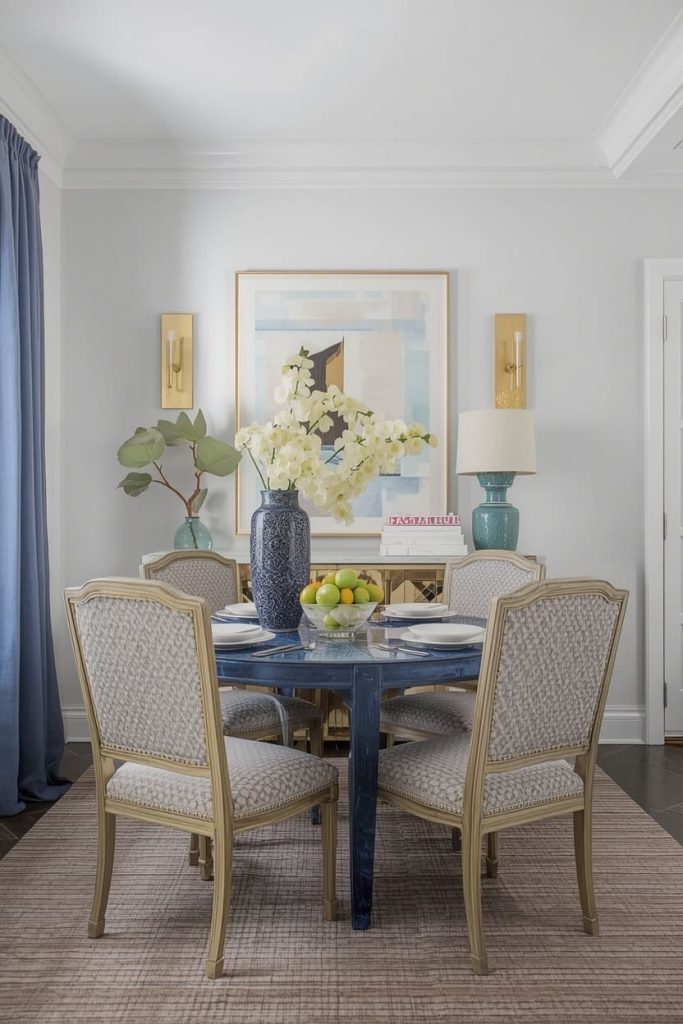
Wall sconces are one of the most underused tools in residential lighting design, and I think it is because people assume they are complicated to install.
The truth is, plug-in sconces require zero electrical work — you simply mount the bracket, plug them in, and tuck the cord behind the fixture or into a cord cover. They instantly add warmth, dimension, and a designer-level finish to any dining room.
Position sconces on either side of a piece of art, a mirror, or a window to create balanced, symmetrical warmth. In a dining room, they work beautifully on the wall adjacent to the table, where they cast a soft side-light that flatters faces and makes food look far more appetizing.
If you have a sideboard or buffet, consider sconces mounted above it to illuminate that surface stylishly. This idea is particularly powerful in smaller dining rooms where you want to add light and visual interest without adding more furniture.
Sconces also shine — pun intended — in dining rooms that feel dark or cave-like, because they push light into corners that overhead fixtures never reach.
Try Pendant Clusters for a Modern, Curated Look
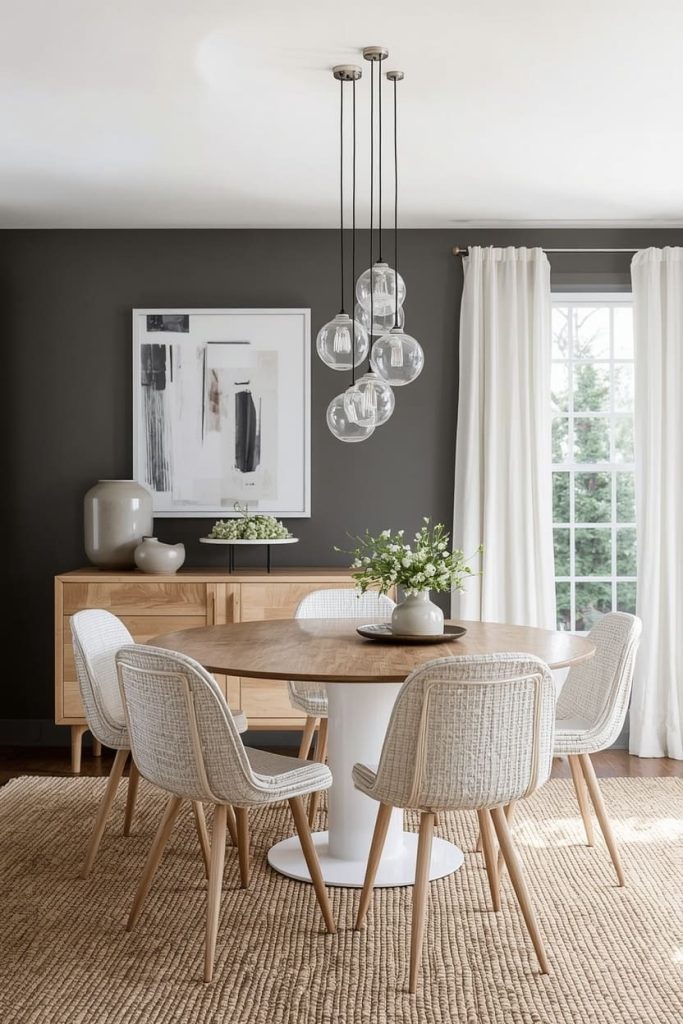
Instead of one pendant or one chandelier, consider grouping multiple pendants together at varying heights over your dining table.
This cluster approach has a wonderfully curated, editorial quality to it — it looks intentional and artful rather than default. It also gives you flexibility, since you can mix bulb types, glass shapes, or even different (but complementary) pendant styles for an eclectic effect.
When building a cluster, odd numbers tend to work best visually — three or five pendants feel more dynamic than two or four. Hang them at slightly different heights, with the lowest point sitting about 30 inches above the table surface.
For a long rectangular table, a linear row of three matching pendants is a classic, timeless choice. For a round table, try three pendants hung in a triangle formation. This works best in dining rooms with higher ceilings — 9 feet or above — and in spaces with a modern, eclectic, or industrial design direction.
If you love interior design content on Pinterest, there is a good chance a pendant cluster is already saved to one of your boards.
Add Under-Cabinet or Buffet Lighting for Subtle, Elevated Warmth
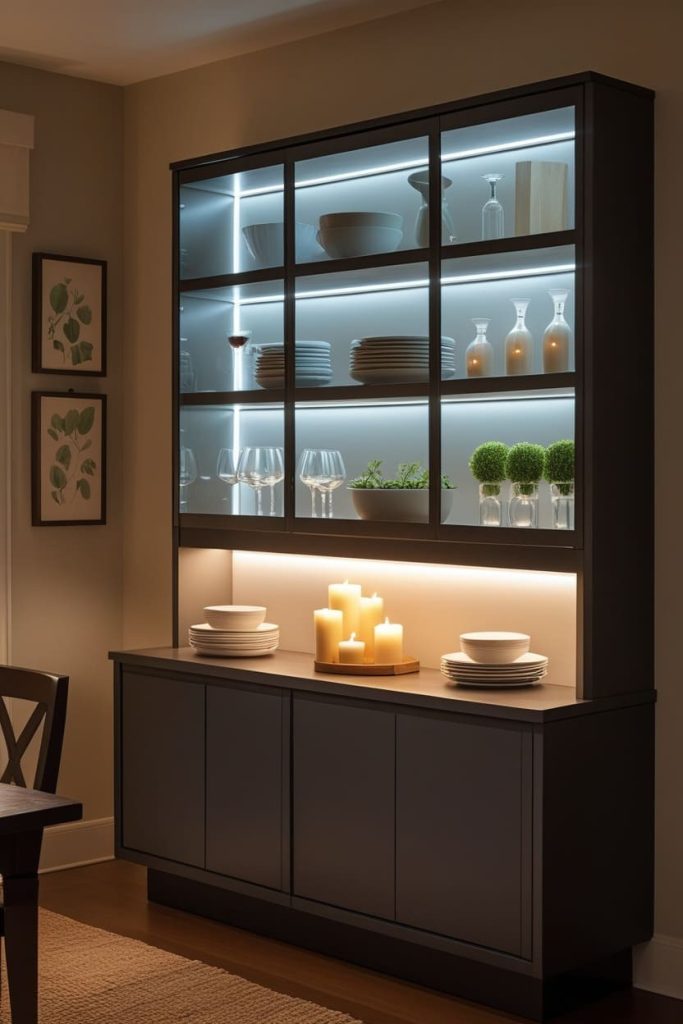
The finishing touch that most people never think to add is accent lighting at a lower level — specifically, lighting that illuminates your sideboard, buffet, or open shelving.
LED strip lights placed under floating shelves or inside a glass-front cabinet add a level of depth and refinement that genuinely makes a dining room look professionally designed.
This approach works especially well if you display dishes, glassware, candles, or plants on a sideboard. Lit from within or below, those objects become intentional décor rather than just stuff on a shelf.
You can find warm-white LED strip lights on Amazon for under $20, and most are adhesive-backed and USB or plug-in powered — no electrician required. Pair this with a dimmer-compatible overhead fixture and a few candles on the table, and your dining room will have the kind of layered, atmospheric glow that makes guests immediately relax.
This idea suits every style and budget, and it is one of the most satisfying weekend upgrades you can do in an afternoon.
Frequently Asked Questions About Dining Room Lighting
How low should a chandelier hang over a dining table?
The general rule is to hang your chandelier so the bottom of the fixture sits 30 to 36 inches above the tabletop. If your ceilings are higher than 8 feet, you can add 3 inches of height for every additional foot of ceiling height. The goal is for the light to illuminate the table and faces without blocking sightlines across the table.
What is the best color temperature for dining room lighting?
For dining rooms, you want bulbs in the 2700K to 3000K range, which produces a warm white light that flatters skin tones and makes food look appealing. Avoid anything above 4000K in a dining space — that range starts to feel clinical and cool, which works against the warm, inviting atmosphere you are trying to create.
Can I add a dimmer to any light fixture?
Not every bulb and dimmer combination is compatible. You need dimmable bulbs — check the packaging — and a dimmer switch rated for the bulb type you are using. Most modern LED-compatible dimmers work well with dimmable LED bulbs. If you rent or prefer not to rewire, smart bulbs with app-based dimming are a seamless alternative that requires no electrical changes.
How do I choose the right size pendant for my dining room?
For a single pendant over a dining table, the shade diameter should be roughly half the width of the table or slightly less. Over a 36-inch wide table, a pendant between 14 and 20 inches in diameter typically looks proportionate. If you are doing a cluster of smaller pendants, each individual shade can be smaller since the grouping creates the visual mass.
Do I need an electrician to change a light fixture?
Swapping a light fixture is a manageable DIY project for most people — it involves turning off the breaker, disconnecting the old fixture, and wiring the new one following the included instructions. That said, if you are adding a new fixture where there is no existing wiring, or if you are installing a ceiling fan with a light, hiring an electrician is the safer choice.
You have everything you need to make your dining room feel completely different — warmer, more intentional, and genuinely beautiful. Pick just one idea from this list and start there. You do not have to overhaul everything at once.
Change one bulb to a warmer tone, order that rattan pendant you have been eyeing, or spend $15 on a dimmer switch this weekend. Small lighting changes create big emotional shifts in a room, and your next dinner party will feel like proof.

Eric Alvarez is the head of content on LilDutchUncle.Com. He is an HVAC guy based in El Paso, Texas, United States. He obtained his Bachelor of Science degree from the University Of Texas at El Paso. Years of experience in the HVAC field have taught him many lessons, not the least of which is that the value of quality and knowledge far exceeds any promised initial savings. He has a good standing reputation for superior skills in heating, air conditioning, hot water tanks, and indoor air quality systems.