For the longest time, I cleaned my dining room and it still never looked clean.
The table collected mail, the chairs collected bags, and the corner near the door became a permanent landing zone for everything that didn’t have a home elsewhere.
I’d tidy it before guests arrived and within two days it looked exactly the same. The problem wasn’t that I was messy — the problem was that my dining room had zero real storage.
Nothing had a designated place, so everything just landed wherever it fit. The day I stopped trying to tidy around the problem and started actually solving it was the day my dining room finally felt like a room.
If your dining room is fighting you the same way, these seven ideas are what changed everything for me — and here are five products worth starting with.
Table of Contents
- Use a Sideboard to Make Everyday Clutter Completely Disappear
- Add a China Cabinet That Displays What's Beautiful and Hides What Isn't
- Mount Floating Shelves to Add Storage Without Touching the Floor
- Swap Your Dining Bench for One With Hidden Storage Inside
- Claim the Dead Corner Space With a Corner Cabinet That Actually Fits
- Organize the Inside of Your Existing Storage So It Actually Stays Tidy
- Create a Dining Room Command Center for the Household Overflow That Always Ends Up There
Top 5 Storage Pieces Worth Every Penny (Available on Amazon)
- VASAGLE Buffet Sideboard Cabinet with 4 Drawers — The combination of deep drawers and enclosed cabinet space makes this the single most versatile clutter-solving piece you can add to a dining room.
- Yaheetech Freestanding China Cabinet with Glass Doors — Glass-front upper doors let you display your nicest pieces while the solid lower cabinets keep everyday items completely out of sight.
- Homfa Storage Bench with Flip-Top Lid — The generous interior compartment swallows tablecloths, placemats, and extra linens while the padded top adds comfortable extra seating at the table.
- Wallniture Floating Wall Shelf Set with Brackets — Mounts cleanly above furniture or along an empty wall to give you display and storage without using a single inch of floor space.
- WLIVE Corner Cabinet with Adjustable Shelves — Designed specifically to fit into unused room corners, this piece turns the most wasted real estate in your dining room into functional enclosed storage.
The 7 Ideas
Use a Sideboard to Make Everyday Clutter Completely Disappear
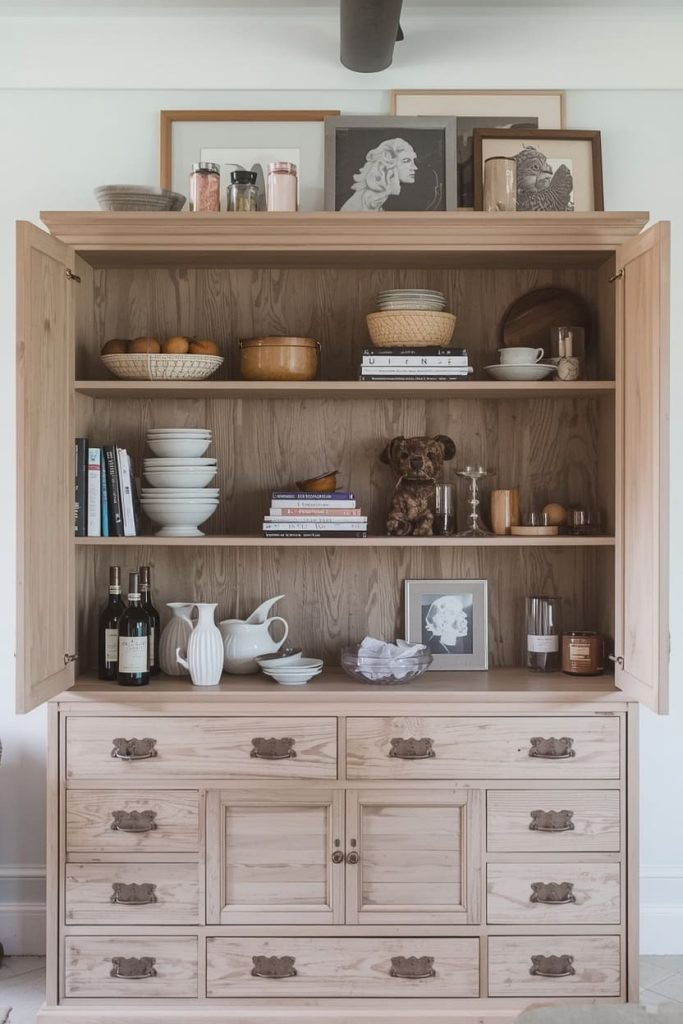
The frustration of a dining room that never stays tidy usually comes down to one thing: there’s nowhere for stuff to actually go. Things land on the table and the chairs because those are the only horizontal surfaces available. A sideboard fixes that problem at the root by giving clutter a proper home that closes.
When I added a sideboard to my dining room, I stopped thinking of it as furniture and started thinking of it as a clutter management system with good looks. The drawers handle the small things — batteries, birthday candles, a notepad, twist ties, all the tiny items that used to migrate to the table. The cabinets handle the bigger things — extra napkins, serving bowls, candles, and the random household overflow that used to stack up in the corner.
The surface on top gives you one intentional styling spot that actually stays styled because everything that used to land there now has a drawer to go into instead.
For you, the key is to assign every drawer and cabinet section a specific category before you start filling it. Vague storage becomes clutter storage. Specific storage stays organized. Spend twenty minutes deciding what lives where before you put anything inside, and your sideboard will stay functional instead of becoming another surface that collects chaos.
Add a China Cabinet That Displays What’s Beautiful and Hides What Isn’t
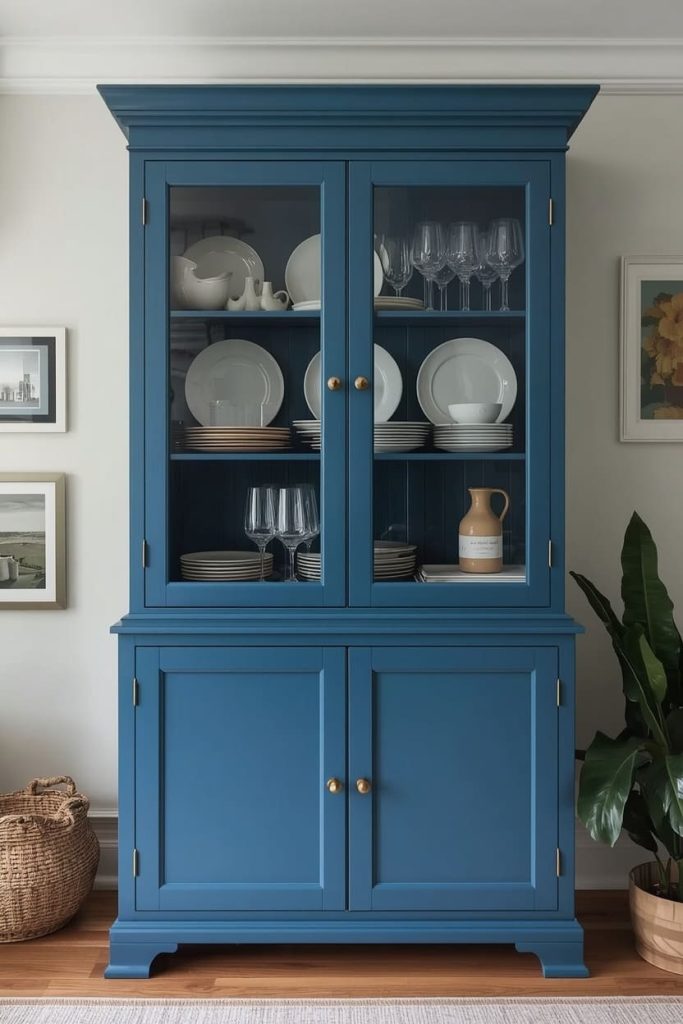
One of the smartest storage moves I ever made in a dining room was choosing a china cabinet with glass doors on top and solid doors on the bottom. That combination does something that pure closed storage can’t — it lets the room breathe while still solving the clutter problem, because not everything needs to be hidden.
Your nicest dishes, your wine glasses, your serving platters — these things are worth looking at. Putting them behind glass-front doors means they’re accessible, visible, and contributing to the overall look of the room rather than hidden away in a cabinet you forget exists. The solid lower doors are where the less photogenic stuff lives: extra storage containers, backup candles, the holiday tablecloth you only use twice a year.
What I discovered is that having a dedicated place for my nicest things also made me more intentional about what I kept. When storage is visible, you naturally edit it down to things worth displaying. That editing process alone made my dining room feel significantly less cluttered even before I’d organized anything else.
For you, a china cabinet works especially well if your dining room doubles as a place to store items you’re genuinely proud of — heirloom dishes, collected glassware, or ceramics you’ve picked up over the years. Give those things a proper stage and they stop feeling like clutter and start feeling like character.
Mount Floating Shelves to Add Storage Without Touching the Floor
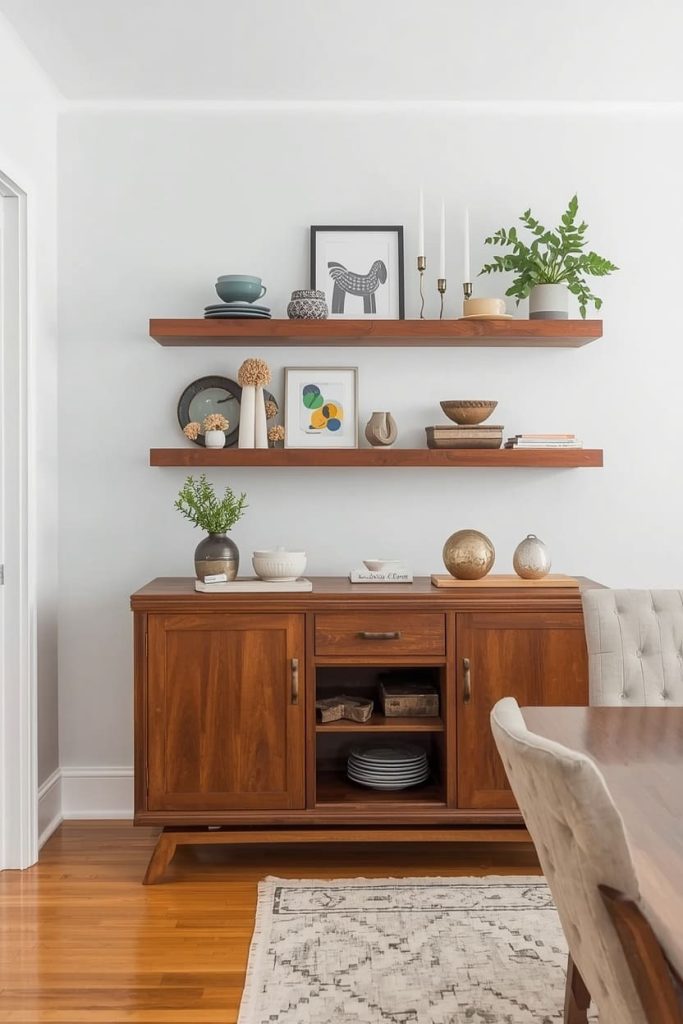
Floor space in a dining room is non-negotiable. You need clearance around the table, clearance behind the chairs, and clearance for people to move comfortably during a meal. Any storage solution that eats into that clearance creates a room that feels smaller and more cramped than it needs to.
Floating wall shelves solve the storage problem by going vertical instead of horizontal. When I installed two long floating shelves on the wall beside my dining room doorway, I gained significant storage without losing a single inch of floor space. That wall had been completely bare and completely wasted for years.
The key to making floating shelves work in a dining room — rather than just looking like random shelves stuck on a wall — is to treat them as a mix of practical and decorative. I keep serving bowls and a few cookbooks I actually use on the lower shelf, and candles, small plants, and a framed print on the upper shelf. That combination keeps the shelves looking intentional rather than like a dumping ground at eye level.
For you, floating shelves work especially well in dining rooms that don’t have enough wall space for a full sideboard or china cabinet. Even one well-placed shelf above a console table or along a short wall adds meaningful storage and a natural styling opportunity that makes the room feel more finished and considered.
Swap Your Dining Bench for One With Hidden Storage Inside
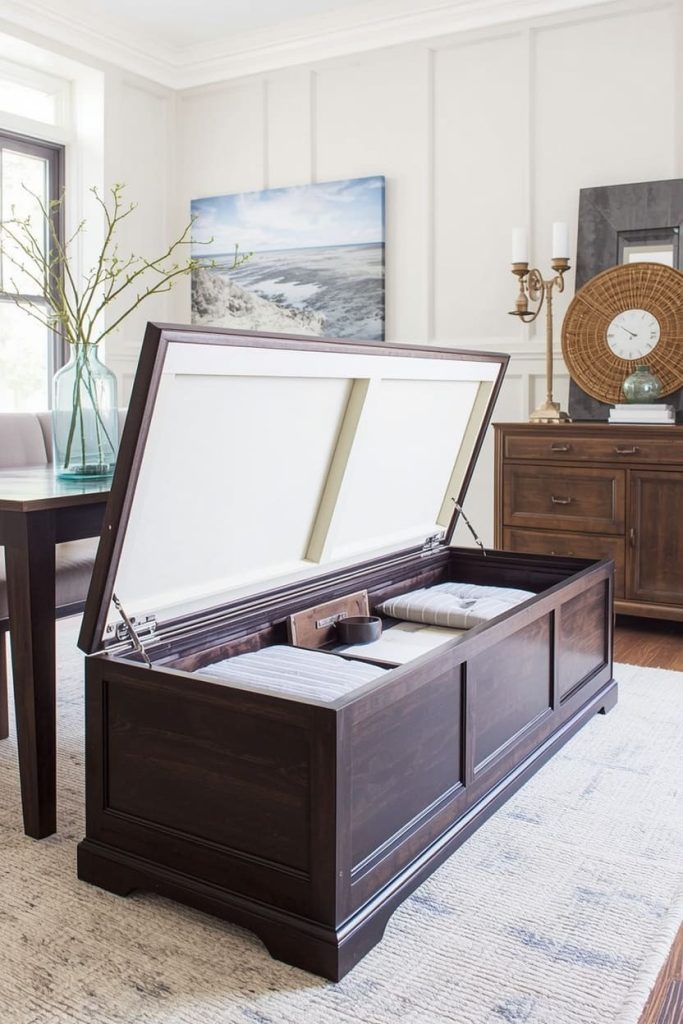
If you already have a bench at your dining table, there’s a good chance it’s doing exactly one job: providing a place to sit. That’s a missed opportunity, especially in a dining room where storage is at a premium, because a storage bench does that same job while quietly solving a second problem you probably have — nowhere to put your table linens.
I made this swap a couple of years ago and the impact was immediate. My tablecloths, cloth napkins, placemats, and table runners had been living in a drawer in another room because there was simply nowhere logical to keep them near the dining table. Moving them into the bench compartment meant they were exactly where I needed them, exactly when I needed them — which also meant I actually used them more often instead of defaulting to bare table because the linens were inconvenient to retrieve.
The flip-top style storage bench is the most practical version for a dining room because the entire interior is accessible in one motion and there are no drawers to pull out while you’re squeezed between the bench and the table.
For you, this swap works best when the bench runs along one side of the table against or near a wall. That position makes the flip-top easy to access without disrupting the rest of the table setup, and it keeps the bench feeling like furniture rather than a storage box that happens to have a cushion on top.
Claim the Dead Corner Space With a Corner Cabinet That Actually Fits
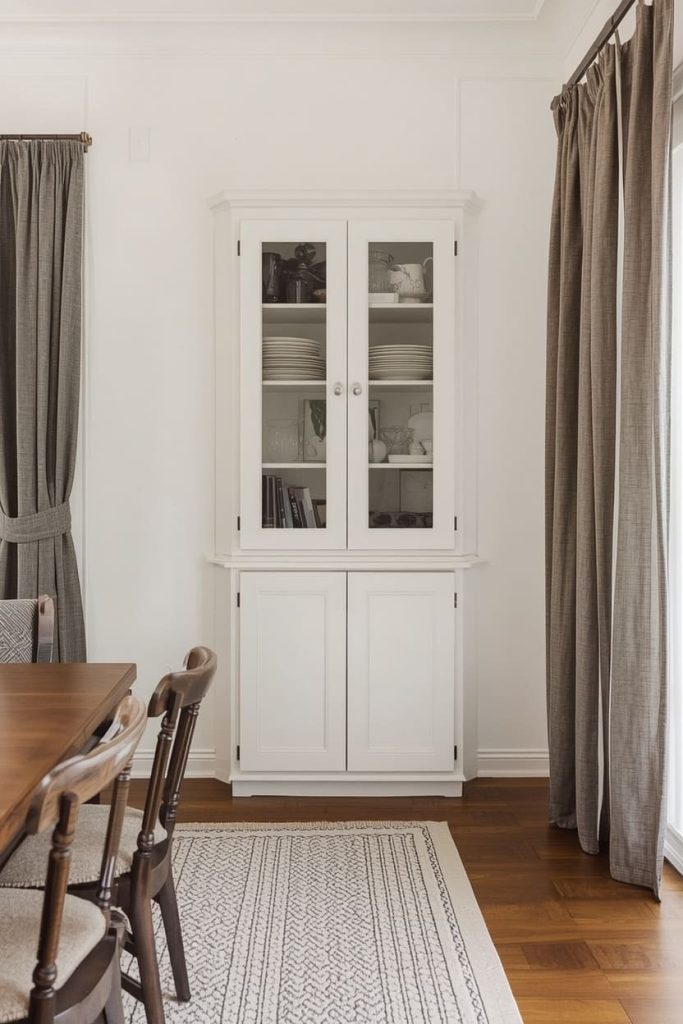
Every dining room has at least one corner that does absolutely nothing. In most rooms, that corner either stays empty or becomes the place where things get pushed when you’re tidying for guests — a chair that doesn’t quite belong, a stack of bags, a plant that’s slowly dying. That corner is wasted storage potential, and a corner cabinet is exactly the right fix.
I had a corner in my dining room that had bothered me for years. It was too small for another piece of full-size furniture but too visible to ignore. When I put a corner cabinet there, the room immediately felt more intentional and complete — like the layout had been planned rather than assembled piece by piece over time.
Corner cabinets are designed specifically to fit the geometry that standard rectangular furniture can’t use. They tuck cleanly into the angle of the wall and provide enclosed storage without projecting far into the room. Most extend only 20 to 24 inches from the corner point, which means they add significant cabinet space without meaningfully reducing your floor clearance.
For you, a corner cabinet is particularly valuable if your dining room is small or awkwardly shaped. It transforms a problem area of the room into an asset, and because it’s tucked away rather than centered on a wall, it adds storage without dominating the visual space the way a large sideboard would.
Organize the Inside of Your Existing Storage So It Actually Stays Tidy
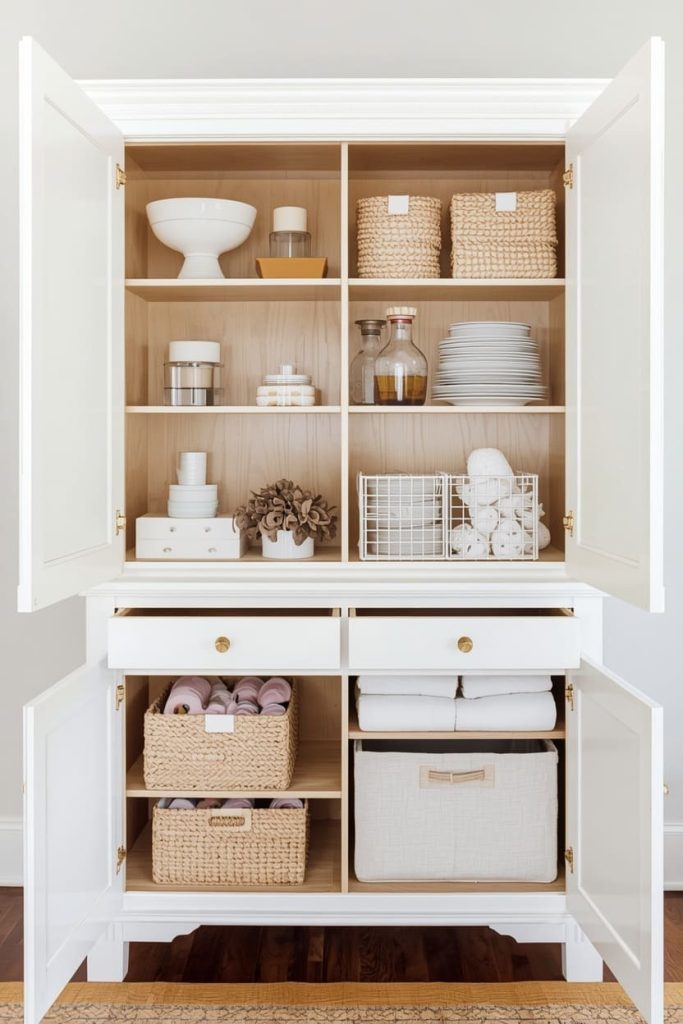
Here’s something I had to learn the hard way: buying storage furniture doesn’t automatically solve a clutter problem. If you put disorganized stuff into a cabinet without a system, you just have hidden disorganized stuff — and within weeks, opening that cabinet becomes its own source of low-grade stress.
The inside of your dining room storage furniture deserves just as much intentional organization as the outside styling. After I filled my sideboard cabinets for the first time, I spent an afternoon reorganizing the interior with a few simple tools: a small file organizer to store serving platters vertically, a shallow drawer divider for candles and small items, and a fabric bin for overflow linens.
Those three additions cost less than thirty dollars total and completely changed how the storage functioned. Instead of opening a cabinet and digging through a pile to find what I needed, everything was visible, accessible, and in a logical place.
For you, the fastest way to organize existing dining room storage is to empty it completely first, then categorize everything into groups before putting anything back. Returning items to a cabinet in organized categories — serving pieces together, linens together, candles together — takes ten minutes and creates a system that naturally maintains itself because everything has a home it wants to return to.
Create a Dining Room Command Center for the Household Overflow That Always Ends Up There
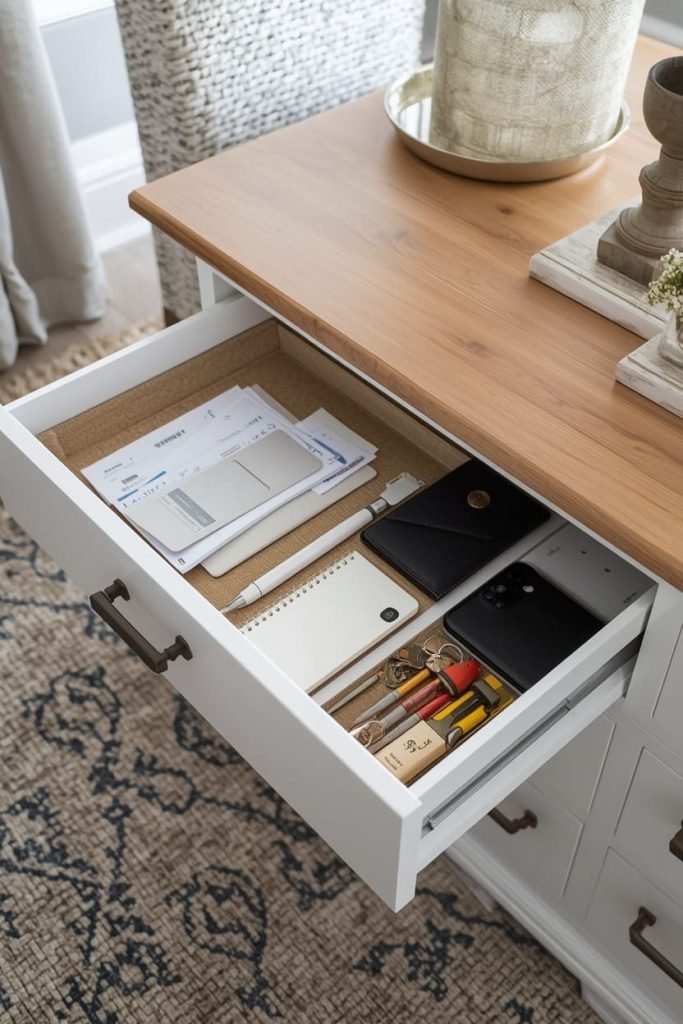
The dining room table becomes a dumping ground for household overflow because it’s centrally located, large, and flat. Mail, school papers, keys, chargers, random items that need to go somewhere else — they all find their way there because there’s no better option nearby. The solution isn’t to keep clearing the table. The solution is to give that overflow a designated home right there in the dining room so it stops migrating to the table.
I dedicated one drawer of my sideboard entirely to what I call the command center: a small tray for keys and wallets, a slim file folder for mail that needs attention, a notepad and pen, and a charging cable. Everything that used to land on my table now has a specific spot in that one drawer.
The rule I set for myself was simple: the drawer can hold what fits in it neatly, and nothing overflows onto the table. When the drawer starts getting full, it’s time to deal with what’s in it rather than let it expand onto the nearest surface.
For you, this idea works in any piece of dining room storage that has at least one dedicated drawer. The key is designating it specifically for household overflow rather than letting it become a general junk drawer — a small tray inside the drawer creates the visual boundary that keeps it organized rather than chaotic.
Frequently Asked Questions About Dining Room Storage
What is the best storage furniture for a small dining room?
In a small dining room, a slim sideboard or a storage bench gives you the most storage with the least floor impact. Wall-mounted floating shelves are even better if floor space is genuinely tight. The goal is to go vertical wherever possible and choose pieces that serve double duty — a storage bench that seats guests, or a slim console that stores and styles simultaneously.
How do I reduce clutter in my dining room?
The most effective approach is to give every category of item a specific designated home rather than general storage space. Clutter accumulates when things don’t have a place to return to. Assign a drawer for small items, a cabinet for linens, and a tray or bin for household overflow. Once everything has a home, tidying takes minutes rather than becoming an ongoing frustration.
Where should I store extra dishes and glassware in the dining room?
A china cabinet with glass-front doors is the most practical and attractive solution for dishes and glassware. It keeps them accessible, visible, and protected from dust. If a china cabinet isn’t an option, a sideboard with deep lower cabinets works well for stacking dishes, and floating shelves can handle everyday glassware if your dining room layout allows for it.
Can I add storage to a dining room without taking up too much floor space?
Absolutely. Wall-mounted floating shelves add significant storage without using any floor space at all. A corner cabinet claims unused corner geometry rather than open floor area. Even a slim sideboard under 14 inches deep adds substantial cabinet and drawer storage while projecting minimally into the room. Vertical thinking is the key to adding storage in any room where floor space is limited.

Jenny is a passionate writer specializing in home decor, design, and styling. With years of experience in transforming spaces, she shares expert tips on creating beautiful, functional homes. From interior design trends to DIY decor ideas, Jenny’s work helps homeowners craft spaces that reflect their unique style. Whether it’s a cozy living room, a modern kitchen, or a serene bedroom, her articles offer practical advice and inspiration to elevate any home.