I scrolled past the same video three times before I actually believed it.
Someone was spraying foam dish soap onto a pair of grimy white sneakers, scrubbing for maybe twenty seconds, and rinsing off what looked like a brand new shoe.
My first thought was that it had to be edited, or the shoes weren’t that dirty to begin with. Dawn Powerwash is dish soap. I use it on baking sheets, not sneakers.
But I had a bottle under my sink and a pair of yellowed, grungy running shoes I’d basically given up on, so I figured I had nothing to lose by trying it myself.
It worked shockingly well, and once I understood why, it stopped feeling like a gimmick and started feeling like something I’d genuinely recommend.
Why Dawn Powerwash Actually Works on Shoes
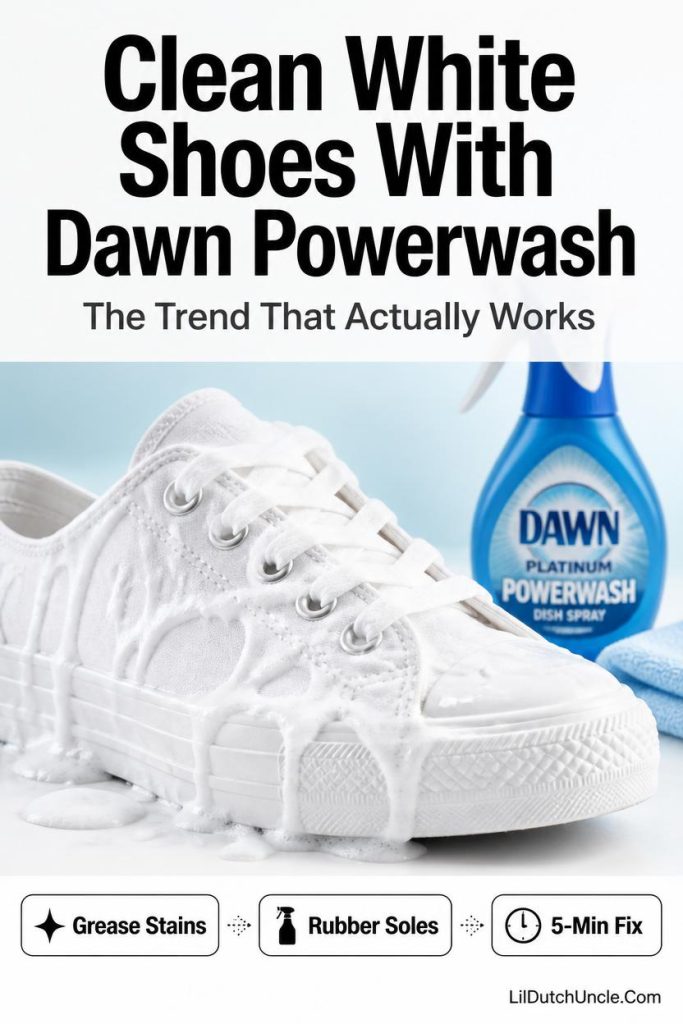
Dawn Powerwash isn’t just Dawn in a different bottle — it’s specifically formulated as a foaming spray, and that foam matters. Regular liquid dish soap needs to be mixed with water and worked into a lather yourself.
Powerwash comes out already foaming, which means the surfactants (the ingredients that cut through grease and oil) are immediately active and spread evenly across the surface instead of sitting in one concentrated blob.
Those surfactants are the real workhorse here.
They’re designed to break down grease and grime, which is exactly what builds up on shoe soles, mesh panels, and rubber — dirt, oils from your skin and the ground, general everyday grime.
It’s the same chemistry that gets baked-on food off a pan, just redirected at your sneakers.
What This Method Is Best For
This is where Dawn Powerwash really earns the hype: foam midsoles, mesh uppers, and rubber soles. If you’ve got a pair with a chunky white foam sole that’s gone gray, or mesh panels that are holding onto ground-in dirt, this is genuinely one of the most effective and low-effort methods out there.
It’s especially popular for cleaning specific sneaker models with foam midsoles — Nike’s foam-heavy styles are a common example people use this hack on, and if that’s the shoe you’re working with, How to Clean White Nike Shoes has some brand-specific tips worth pairing with this method.
Where I’d pump the brakes: suede, leather, and delicate fabrics. The same surfactants that cut grease so effectively can be too harsh or drying for these materials, and leather especially can end up looking dull or damaged rather than clean.
If your shoes are canvas, it generally handles that material well, but How to Clean White Canvas Shoes covers a few extra considerations worth knowing before you start.
What You’ll Need
- Dawn Powerwash (any scent)
- A soft-bristle brush or old toothbrush
- Water
- A clean cloth
That’s genuinely it. No mixing, no ratios, no prep — that’s a big part of why this hack took off in the first place.
Step-by-Step Method: How to Clean White Shoes with Dawn Powerwash
1. Remove laces if needed.
Not required, but it gives you better access to the tongue and eyelets if those areas are dirty too.
2. Spray the foam directly onto the shoe.
Aim it at soles, mesh panels, and any visibly dirty areas. Because it comes out foaming already, you don’t need to work it into a lather yourself — just spray and go.
3. Let it sit for 1–2 minutes.
Give the foam a short window to actually break down the grime before you start scrubbing. This isn’t a long wait — just enough time for the surfactants to get to work.
4. Scrub with your brush.
Use small, firm circular motions, focusing on the soles and any stained or discolored spots. You’ll likely see the foam turn a little gray or dingy as it lifts dirt — that’s a good sign, not a bad one.
5. Rinse thoroughly.
Rinse with water until all the foam and lifted grime is gone. Don’t skip this — leftover residue can leave a filmy look once dry.
6. Wipe down and air dry.
Pat dry with a clean cloth and let your shoes air dry the rest of the way, away from direct heat or sun.
Tips for Better Results
Test a small area first, especially on colored trim or logos. Most white materials handle this fine, but any painted or colored accents are worth checking before you go all in.
Don’t oversaturate fabric uppers. A light, even spray works better than soaking the shoe — too much moisture on fabric can slow drying and affect shape over time.
Give it that short sit time. Scrubbing immediately after spraying skips the part where the foam actually breaks down grime on its own, so you end up doing more manual work than necessary.
Keep the bottle around for touch-ups. Because there’s no mixing involved, this is an easy one to reach for between deeper cleans, not just for one big restoration project.
When to Try Something Else
If your shoes are leather or suede, this isn’t the method for them — the same qualities that make Dawn Powerwash so effective on grease and grime can be too harsh for those materials.
And if you’re dealing with old, deep-set yellowing rather than everyday dirt, this hack will help with surface grime, but it’s not really built to reverse serious discoloration.
For a broader look at methods suited to different materials and stain types, How to Clean White Shoes covers the full range of approaches, so you can match the method to exactly what your shoes need.
Back to That Skeptical Scroll
I still find it a little funny that the thing sitting under my sink for washing dishes ended up being one of the most effective things I’ve used on sneakers. I get why it looks too easy to be real when you first see it — I thought the same thing. But it’s genuinely one of those rare hacks that’s exactly as good as the internet said it was.

Emma Vanderlyn is a home enthusiast with a passion for all things natural and eco-friendly. With years of experience experimenting with DIY solutions, she’s dedicated to creating safe, effective, and budget-friendly cleaning recipes that are kind to both your home and the planet. Emma believes that a clean home shouldn’t come at the cost of harsh chemicals, and her easy-to-follow guides make natural cleaning accessible to everyone.
When she’s not whipping up a new cleaner in her kitchen, Emma can be found researching the latest in green living or transforming her space with mindful, stylish decor ideas. She’s here to share her love of natural living and help you create a home that shines—naturally.