I found out my sneakers had a mildew problem the hard way — I opened my closet after a rainy week and got hit with this musty, damp-basement smell before I even saw the shoes.
They’d gotten soaked on a walk, and I’d made the mistake of tossing them straight into the closet instead of letting them dry out properly first. By the time I noticed, the smell had settled in deep.
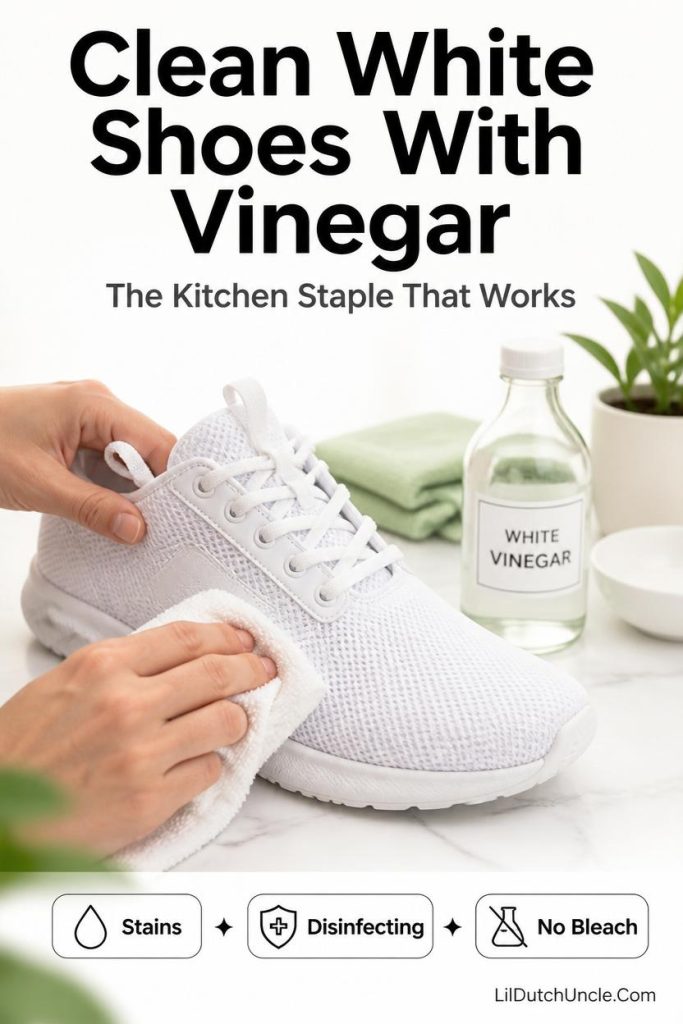
I didn’t want to reach for bleach on shoes that weren’t really stained, just smelly and a little gross. Vinegar felt like the obvious move, and it turned out to be exactly the right one.
Why Vinegar Works
Vinegar is acidic, and that acidity is genuinely good at breaking down the bacteria and mold spores that cause musty odors in the first place — it’s not just masking the smell, it’s dealing with what’s actually causing it.
It also has natural disinfecting properties, which is why it’s such a common go-to for anyone trying to avoid harsher chemical cleaners. And since it’s non-toxic, it’s an easy choice if you’ve got kids or pets around your shoes.
What This Method Is Best For
Vinegar shines for odor, mustiness, mild mildew, and general disinfecting. It’ll also help with light everyday dirt and mild discoloration.
What it’s not great at: lifting deep, set-in stains or fixing shoes that have gone properly yellow with age. Vinegar is a maintenance and freshening tool first, a stain remover second.
If odor or mustiness is your main issue, this is genuinely one of the best methods you can use. If deep staining is your issue, treat vinegar as a helpful assist, not the whole solution.
Wait — Won’t My Shoes Smell Like Vinegar?
I get why this is the first question people ask. The answer is no, not once they’re dry.
Vinegar’s smell is strong while it’s wet, but it’s also highly volatile, meaning it evaporates completely as the shoes air dry.
Once your shoes are fully dry, there’s no vinegar smell left behind — just the absence of whatever odor you were dealing with before. Good airflow while drying speeds this up even more.
What You’ll Need
- White distilled vinegar
- Water
- A spray bottle
- A clean cloth
- A soft-bristle brush or old toothbrush
Dilution ratio: Mix equal parts white vinegar and water — a 1:1 ratio — in your spray bottle. For lighter, more routine odor maintenance, you can go slightly weaker at 1 part vinegar to 2 parts water.
Step-by-Step Method: How To Clean White Shoes With Vinegar
For Odor and Mustiness (Spray Method)
1. Mix your solution.
Combine your vinegar and water at a 1:1 ratio in a spray bottle and shake well.
2. Spray the inside and outside of the shoes.
Lightly mist the interior lining, insoles, and any exterior areas holding onto smell. You want it damp, not soaked.
3. Let it sit for 15–20 minutes.
This gives the vinegar time to actually break down the bacteria causing the odor, rather than just sitting on the surface.
4. Wipe down and air dry.
Wipe the shoes with a clean cloth, then set them somewhere with good airflow to dry fully. Avoid direct sun, which can affect certain materials over time.
For Light Stains (Scrub Method)
1. Mix the same 1:1 solution.
The same ratio works for stains as it does for odor.
2. Dampen your brush with the solution.
Dip your brush into the mixture rather than pouring it directly onto the shoe.
3. Scrub the stained area gently.
Work in small circular motions over the stain for 30 seconds to a minute.
4. Wipe away and check your progress.
Wipe with a clean cloth. If the stain is light, you’ll likely see real improvement. If it’s deeper, this is a good moment to reset expectations — vinegar alone may only partially lift it.
5. Air dry fully before wearing.
Tips for Better Results
Prioritize airflow while drying. This is what clears the vinegar smell fastest and also helps prevent the shoes from staying damp long enough to develop odor again.
Don’t oversoak fabric or leather. A light mist or damp cloth is enough — soaking increases drying time and, on certain materials, can cause its own problems.
Be cautious with leather specifically. Vinegar’s acidity can dry out leather over time if used too often or too strong. If your shoes are leather, How to Clean White Leather Tennis Shoes walks through a gentler approach that’s better suited to that material.
Combine with baking soda for extra odor control. Sprinkling baking soda inside your shoes after the vinegar treatment can help absorb any remaining moisture and odor. A few more simple combination methods like this are covered in White Shoe Cleaning Hacks, if you want additional options to keep in rotation.
When to Try Something Else
If you’re dealing with genuinely deep, old, or set-in stains — not odor, not mild dirt, but real discoloration — vinegar isn’t going to be your strongest option. For that, it’s worth looking at the fuller range of methods in How to Clean White Shoes, which covers stronger approaches for tougher, more stubborn stains.
Back to That Closet
I still keep a vinegar-water spray bottle around specifically for shoes now, mostly for the after-the-rain moments or the end of a long gym week when something starts smelling a little off before I’ve even noticed a stain.
It’s simple, it’s already in most kitchens, and it deals with the actual problem instead of just covering it up — which, if you’ve ever opened a closet and been hit with that same musty smell I was, is really all you’re asking it to do.

Emma Vanderlyn is a home enthusiast with a passion for all things natural and eco-friendly. With years of experience experimenting with DIY solutions, she’s dedicated to creating safe, effective, and budget-friendly cleaning recipes that are kind to both your home and the planet. Emma believes that a clean home shouldn’t come at the cost of harsh chemicals, and her easy-to-follow guides make natural cleaning accessible to everyone.
When she’s not whipping up a new cleaner in her kitchen, Emma can be found researching the latest in green living or transforming her space with mindful, stylish decor ideas. She’s here to share her love of natural living and help you create a home that shines—naturally.