I first tried this because I was too lazy to walk to the store. I had a pair of white sneakers with a scuffed toe from kicking a curb, no bleach in the house, and a half-used tube of toothpaste sitting right there on the sink.
I’d seen the “clean your shoes with toothpaste” hack floating around for years and always assumed it was one of those tips that sounds smart but doesn’t actually do anything. I figured I had nothing to lose.
Ten minutes later, the scuff was gone. Not faded — gone. I remember being genuinely annoyed that something this simple had been sitting in my bathroom the whole time.
So if you’re skeptical too, that’s fair. Let me explain why it actually works before we get into how.
Does Toothpaste Actually Work? Here’s Why
Toothpaste isn’t magic — it’s just a convenient combination of two things that happen to be great for cleaning shoes: mild abrasives (the same stuff that scrubs plaque off your teeth) and whitening agents like baking soda or peroxide, which a lot of toothpaste brands already include.
The abrasive lifts surface dirt and scuffs. The whitening agents help brighten discoloration on contact. Put them together and you’ve basically got a mini stain-remover you didn’t know you owned.
One important detail: use white, paste toothpaste — not gel, and not anything with colored stripes or beads. Gel doesn’t have the same abrasive texture, and colored gels can actually stain light-colored materials instead of cleaning them. Plain white paste, the cheaper the better, honestly.
What This Method Is Actually Good For
I want to be upfront about this, because I don’t want you scrubbing away at your shoes for twenty minutes expecting a miracle.
Toothpaste is great for:
- Light scuffs, especially on rubber soles and toe caps
- Small surface stains
- Everyday grime that hasn’t set in deep
- Touch-ups between deeper cleans
It’s not going to fully whiten shoes that have gone yellow with age, and it won’t do much for deep, set-in stains or heavily soiled fabric. If that’s what you’re dealing with, this method will only get you partway there — and I’ll point you toward better options for that further down.
If it’s specifically your soles that are dingy, toothpaste tends to work especially well there, and I go deeper into sole-specific techniques in How to Clean White Shoe Soles.
What You’ll Need
- White toothpaste (paste, not gel)
- An old toothbrush
- A small cup of water
- A clean, damp cloth
That’s genuinely it. No gloves, no ventilation concerns, nothing you have to buy.
Step-by-Step: How to Clean White Shoes with Toothpaste
1. Wipe off loose dirt first.
Use your damp cloth to remove any loose dirt or dust before you start. Toothpaste works on stains, not mud — you want a relatively clean surface to begin with.
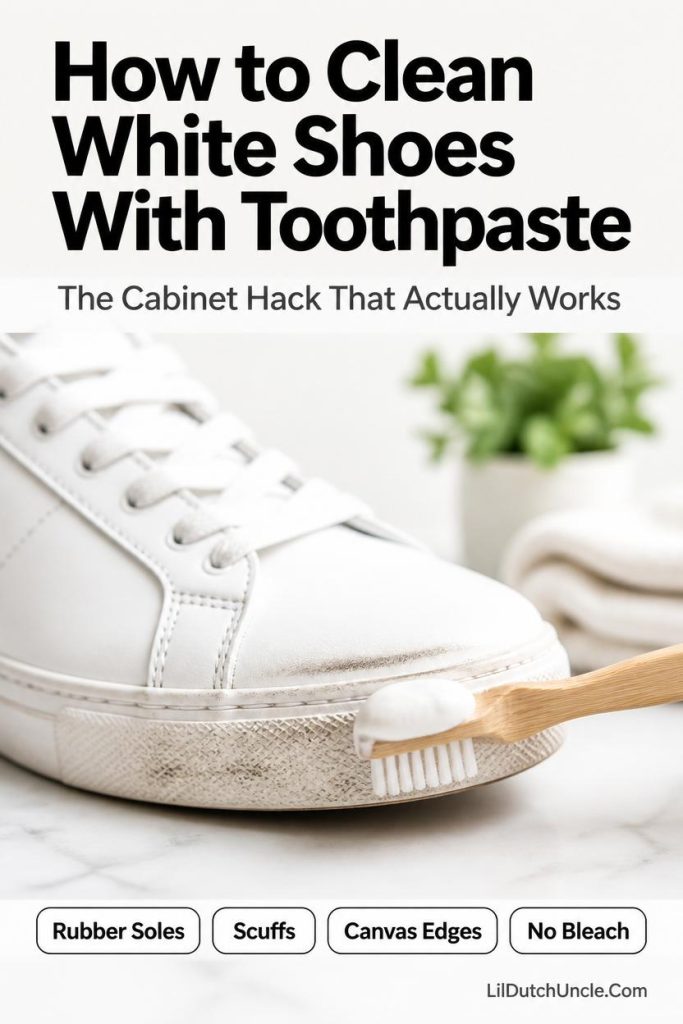
2. Apply a small amount of toothpaste directly to the scuff or stain.
You don’t need much — about a pea-sized amount per scuff is plenty.
3. Scrub in small circular motions.
Use your toothbrush and work the toothpaste into the area for about 30 seconds to a minute. You’ll usually start to see the scuff lifting as you go.
4. Let it sit for a few minutes.
This is the step people skip, and it makes a real difference. Give the toothpaste 3 to 5 minutes to actually work on the stain instead of just scrubbing it around.
5. Wipe away with your damp cloth.
Wipe the area clean, checking as you go. If the stain is still visible, you can repeat the process once more on that spot.
6. Let the shoes air dry.
No need for direct sun or a hair dryer — just let them dry naturally before wearing them again.
Tips for Better Results
Focus on rubber and hard surfaces first. Toothpaste performs best on rubber soles, toe caps, and hard synthetic materials. It’s gentler and less predictable on soft canvas or fabric, so test a small area first if you’re working on fabric uppers.
Don’t oversaturate. More toothpaste doesn’t mean more cleaning power. A thin layer worked in well beats a thick glob sitting on top.
Skip it on suede or leather. The abrasive texture that makes this method work on rubber is exactly what can damage suede or dull leather. If your shoes are leather or suede, this isn’t the method for them.
Pair it with other light hacks if needed. Toothpaste works well alongside a few other everyday home remedies, especially for shoes with multiple problem spots. I rounded up several of these in White Shoe Cleaning Hacks, if you want a few more tricks to keep in your back pocket.
When to Try Something Else
If you’ve done this once or twice and the stain is still stubbornly there, that’s your sign the toothpaste hack has reached its limit — not that you did something wrong. Deep discoloration, fully yellowed fabric, or ground-in dirt usually needs a stronger method.
For that, it’s worth looking at a full breakdown of options in How to Clean White Shoes, which covers everything from mild solutions like this one to stronger methods for tougher stains. Toothpaste is a great first move, but it’s not the only tool worth having.
Back to That Scuffed Toe
I still keep a spare tube of white toothpaste in my shoe-cleaning kit now, right next to the actual cleaning products, because it turned out to be more useful than I expected from something meant for teeth.
It’s not going to fix every problem your shoes have, but for the small stuff — the scuffs, the light marks, the little things that bug you every time you look down — it works exactly as well as the internet said it would.
Sometimes the cheap, slightly ridiculous-sounding hack is just the right tool for the job.

Emma Vanderlyn is a home enthusiast with a passion for all things natural and eco-friendly. With years of experience experimenting with DIY solutions, she’s dedicated to creating safe, effective, and budget-friendly cleaning recipes that are kind to both your home and the planet. Emma believes that a clean home shouldn’t come at the cost of harsh chemicals, and her easy-to-follow guides make natural cleaning accessible to everyone.
When she’s not whipping up a new cleaner in her kitchen, Emma can be found researching the latest in green living or transforming her space with mindful, stylish decor ideas. She’s here to share her love of natural living and help you create a home that shines—naturally.