You have a good eye for design — anyone who looks at your Pinterest boards can see that. But somewhere between the inspiration and your actual living space, something isn’t quite translating.
The dining table feels like it’s crowding the sofa. The two zones look like they ended up together by accident rather than by design. Nothing feels defined, and the whole room just feels a little off.
Sound familiar? You are not alone — and more importantly, you are not stuck.
These 9 dining and living room combo ideas will show you exactly how to zone, style, and transform your shared space into something that looks completely intentional, beautifully balanced, and uniquely yours.
Table of Contents
Products You’ll Need Before You Start
- Safavieh Madison Collection Large Area Rug in Cream and Grey — A generously sized area rug that anchors and defines your living zone instantly, creating a clear visual boundary between the two spaces without a single wall or divider.
- VASAGLE Extendable Dining Table with Solid Wood Legs — A smart, space-saving dining table that seats two comfortably every day and extends to seat six when you need it, making it the perfect solution for a combo space.
- Homifa Stackable Dining Chairs Set of 4 — Lightweight, stackable chairs that tuck away effortlessly when you need more living room floor space, solving the number one layout problem in combined spaces.
- Nathan James Theo Open Bookshelf Room Divider — A slim, open-backed bookshelf that creates a subtle, stylish visual boundary between your dining and living zones while adding storage and display space at the same time.
- Haitral Pendant Lights Set of 2 with Adjustable Cord — A pair of matching pendant lights hung directly above your dining table that define the dining zone with light and add an immediate sense of intention and polish to the space.
1. The Rug Zoning Trick
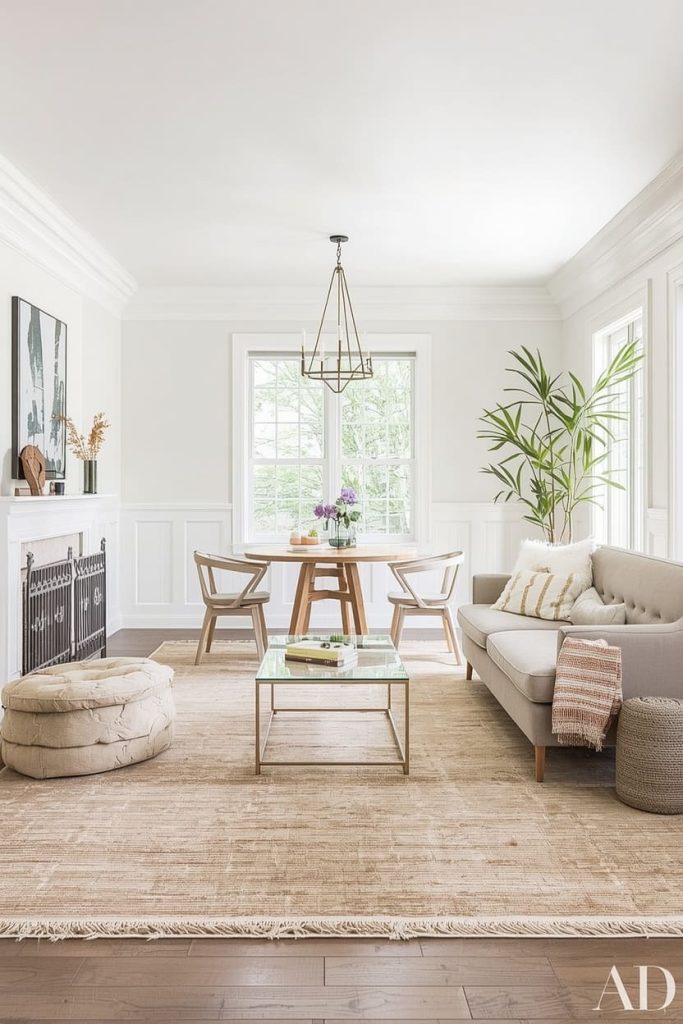
If you only take one idea from this entire article, let it be this one — because a well-chosen area rug is the single most powerful and affordable zoning tool available to you in a combined space.
The principle is simple: your living zone gets a large rug that sits under or in front of your sofa, and your dining zone remains on bare floor or a smaller, contrasting rug.
The moment you place that rug, the room divides itself into two distinct areas without a single wall, curtain, or piece of furniture acting as a barrier. Choose a rug that is genuinely large enough — too small and the effect disappears entirely.
A rug in a warm neutral with a subtle texture or pattern works in virtually every combined space and every style, from Scandinavian minimalist to boho chic to contemporary urban.
Pinterest-worthy tip: Photograph the full room from a slightly elevated angle — a standing position looking slightly down — to capture both the rug-defined living zone and the dining area in a single frame that clearly shows the intentional zoning.
2. The Back-to-Back Layout
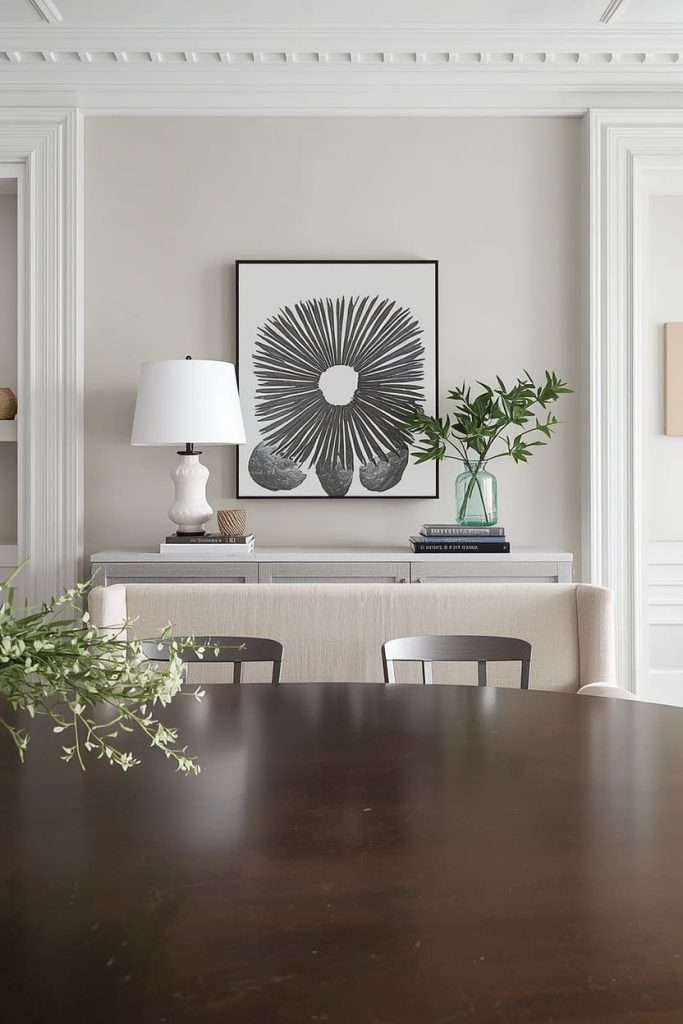
One of the most underused layout strategies for combined spaces is placing your sofa with its back facing the dining table rather than facing away from it entirely or awkwardly sharing the same sightline.
This back-to-back arrangement creates an instant, furniture-defined boundary between the two zones that is both practical and visually clean. The back of the sofa acts as a low, soft room divider — separating the spaces clearly without blocking light or making the room feel smaller.
Choose a sofa with a clean, attractive back profile since it will be visible from the dining table — a simple linen or boucle sofa in a neutral tone works beautifully.
Add a narrow console table behind the sofa if there is enough room — it fills the gap elegantly and gives you a surface for a lamp, a plant, or a small decorative object.
Pinterest-worthy tip: Style the console table behind the sofa with a small lamp, a trailing plant, and one decorative object, then photograph the dining table in the foreground with the sofa and console as the backdrop — the layered depth creates a beautifully composed image.
3. The Pendant Light Zone Marker
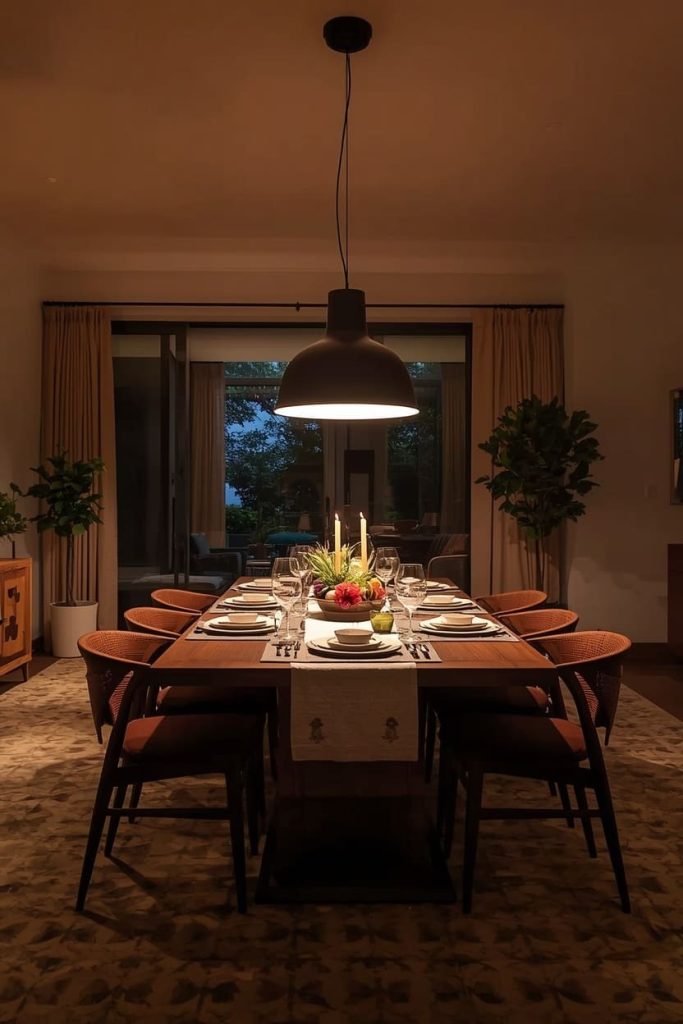
Lighting is one of the most overlooked zoning tools in a combined space — and it is one of the most effective. Hang a statement pendant light or a pair of matching pendants directly above your dining table, positioned lower than you might instinctively think — ideally around 70 to 80 centimetres above the table surface.
This creates a pool of warm, defined light that immediately signals to anyone who enters the room that this is a distinct, intentional dining zone. It draws the eye, anchors the space, and adds an atmosphere that no ceiling light can replicate. T
he living zone, lit by floor lamps and table lamps at a softer level, feels completely separate in both function and mood. The contrast between the two lighting approaches does more zoning work than almost any piece of furniture.
Pinterest-worthy tip: Photograph your dining table setup at dusk with only the pendant lights and a candle or two switched on — the warm glow against the surrounding room creates an atmospheric, deeply save-worthy image.
4. The Open Shelf Divider
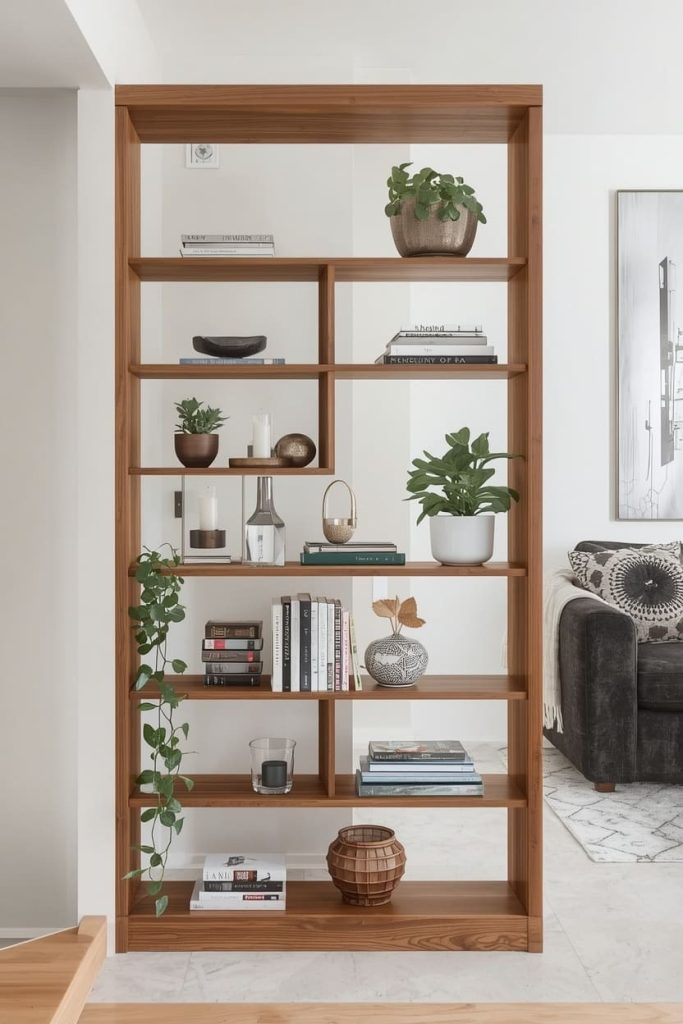
A slim, open-backed bookshelf or shelving unit placed perpendicular to the wall — or positioned between the dining and living zones — is one of the cleverest ways to create a defined boundary in a combined space without sacrificing light, airflow, or the sense of openness that makes smaller homes feel livable.
The key is choosing a shelf that is open on both sides, so it never feels like a wall — it is more of a suggestion of a boundary than an actual one. Style it with a mix of books, small plants, candles, and decorative objects that complement both zones.
Keep it relatively light and airy — no more than two thirds full — so it always feels curated rather than cluttered. A shelf in a warm wood tone works with almost every interior style and adds genuine warmth to the dividing space.
Pinterest-worthy tip: Style the shelf with an intentional mix of objects — stacked books, a trailing potted plant, a small candle, and one sculptural piece — and photograph it from the side to capture the depth of both zones behind it.
5. The Color Zone Strategy
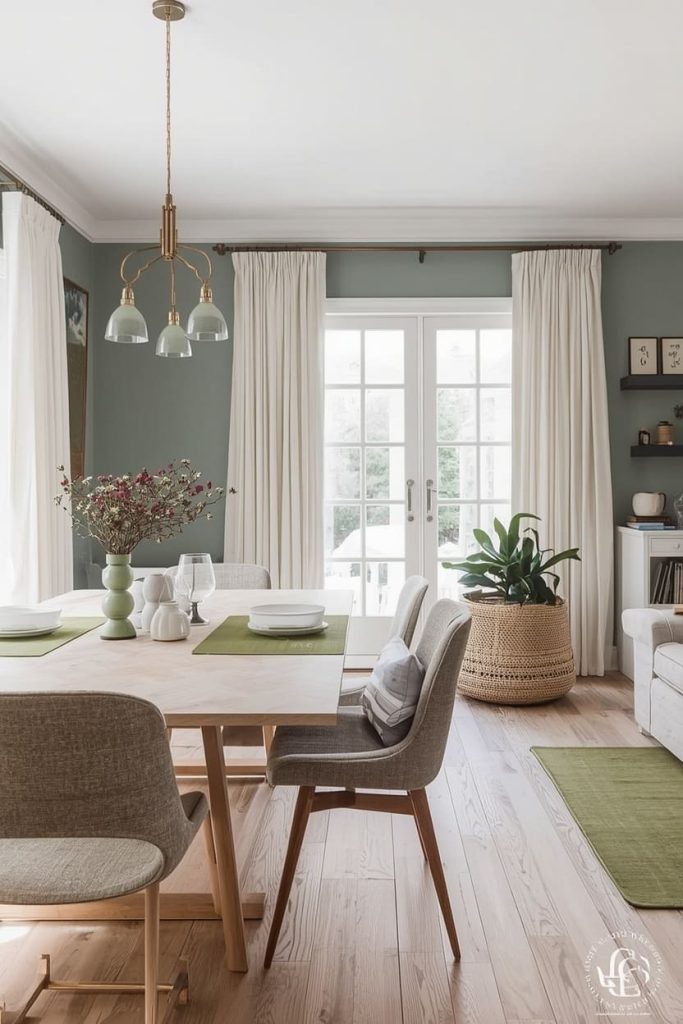
You don’t need different wall colors to create distinct zones in a combined space — but using color strategically in your furniture and accessories is one of the most sophisticated and effective ways to signal where one area ends and another begins.
Choose a cohesive overall color palette for the room — say, warm neutrals with sage green and natural wood tones — and then use slightly different expressions of that palette in each zone.
Your living zone might lean into the sage green through a sofa throw and cushions, while your dining zone expresses the same palette through sage green placemats and a ceramic vase centerpiece.
The two zones feel visually connected but distinctly different — which is exactly the balance a well-designed combined space needs to achieve.
Pinterest-worthy tip: Photograph both zones in a single wide shot that captures the color relationship between them — the visual coherence with subtle variation photographs as a beautifully considered, intentional interior.
6. The Extendable Table Solution
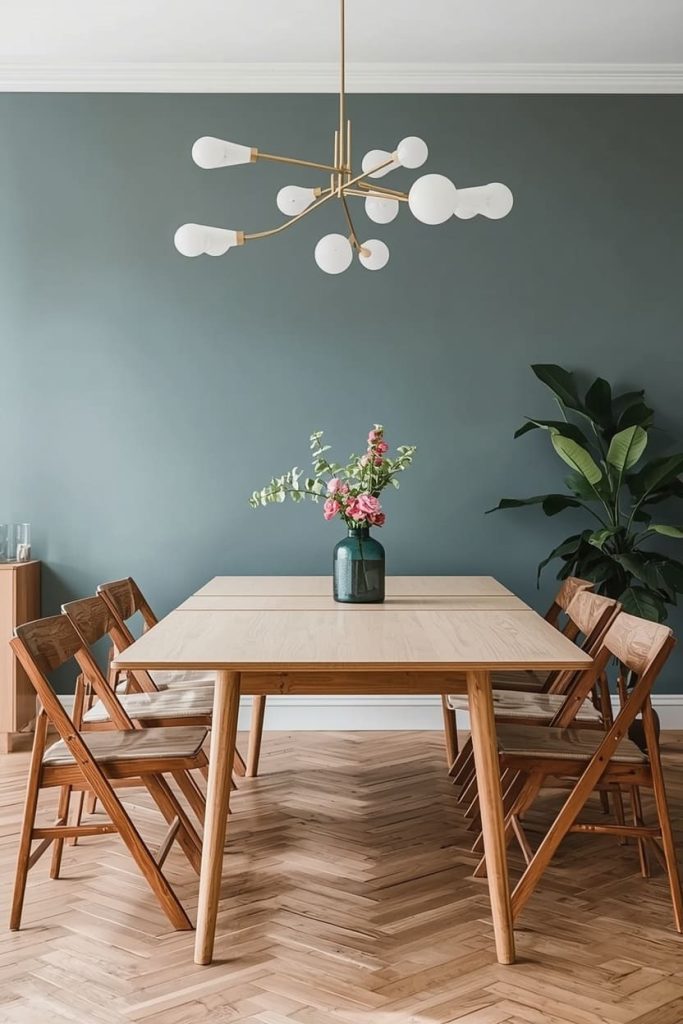
In a combined dining and living space, your dining table is arguably the most important furniture decision you will make — because it needs to be right-sized for daily life without being too small for the occasions when you actually need it.
An extendable dining table solves this problem so elegantly that once you have one, you will wonder how you ever managed without it.
Choose a table that seats two to four people comfortably at its standard size — small enough that it doesn’t dominate the room on an ordinary Tuesday evening — and extends to seat six or eight when you are entertaining.
Pair it with stackable or foldable chairs that store away easily, so the room never feels over-furnished. On non-dining days, a small, well-styled extendable table can even double as a workspace or hobby surface without the room losing its sense of order.
Pinterest-worthy tip: Photograph the table in its extended, fully set state with all chairs out and a simple centerpiece — then show the same table compact and minimal in a side-by-side image to demonstrate the transformation.
7. The Defined Dining Nook
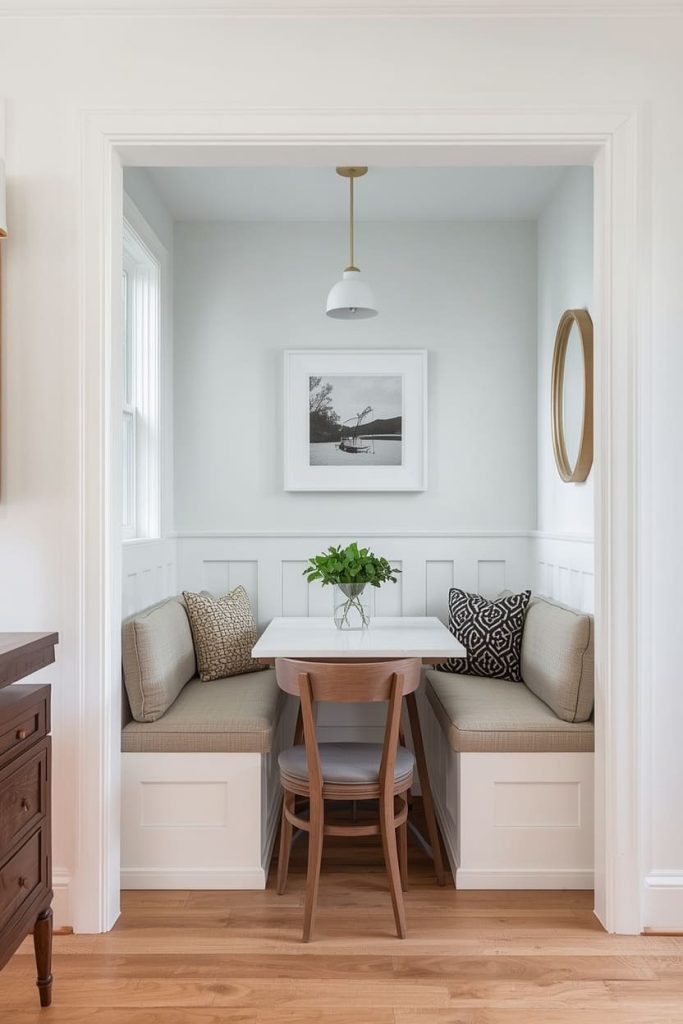
If your combined space has an alcove, a bay window, a corner, or even just one wall that feels slightly set apart from the main living area, lean into it completely and create a defined dining nook that has its own distinct character within the larger room.
A built-in bench seat along one wall with a compact table and two chairs opposite creates a dining setup that feels intentionally carved out rather than awkwardly placed.
Add a small pendant light directly above the table, a piece of art or a mirror on the wall behind the bench, and a simple cushion in a complementary fabric on the bench seat.
The nook feeling is what does the design work here — the sense that this corner was always meant to be a dining space, not just where the table ended up.
Pinterest-worthy tip: Style the bench with two or three cushions in complementary fabrics, add a small trailing plant to the corner, and photograph from slightly outside the nook looking in — the framed, intimate quality of the shot is deeply appealing on Pinterest.
8. The Cohesive Furniture Family
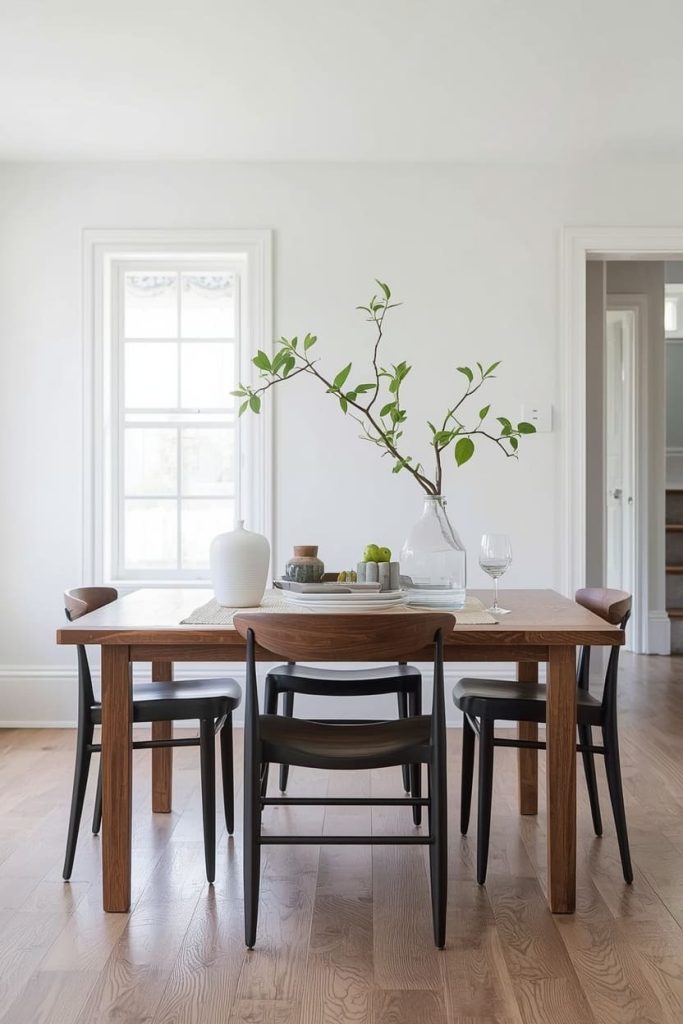
One of the most common reasons combined spaces look accidental rather than intentional is that the dining furniture and the living furniture have nothing to say to each other — different wood tones, different metal finishes, completely different styles that happen to share a room.
The solution is to treat your combined space as a single, cohesive interior rather than two separate rooms that share a wall. Choose furniture pieces that belong to the same visual family — not matching sets, which can look rigid and showroom-like, but pieces that share a material, a finish, or a design language.
If your sofa has tapered oak legs, choose a dining table with tapered oak legs too. If your coffee table has a black metal frame, echo that in your dining chairs. These quiet connections are what make a combined space look designed rather than assembled.
Pinterest-worthy tip: Photograph a detail shot that captures the shared material or finish between your living and dining furniture — a close-up of matching wood tones or metal legs — to highlight the intentional design thinking that elevates the whole space.
9. The Gallery Wall Anchor
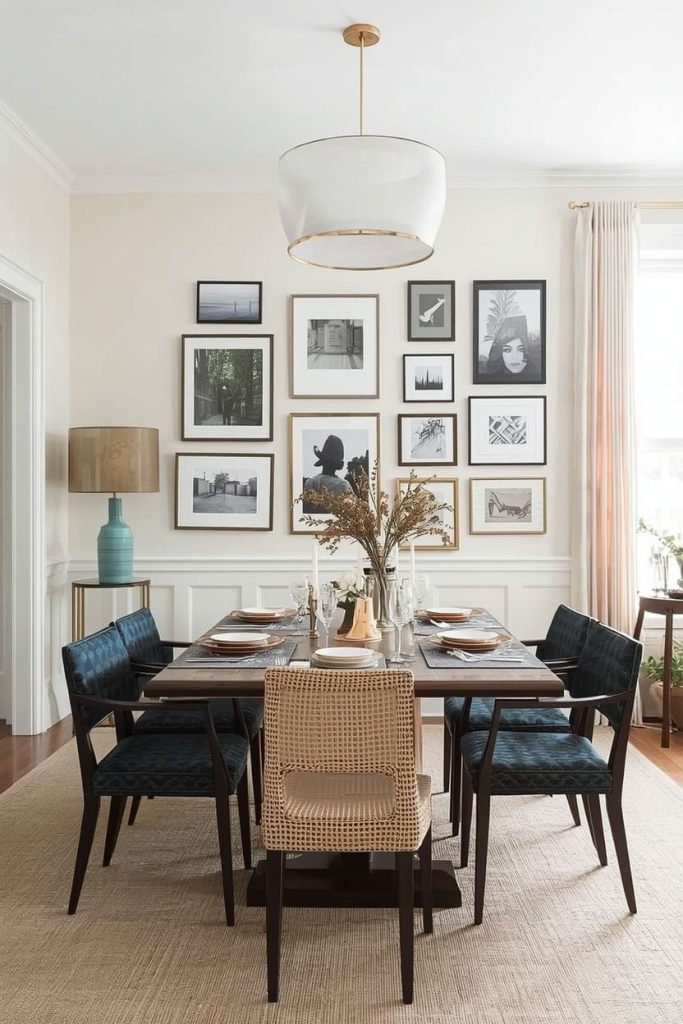
A gallery wall positioned on the wall behind or adjacent to your dining table does something remarkably powerful in a combined space — it gives the dining zone a strong visual anchor that makes it feel like a fully considered room within a room.
Without something on the walls, a dining area in a combined space can feel like it is floating, undefined, and slightly temporary. A gallery wall changes that instantly.
Choose artwork and prints that connect to the overall palette of your room and arrange them in a layout that extends slightly wider than the dining table itself — this gives the zone a sense of generous, intentional scale.
Keep the living zone’s walls simpler by contrast — perhaps just one large mirror or a single statement print — so the gallery wall reads clearly as the dining zone’s defining feature.
Pinterest-worthy tip: Photograph the dining table fully styled with the gallery wall as the backdrop, shooting straight on from the opposite side of the table — the layering of the table setting in the foreground and the artwork behind creates an incredibly rich, editorial quality image.
Your Space Is Already Enough
Here is what every woman with a combined dining and living space needs to hear: you are not working around a limitation — you are working with an opportunity. The most intentional, beautifully designed rooms in the world are not always the largest ones.
They are the ones where every decision was made thoughtfully, every zone was considered carefully, and every piece of furniture earned its place.
Pick one idea from this list that resonates most, start there, and watch your combined space transform into something you are genuinely proud of.

Jenny is a passionate writer specializing in home decor, design, and styling. With years of experience in transforming spaces, she shares expert tips on creating beautiful, functional homes. From interior design trends to DIY decor ideas, Jenny’s work helps homeowners craft spaces that reflect their unique style. Whether it’s a cozy living room, a modern kitchen, or a serene bedroom, her articles offer practical advice and inspiration to elevate any home.