You know that feeling when your dining table and sofa are basically staring at each other? Nothing feels separate. Nothing feels organized.
The whole space just feels like one big undefined room. It’s frustrating — especially when you have good taste and you know it could look so much better. But here’s the thing. You don’t need to build a wall. You don’t need a contractor. You don’t need to spend a lot of money either.
You just need the right idea. These 7 partition ideas are stylish, practical, and completely doable in a real home. Let’s get into it.
Products You’ll Need Before You Start
- BEWISHOME 4-Panel Wooden Room Divider Screen with Carved Lattice Detail — A freestanding decorative screen that creates an instant, beautiful partition between your living and dining zones with zero installation required.
- Nathan James Theo 5-Shelf Open Bookcase Room Divider — A slim, open-backed bookshelf that defines your spaces while giving you valuable display and storage on both sides.
- Costa Farms Tall Live Majesty Palm Tree in Decorative Planter — A set of tall, lush indoor plants that create a stunning natural green partition that feels organic, fresh, and completely unique.
- FORWARDOR Ceiling Mounted Curtain Track System with Linen Panel Curtains — A ceiling-mounted curtain track that lets you draw a full-length fabric partition whenever you need it and pull it back completely when you don’t.
- Mkono Macramé Room Divider Hanging Curtain with Wooden Beads — A handcrafted macramé panel that adds texture, warmth, and a beautifully bohemian visual boundary between your two spaces.
1. The Wooden Jaali Screen
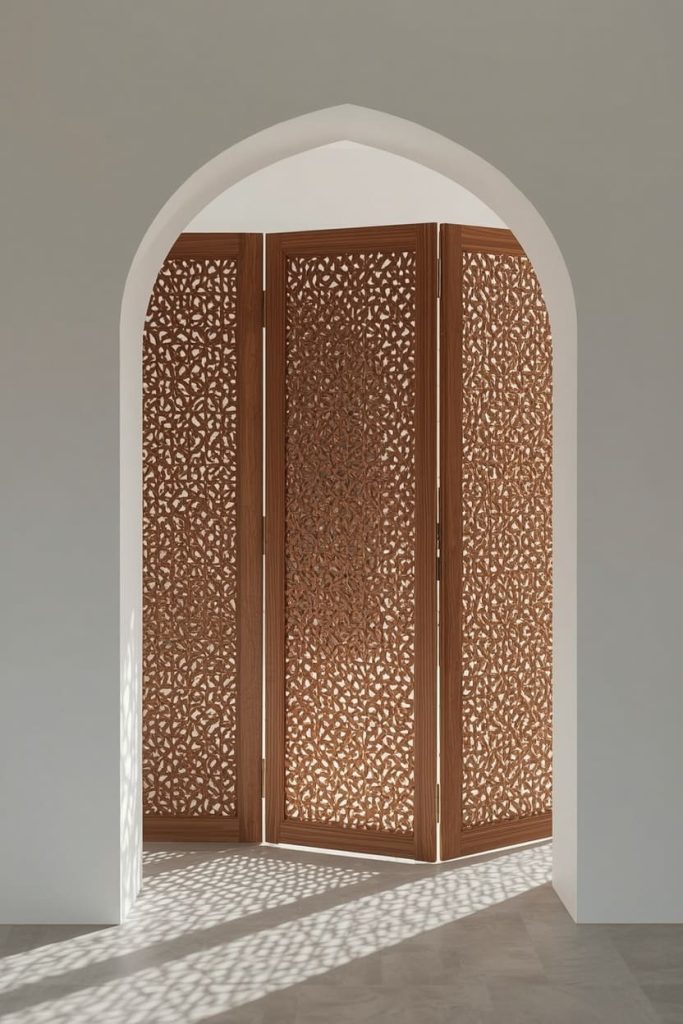
Okay, this one is a classic for a reason. A jaali screen — that gorgeous carved wooden lattice panel — is one of the most beautiful partition solutions you can use. It is deeply rooted in South Asian and Middle Eastern design. And it works in modern homes too.
You simply place a freestanding jaali screen between your dining and living zones. No drilling. No construction. Just instant separation. The carved patterns cast the most beautiful light shadows across your floor when the sun hits them. It looks expensive. It adds culture and character to your space.
Choose a screen in a warm teak or walnut finish for a traditional feel, or go for a white or black painted jaali if your home is more contemporary. Either way — it is stunning.
Pinterest-worthy tip: Position your jaali screen where natural light hits it from behind and photograph the light shadow patterns it casts on the floor — it creates one of the most saved interior images on Pinterest.
2. The Open Bookshelf Divider
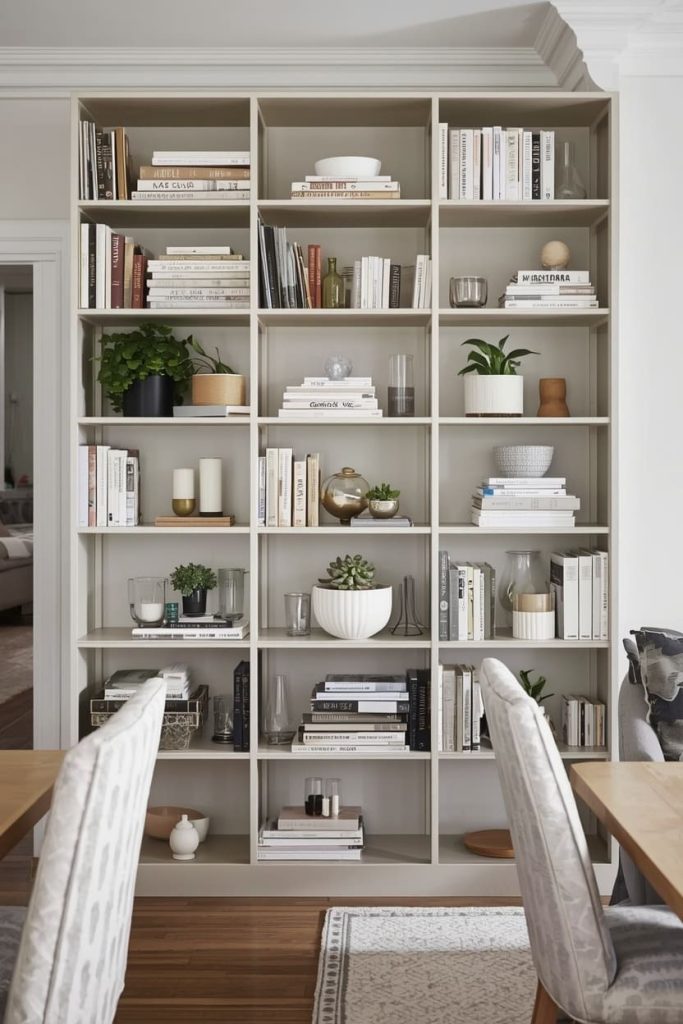
This idea is pure genius for two reasons. First — it separates your spaces beautifully. Second — it gives you storage and display space on both sides. Win-win.
Choose a tall, open-backed bookshelf and position it perpendicular to the wall — right between your dining and living areas. The open design means light still flows through. The room still feels spacious.
But the zones are now clearly defined. Style it with a mix of books, small plants, candles, and a few decorative objects. Keep it about two thirds full — not crammed. The bookshelf works in almost every home style.
Modern. Scandinavian. Contemporary Indian. Boho.
It doesn’t matter. A well-styled open shelf always looks intentional and always looks beautiful.
Pinterest-worthy tip: Style one side of the shelf for your living zone and the other side for your dining zone using complementary objects, then photograph it from a diagonal angle to capture both sides in one frame.
3. The Indoor Plant Wall
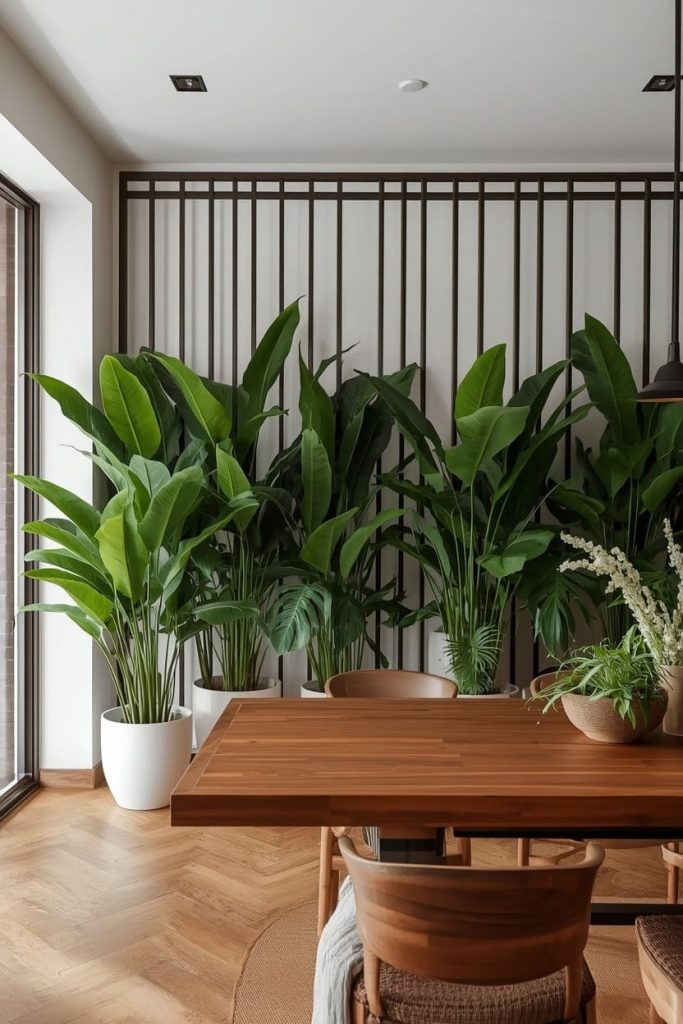
Want a partition that is also alive? This one is for you. A row of tall, lush indoor plants placed in matching planters creates the most natural, gorgeous visual boundary between your living and dining spaces.
Think tall majesty palms, fiddle leaf fig trees, or bamboo stalks in ceramic or rattan planters. Line them up with just a small gap between each one. It creates a green, breathing wall. It adds oxygen to your home. It makes the whole space feel fresh and luxurious.
This works especially beautifully in homes with warm, earthy, or tropical-inspired interiors — which are incredibly popular across South and Southeast Asia. The plant wall also photographs magnificently and consistently performs well on Pinterest and Instagram alike.
Pinterest-worthy tip: Line up three to four tall plants in matching white or terracotta pots, place a warm-toned lamp nearby, and photograph the plants with the dining table visible just behind them — the layered greenery and warm light is irresistible.
4. The Curtain Track Partition
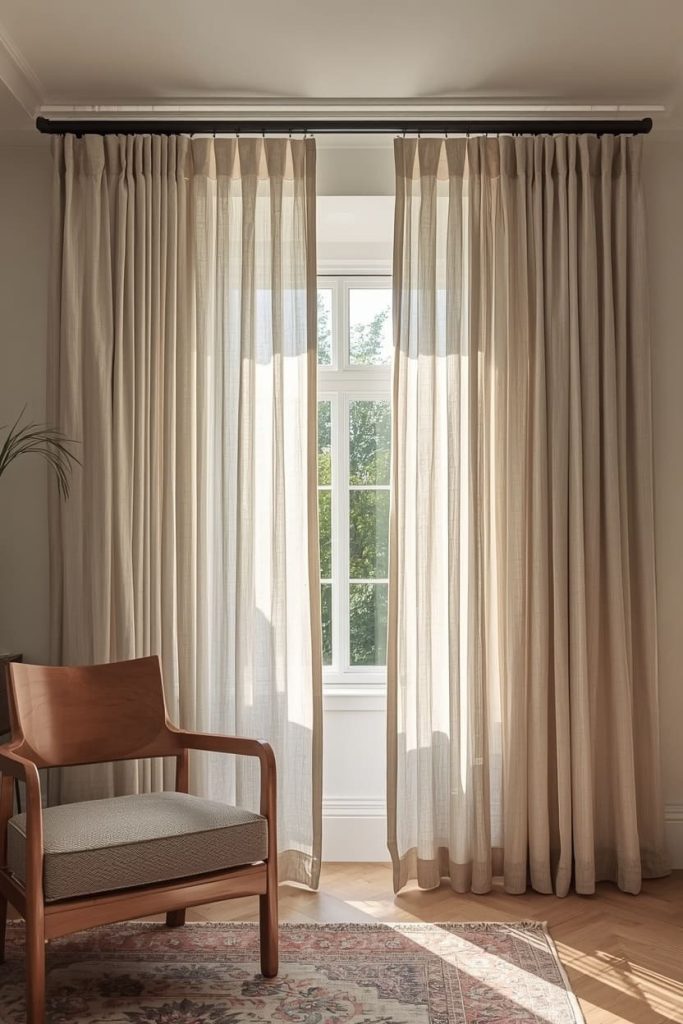
This is the most flexible partition idea on this list. And honestly — one of the most underrated. A ceiling-mounted curtain track runs across the width of your room, right at the point where your living and dining zones meet.
You hang full-length curtain panels from it. When you want separation — pull them across. When you want the open plan feeling back — push them to the sides. Done. The curtain becomes part of your décor.
Choose a fabric that complements your interior — linen in cream or warm white for a relaxed, airy feel, or a deeper tone like sage, terracotta, or navy if you want more drama. This is also a perfect solution for renters. No permanent changes. No damage to walls. Just a ceiling track and beautiful fabric.
Pinterest-worthy tip: Photograph the curtain panels half-drawn with warm afternoon light filtering through the fabric — the soft, diffused light against the curtain creates a dreamy, atmospheric image that performs beautifully on Pinterest.
5. The Decorative Metal Screen
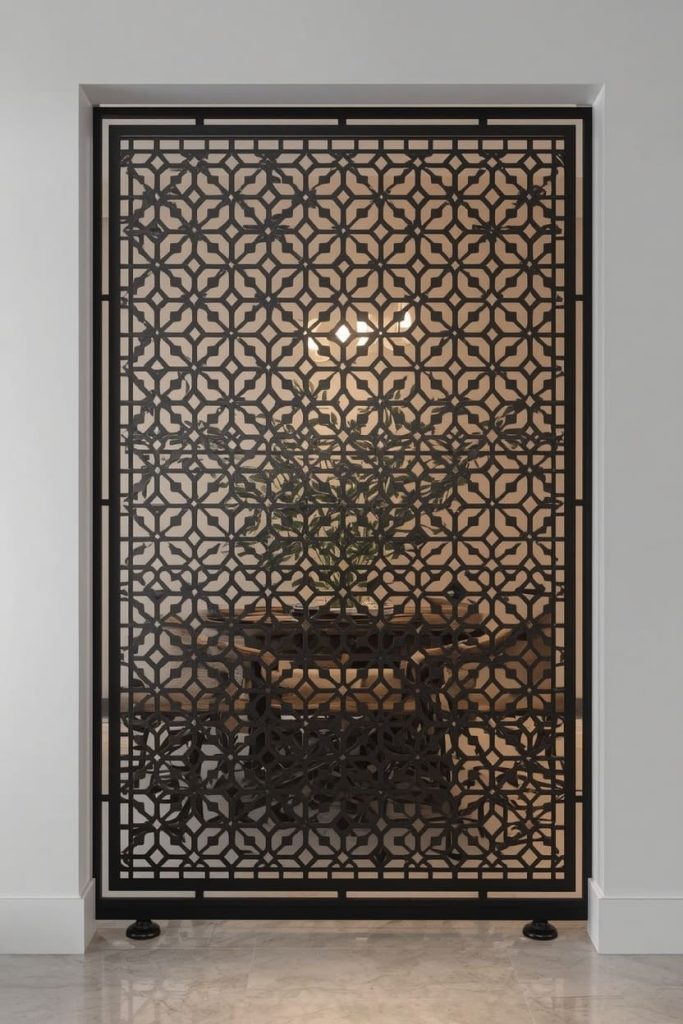
If you love a modern, contemporary look — this one is for you. A decorative metal screen partition is sleek, architectural, and incredibly stylish. Think laser-cut geometric patterns in matte black, brushed gold, or antique bronze.
These screens are freestanding — no installation needed. They create a defined visual boundary between your dining and living areas while also acting as a genuine statement piece in their own right.
Geometric metal screens are particularly popular in modern Middle Eastern and contemporary Indian interiors right now. They pair beautifully with neutral walls, marble surfaces, and warm wood furniture.
They also catch the light in the most beautiful way — especially in the evening when your indoor lights are on and the cut-out patterns glow.
Pinterest-worthy tip: Position a warm light source directly behind the metal screen and photograph it from the front at night — the glowing geometric patterns create an absolutely stunning, highly shareable image.
6. The Macramé or Bead Curtain
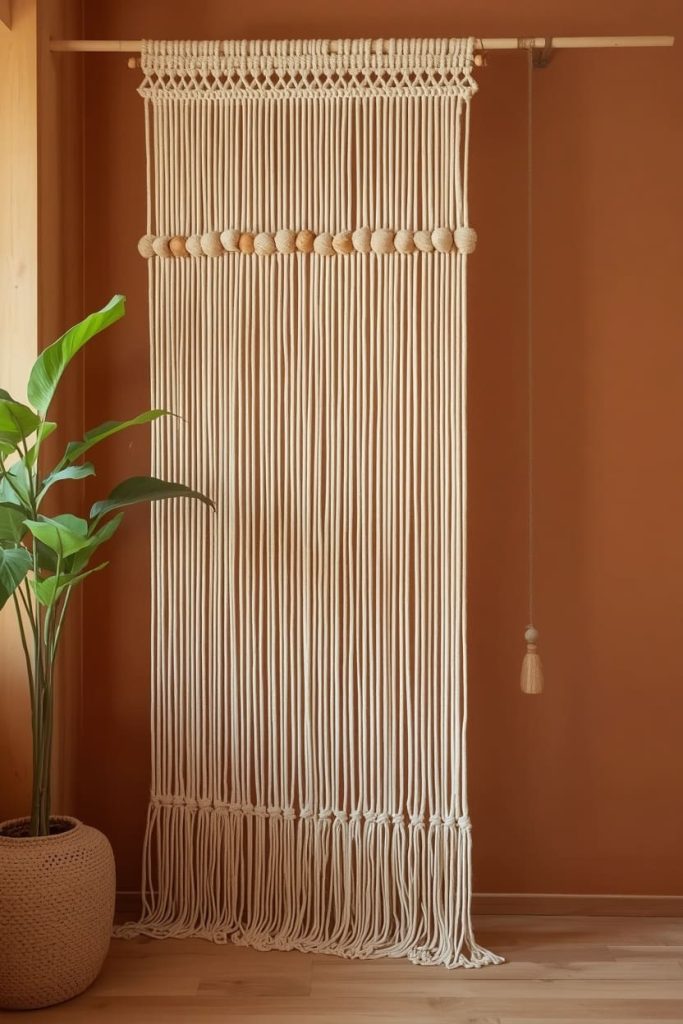
Don’t underestimate this one. A well-chosen macramé panel or hanging bead curtain is not the tacky room divider from decades past. Done right — it is genuinely beautiful.
Modern macramé partitions use thick, chunky natural cotton rope in warm ivory or cream tones, often combined with wooden beads or rings. They hang from a ceiling-mounted rod and create a soft, textural boundary that filters light rather than blocking it entirely.
This works magnificently in boho, coastal, or earthy-toned interiors — all of which are hugely popular across Southeast Asia and increasingly across South Asia too.
It adds warmth and handcrafted beauty to any combined space. And it is one of the easiest partitions to install — just a rod and some hooks and you are done.
Pinterest-worthy tip: Hang your macramé partition in front of a warm-toned wall and photograph it with a trailing plant just beside it and soft, warm lighting — the textures and tones together create a deeply covetable, save-worthy image.
7. The False Ceiling Zone Definer
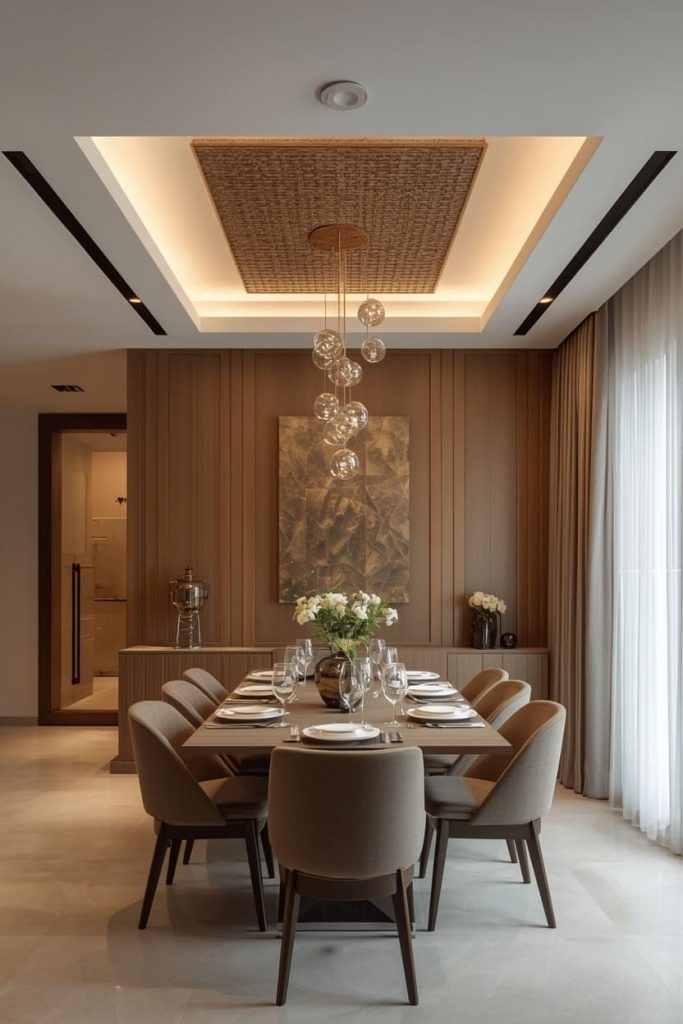
Okay — this one is slightly more involved than the others. But it is worth mentioning because it is one of the most sophisticated partition solutions available. And it does not require a wall.
A false ceiling — or dropped ceiling panel — installed specifically over your dining area creates an immediate sense of a defined, separate zone. The dining space feels enclosed and intentional. The living space feels open and airy.
The contrast between the two ceiling heights does all the zoning work. You can add recessed lights or a pendant light within the false ceiling panel to make the dining zone even more distinct.
This is incredibly popular in new-build apartments across India, the UAE, and Malaysia. It is a permanent solution — but far less expensive and disruptive than building a full wall.
Pinterest-worthy tip: Photograph the dining area from a low angle looking up slightly — capturing both the false ceiling detail above and the beautifully set dining table below — the architectural framing creates an incredibly polished, professional-looking image.
Your Open Plan Home Is a Canvas
Stop seeing your open-plan space as a problem. It is actually an opportunity. You get to decide how it feels. You get to create zones that work for your life. Pick one idea from this list. Just one. Start there. Your home is going to look so good — I promise.

Jenny is a passionate writer specializing in home decor, design, and styling. With years of experience in transforming spaces, she shares expert tips on creating beautiful, functional homes. From interior design trends to DIY decor ideas, Jenny’s work helps homeowners craft spaces that reflect their unique style. Whether it’s a cozy living room, a modern kitchen, or a serene bedroom, her articles offer practical advice and inspiration to elevate any home.