If you’ve ever stood in your small combined living and dining room and thought, “I don’t even know where to start” — this one’s for you.
Decorating a space that has to do double (or triple) duty can feel overwhelming, but here’s the truth: some of the most stunning, soulful rooms are small ones. There’s a particular magic in a compact space that’s been thoughtfully designed — it feels cozy, intentional, and surprisingly airy all at once.
The secret isn’t more square footage; it’s smarter choices. These 7 ideas will show you exactly how to make your small living and dining room look beautiful, function brilliantly, and feel like home.
Table of Contents
- 5 Space-Saving Amazon Picks to Shop While You Read
- 7 Small Living and Dining Room Ideas That Make Every Inch Count
- Your Small Space Has More Potential Than You Think
5 Space-Saving Amazon Picks to Shop While You Read
Before we get into the ideas, here are 5 space-saving, top-rated products on Amazon that will make a real difference:
- VASAGLE Extendable Dining Table — A slim, compact table that expands from a two-seater to a four-seater in seconds, making it the ideal everyday-to-entertaining solution for small combined rooms.
- Nathan JamesArlo Small Space Sectional Sofa — A sleek, low-profile sectional with clean modern lines that fits snugly into tight living areas without visually overwhelming the space.
- Neutype Large Wall Mirror with Gold Frame — A generously sized floor-leaning mirror in a warm gold frame that instantly doubles the sense of depth and bounces light beautifully across a small room.
- Homfa Nesting Coffee Tables Set of 2 — A stylish pair of round nesting tables in a warm walnut finish that tucks neatly together when not in use, freeing up precious floor space on demand.
- SONGMICS Tall Bookcase with Open Shelves — A vertical storage tower that draws the eye upward and stores everything from books to plants to table linens, making smart use of wall height rather than floor space.
7 Small Living and Dining Room Ideas That Make Every Inch Count
Define Two Zones Without Building a Single Wall
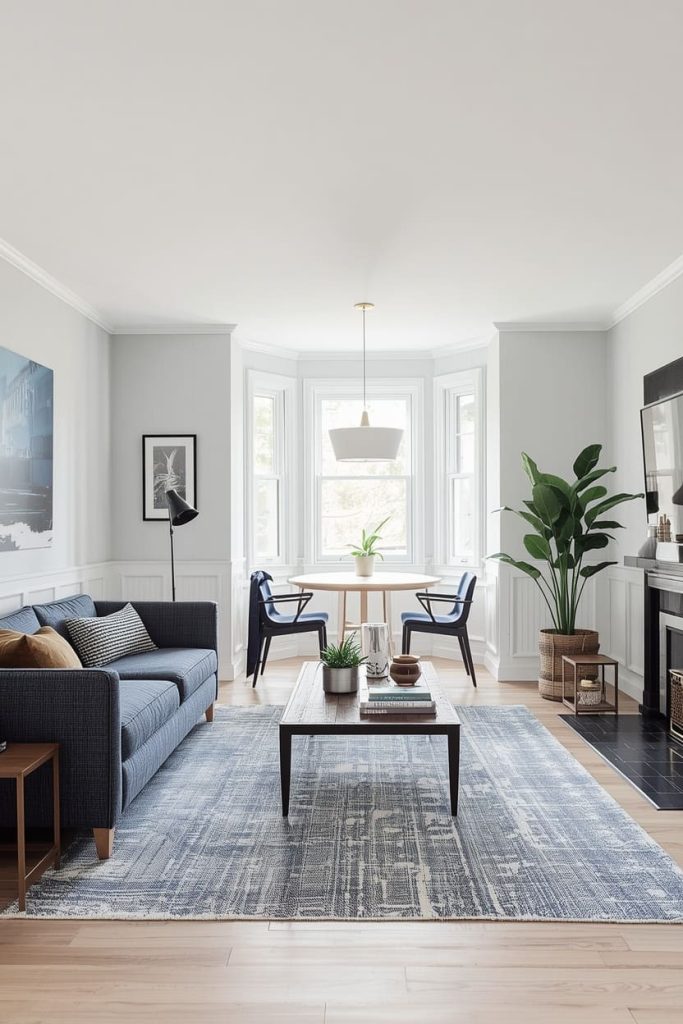
One of the biggest challenges in a small combined room is making it feel like two purposeful spaces rather than one confused one — and the good news is you don’t need walls, dividers, or any permanent changes to pull it off.
A rug is your most powerful tool here: place one under the sofa and coffee table to anchor the living zone, and let the dining table float just beyond it on bare floor or a second smaller rug.
Instantly, your brain reads two distinct areas, and the whole room feels more organized and intentional. Add a pendant light directly above the dining table to reinforce that separation through light rather than structure.
Styling tip: Choose a rug for the living area that’s large enough for all front sofa legs to sit on — a rug that’s too small floats awkwardly and actually makes the room feel smaller, not larger.
Invest in a Table That Grows With Your Needs
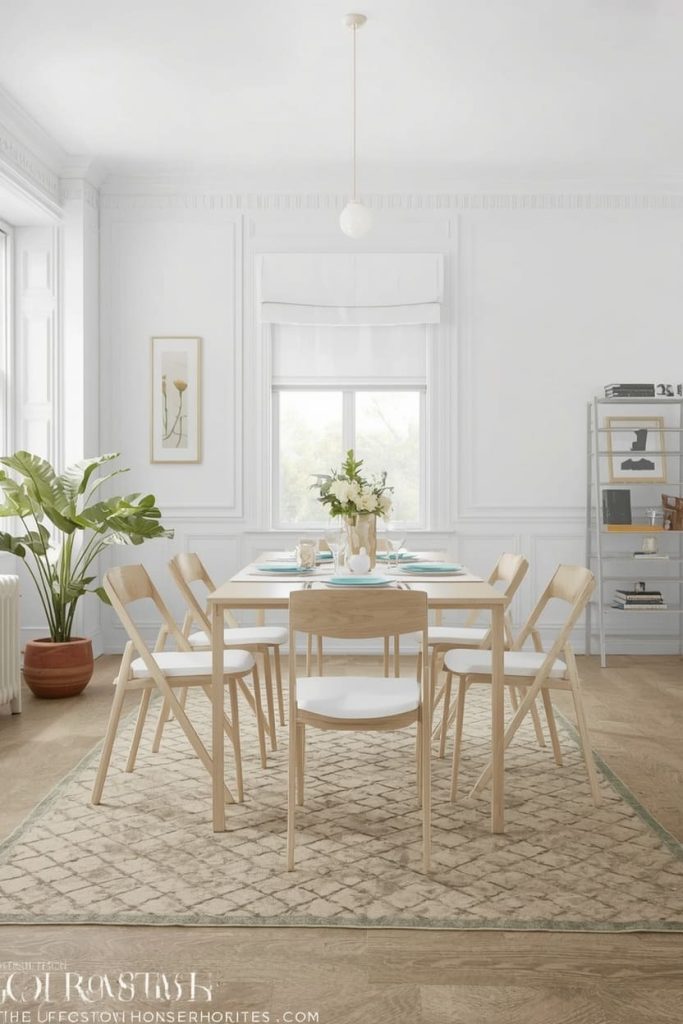
In a small combined space, your dining table is doing a lot of heavy lifting — it needs to be compact enough for daily life but generous enough when friends come over, and it should look great while doing both.
An extendable or drop-leaf table is one of the smartest investments you can make: tucked in, it takes up minimal floor space and keeps the room feeling open; extended, it can comfortably seat four to six without feeling like it was shoehorned in.
Look for designs with clean lines in light wood tones or white, which tend to feel less visually bulky than dark, chunky styles. When it’s not extended, use it as a work-from-home desk, a buffet surface when hosting, or a spot for your morning coffee ritual.
Styling tip: Keep only two chairs at the table daily and store two folding chairs in a closet — this keeps the living area feeling spacious and airy while still letting you host a proper dinner party on short notice.
Use Mirrors Like a Secret Weapon
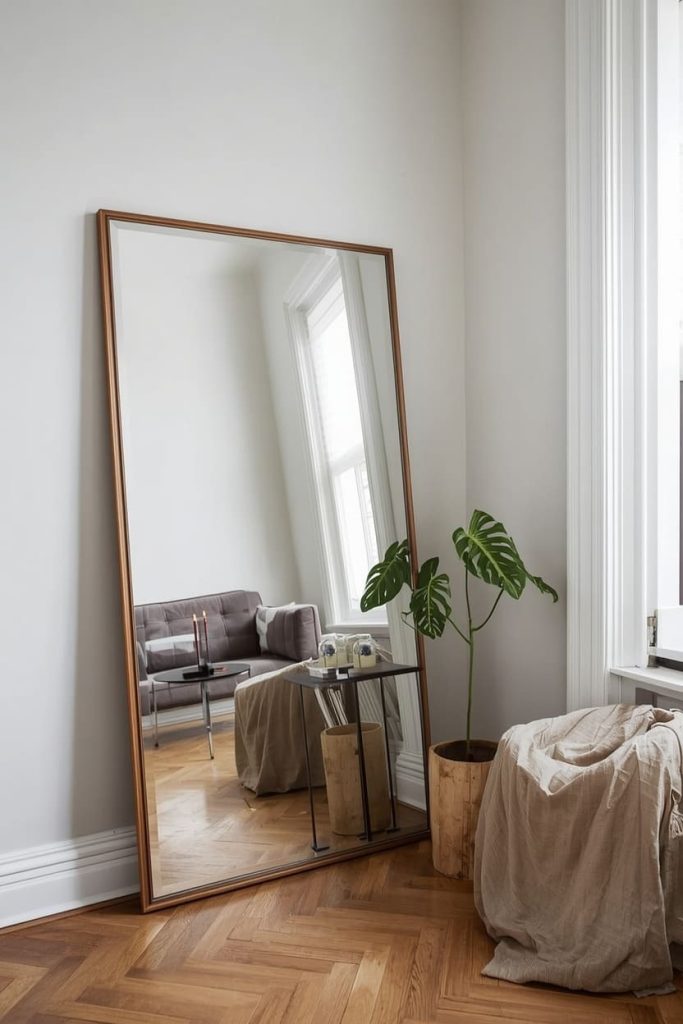
If there’s one thing interior designers of small spaces agree on universally, it’s this: mirrors are magic. A large mirror placed on the wall opposite a window doesn’t just reflect light — it creates the illusion of an entirely new room beyond it, effectively doubling the perceived depth of your space.
In a combined living and dining area, a floor-length mirror leaning against one wall can make the whole room feel like it goes on and on. The effect is especially powerful in the evening when candles or warm pendant lights catch the reflection and fill the room with a soft, layered glow.
Styling tip: Position your mirror so it reflects something beautiful — a window, a plant, a piece of art — rather than a blank wall or a cluttered corner, so the reflection adds to the room rather than just duplicating it.
Go Vertical and Reclaim Your Walls
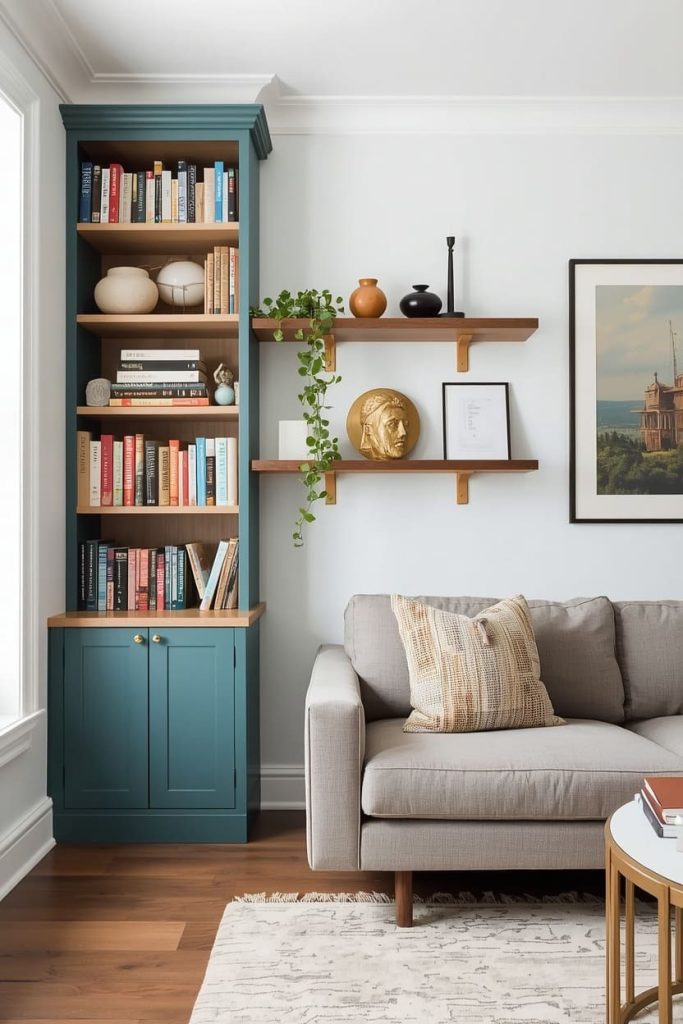
When floor space is limited, the answer is almost always to look up. Walls are massively underused in most small homes, and using vertical space for storage and décor is one of the most effective ways to keep your floor clear, your surfaces uncluttered, and your room feeling breathable.
Tall, slim bookcases that reach toward the ceiling draw the eye upward and make ceilings feel higher than they are. Floating shelves above the sofa or along the dining wall give you storage and display space without stealing a single square foot of floor.
And hanging your art a little higher than feels instinctive has a similar effect — it lengthens the walls and makes the room feel taller.
Styling tip: Style your vertical shelves with a mix of functional items and beautiful objects — a stack of cookbooks, a trailing plant, a candle, a small piece of art — so storage looks intentional and curated rather than just practical.
Choose Furniture That Does Double Duty
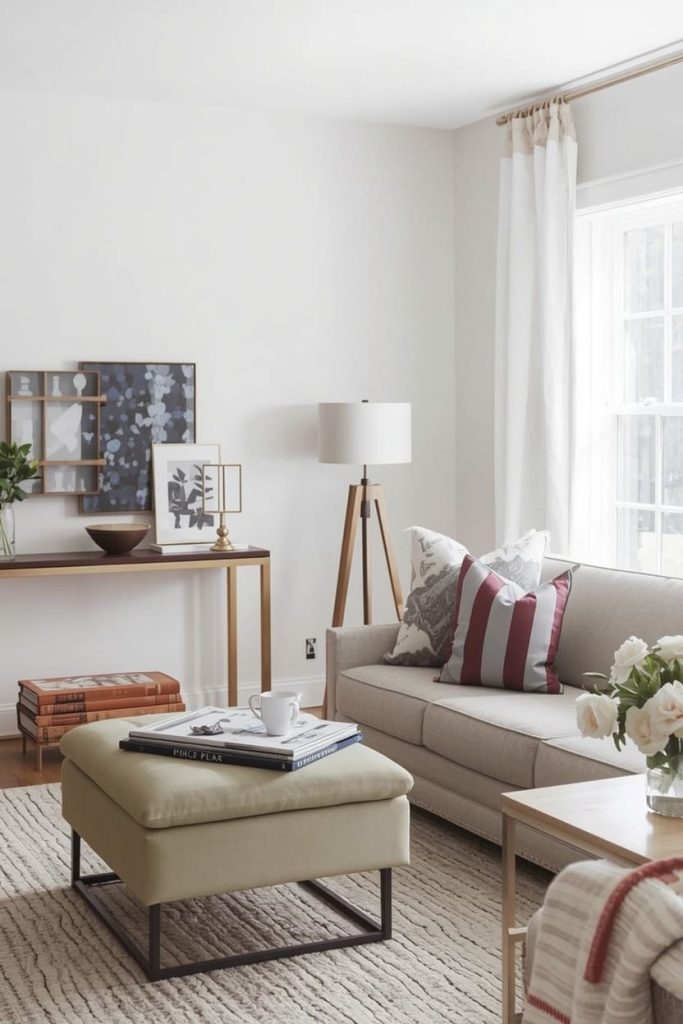
In a small combined space, every piece of furniture should earn its place — and ideally, it should earn it twice. A storage ottoman at the foot of the sofa works as a coffee table, extra seating, and a place to stash throw blankets all at once.
A console table behind the sofa can serve as a bar cart when you’re entertaining and a display surface the rest of the time. Nesting tables beside the sofa give you a side table when you need one and disappear neatly when you don’t. The more intentionally multifunctional your furniture, the less of it you need — and the more open and spacious your room will feel as a result.
Styling tip: When shopping for a new piece, ask yourself: does this do at least two things well? If the answer is no, look for an alternative that does — your small space will thank you for every piece that earns its footprint.
Use Color and Contrast to Shape the Space
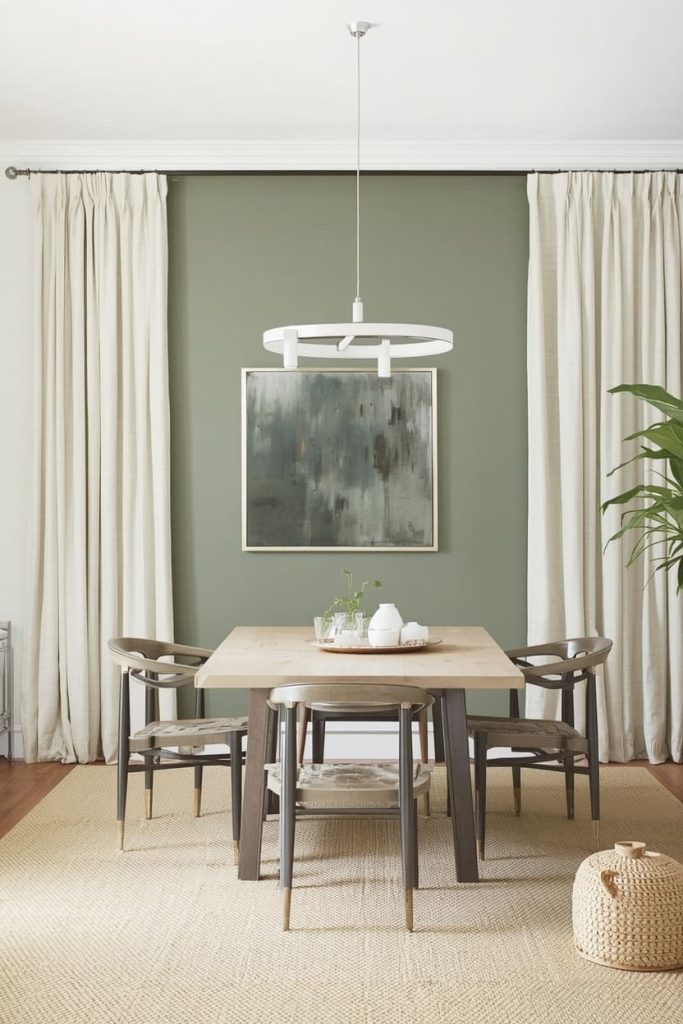
Color is one of the most underestimated tools in small-space decorating — used thoughtfully, it can make a room feel larger, cozier, or more defined without moving a single piece of furniture.
Painting all walls and the ceiling in the same soft, light tone (think warm white, pale sage, or soft putty) creates a seamless, expansive feel that pushes the boundaries of the room outward.
Alternatively, painting one wall in a deeper accent color — behind the dining table or sofa — creates a focal point that draws the eye and makes the room feel purposefully designed rather than accidentally small.
Light, airy curtains hung close to the ceiling and falling all the way to the floor will make windows look larger and ceilings feel higher than they actually are.
Styling tip: If you’re renting and can’t paint, use a large piece of art, a removable wallpaper panel, or a dramatic gallery wall to create the same focal-point effect on your key wall — no landlord approval required.
Edit Ruthlessly and Let the Space Breathe
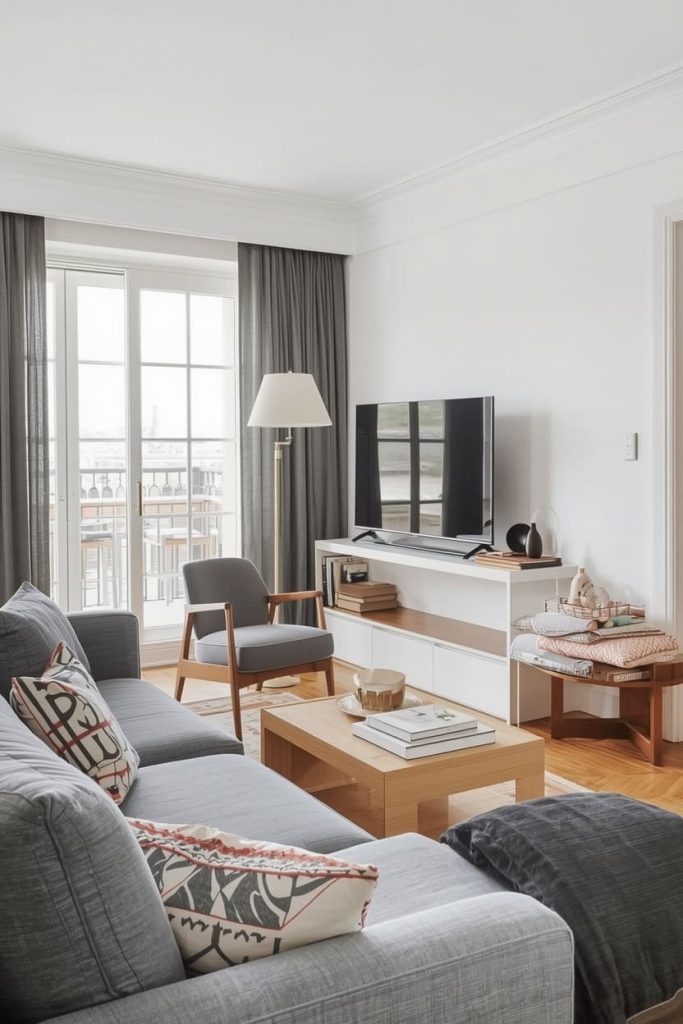
This might be the most powerful idea of all, and it costs nothing: in a small combined room, what you take out matters just as much as what you put in. Visual clutter — too many small decorative objects, mismatched cushions, furniture pushed against every wall — makes a small space feel chaotic and even smaller than it is.
Giving your room breathing room means choosing a few beautiful, intentional pieces and letting them have space around them. A sofa with legs feels lighter than one that sits flat on the floor.
A dining table with a simple, open base feels less heavy than a solid pedestal. Negative space — the empty areas around your furniture — is not wasted space; it’s what makes everything else feel considered and calm.
Styling tip: Do a “one in, one out” edit of your decorative objects — for every new item you bring into the space, remove one that’s no longer earning its place. Your room will immediately feel more intentional and visually restful.
Your Small Space Has More Potential Than You Think
Small spaces aren’t a design problem — they’re a creative invitation. Every one of the ideas here is renter-friendly, budget-conscious, and completely achievable, and even one or two changes can make your combined living and dining room feel like an entirely different space.
Save your favorites to a Pinterest board so you can revisit them as you shop and plan, and remember: the most beautiful rooms aren’t the biggest ones — they’re the ones that feel most like you. Start with one idea today, and watch how quickly your small space starts to feel like exactly the home you always wanted.

Jenny is a passionate writer specializing in home decor, design, and styling. With years of experience in transforming spaces, she shares expert tips on creating beautiful, functional homes. From interior design trends to DIY decor ideas, Jenny’s work helps homeowners craft spaces that reflect their unique style. Whether it’s a cozy living room, a modern kitchen, or a serene bedroom, her articles offer practical advice and inspiration to elevate any home.