It was the last morning of a family holiday in a little whitewashed cottage on the Carolina coast.
I wandered downstairs before anyone else was awake and found myself standing in the most quietly beautiful dining room I had ever seen — rattan chairs, a weathered wood table, sheer linen curtains lifting in the sea breeze, and soft morning light bouncing off every pale surface.
I sat down with my coffee and genuinely did not want to leave. Not the cottage, not the dining room, not that feeling. I drove home two days later determined to recreate it.
If you have ever felt that same pull toward something light, easy, and deeply calming, these seven ideas will show you exactly how to bring it home.
Table of Contents
- My Favorite Coastal Dining Room Picks on Amazon
- 7 Coastal Dining Room Inspirations
- Frequently Asked Questions
My Favorite Coastal Dining Room Picks on Amazon
- Natural Rattan Dining Chairs — These open-weave rattan chairs bring instant coastal texture and relaxed warmth to any dining space without overwhelming it.
- Whitewash Solid Wood Dining Table — A whitewashed finish on a solid wood table captures that sun-bleached, driftwood quality that is the heart of every great coastal dining room.
- Woven Seagrass Pendant Light — Hung low over the table, a seagrass pendant casts the most beautiful warm, dappled light that feels like late afternoon on a beach porch.
- Linen Stripe Table Runner — A simple blue and white or sand and cream striped linen runner adds coastal color and natural texture to your table in under thirty seconds.
- Driftwood and Shell Decorative Centerpiece — This understated natural accent brings the shoreline to your table without tipping into themed or kitschy territory.
7 Coastal Dining Room Inspirations
White, Sand, Blue
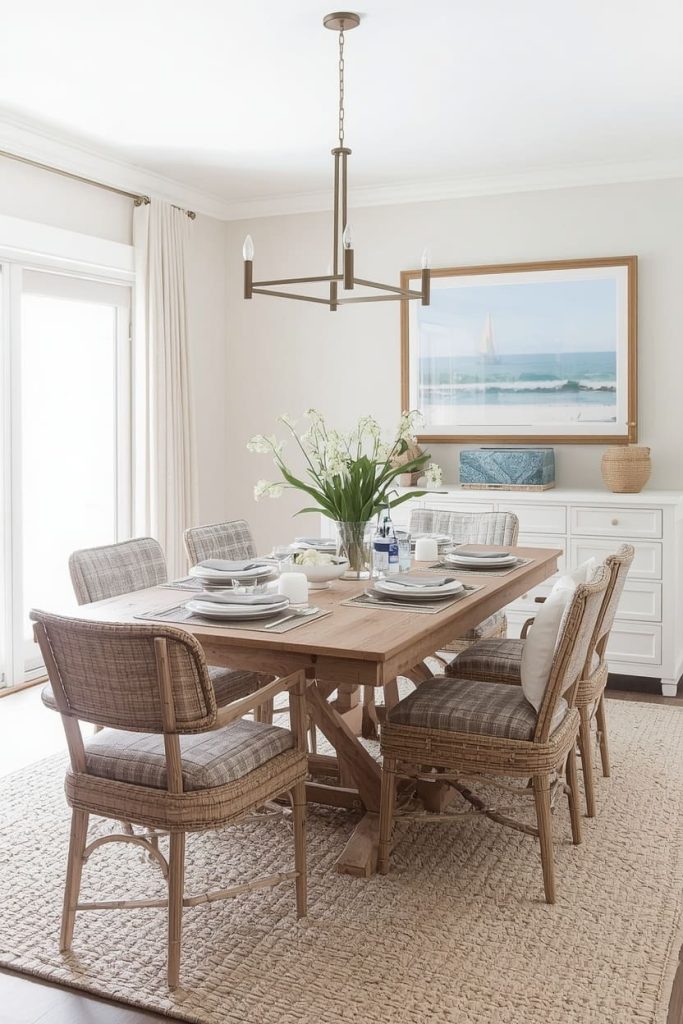
The coastal color palette is one of the most forgiving and timeless in all of interior design, and the dining room is the perfect place to commit to it fully.
The foundation is simple: white or soft cream on the walls, warm sandy neutrals in your furniture and textiles, and touches of blue — whether that is a washed-out sky blue, a deeper ocean navy, or a soft sage-meets-seafoam — used as an accent throughout the room.
I painted my dining room walls in a warm white with just a hint of grey undertone, and the transformation was immediate and dramatic in the best possible way.
The key to making this palette feel elevated rather than predictable is to vary the shades within each color family. Do not use just one blue — layer a pale duck egg with a deeper coastal teal in your cushions, ceramics, or artwork.
Bring sand tones in through natural wood, linen, and woven textures rather than literal beige paint. When you build the palette in layers like this, the result feels collected and effortless rather than color-coordinated and try-hard.
Rattan All Day
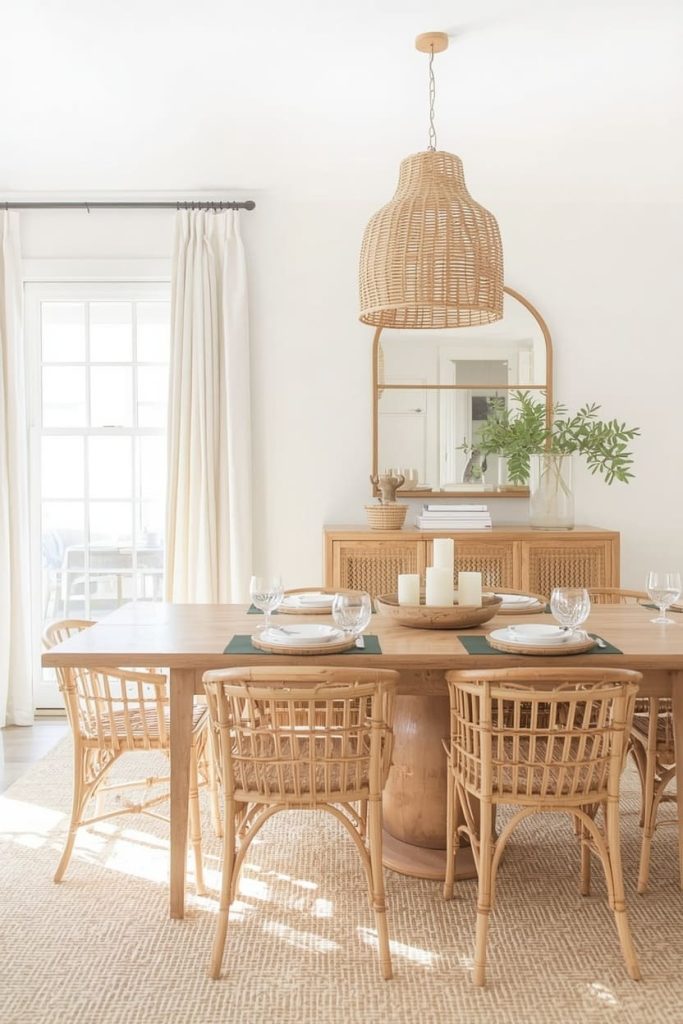
If there is one material that defines the coastal dining room more than any other, it is rattan — and I say that with zero hesitation.
There is something about its open, woven texture and warm honey tone that immediately softens a room and makes it feel connected to nature without trying too hard.
Rattan dining chairs are the single highest-impact swap you can make in a coastal dining room, and they work with almost every table finish from whitewash to natural oak to painted white.
You do not need to limit rattan to just your chairs, either. A rattan or woven seagrass pendant light above the table adds another layer of natural texture at eye level, and a small rattan sideboard or storage unit can tie the whole room together.
If you are working with an existing dining set you are not ready to replace, even a rattan-framed mirror on the wall or a pair of rattan placemats on the table will introduce that coastal warmth.
The beauty of rattan is that it is humble, honest, and endlessly versatile — it never shouts, it just makes everything around it feel more relaxed and considered.
Let Light Flood In
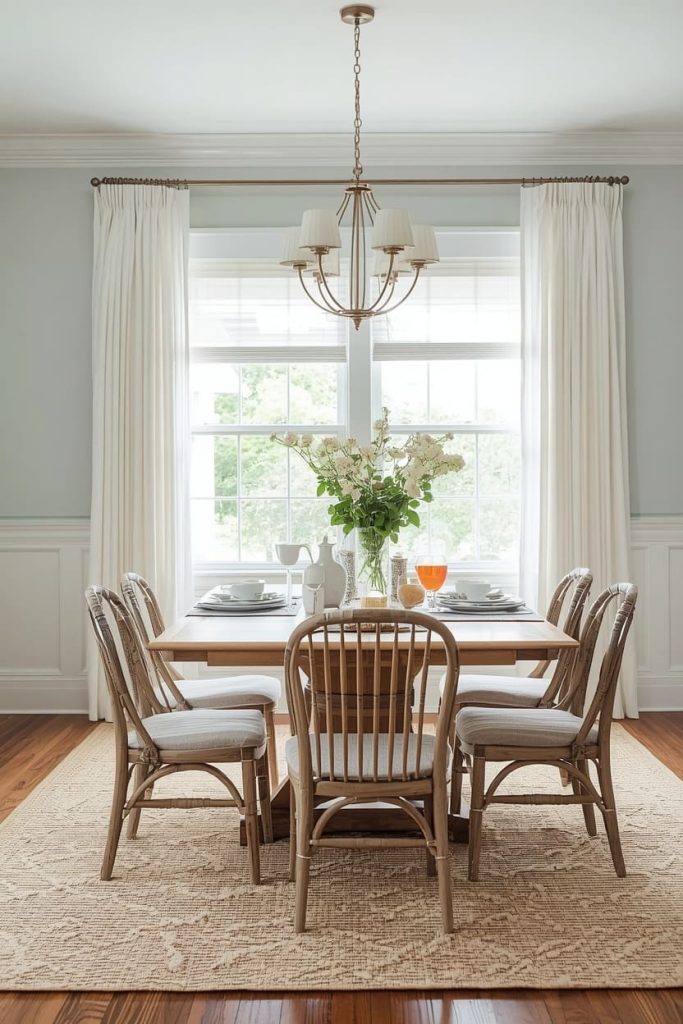
Coastal dining rooms live and die by their relationship with natural light. The whole aesthetic depends on that feeling of brightness, openness, and airiness — and nothing undermines it faster than heavy window treatments that block out the sun.
My single biggest recommendation for achieving a genuinely coastal feel in your dining room is to strip back whatever is currently on your windows and replace it with something sheer, light, and movement-friendly.
White or natural linen sheers are my absolute favourite option because they filter light rather than block it, casting a soft, warm glow across the room even on grey days. If you need privacy, layer sheer panels with simple white roller blinds that you can raise fully during the day.
Avoid heavy drapes, dark curtain panels, or blackout fabrics entirely — they are the enemy of the coastal aesthetic. If your dining room has a glass door or a large window with a garden or outdoor view, keep that sightline as clear as possible.
Connecting visually to the outside — even if you are nowhere near the ocean — is one of the most powerful tools you have for making a room feel coastal and alive.
Dine on Driftwood
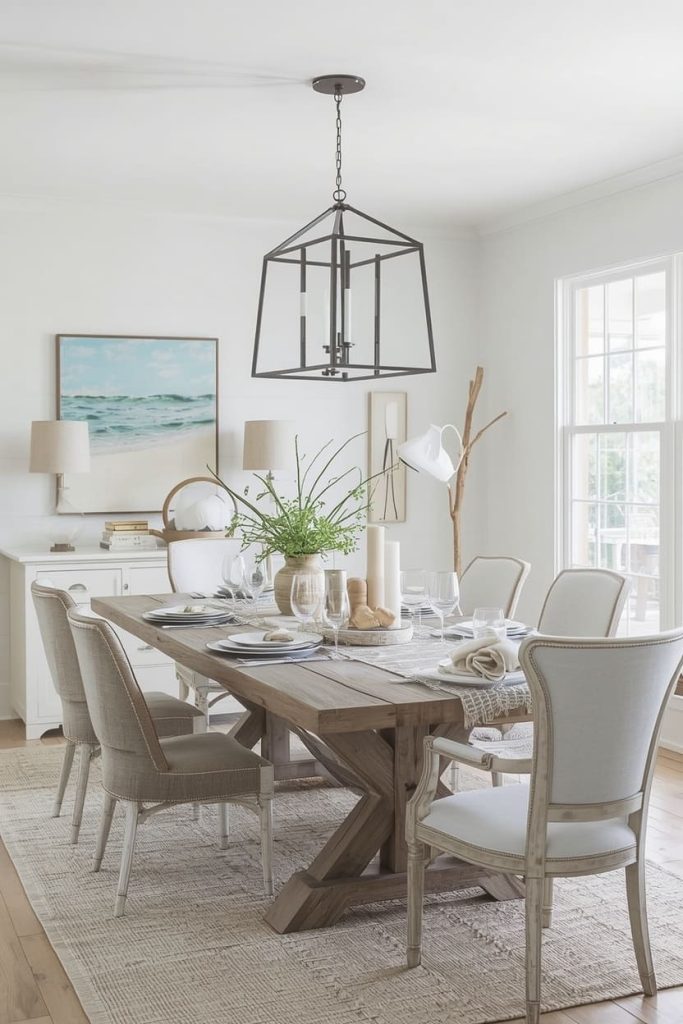
The dining table is the anchor of the whole room, and in a coastal dining space, the right table does an enormous amount of heavy lifting.
You want something that feels organic, a little weathered, and genuinely connected to natural materials — and nothing achieves that better than a driftwood-finish or whitewashed solid wood table.
The beauty of this finish is that it looks perfectly imperfect, with visible grain, gentle variation in tone, and a surface that only gets more characterful with time and use.
If replacing your table is not in the budget right now, you have two very good options. The first is to whitewash your existing wood table yourself using a simple diluted white paint technique — it is a weekend project that costs very little and delivers a genuinely impressive result.
The second is to let your table styling do the work: a linen runner, natural wood serving boards, white ceramic dishes, and a driftwood centerpiece can transform even a plain dark wood table into something that reads as coastal and considered. The table does not have to be perfect — it just has to feel natural.
Layer Natural Textures
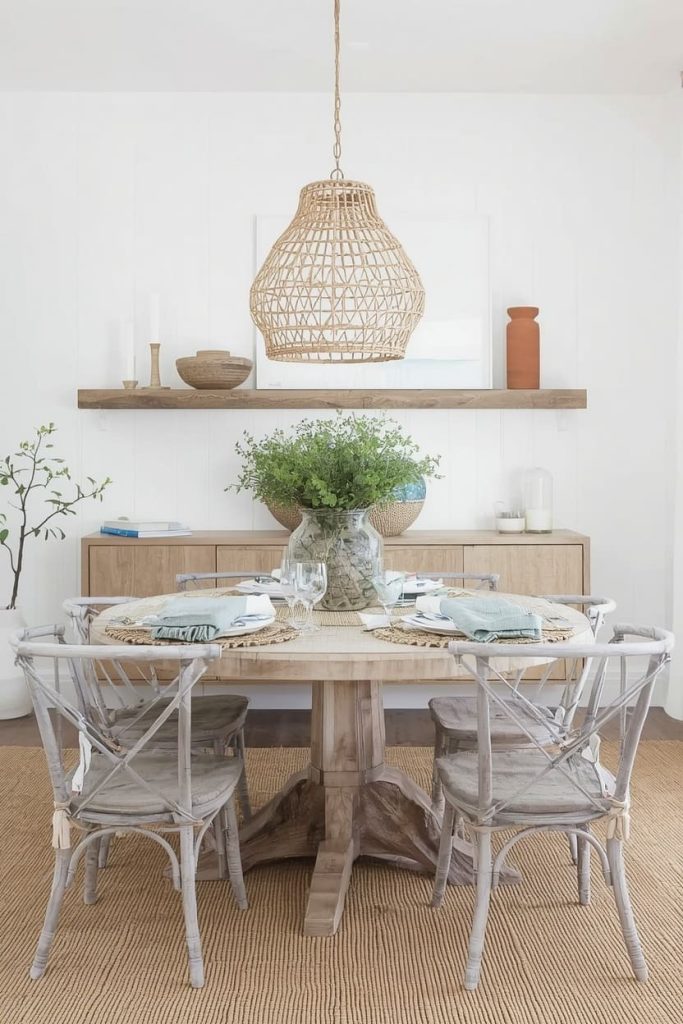
One of the things I love most about the coastal aesthetic is how generously it welcomes natural, tactile materials — and the dining room is the ideal place to layer them up.
Where a dark, moody dining room relies on depth and drama, a coastal dining room relies on texture and touch. The more natural materials you can bring into the space, the more grounded and genuinely organic the whole room will feel.
Think about every surface and soft furnishing as an opportunity: a woven jute or seagrass rug under the dining table, linen or cotton seat cushions on your chairs, a driftwood or reclaimed wood floating shelf on the wall, woven placemats and linen napkins on the table, a terracotta or raw clay vase as a centerpiece.
None of these elements is expensive or difficult to source, but together they create a layered, tactile richness that no paint color alone can replicate. The rule I follow is simple: if it came from the earth or could have washed up on a beach, it probably belongs in a coastal dining room.
Style the Table
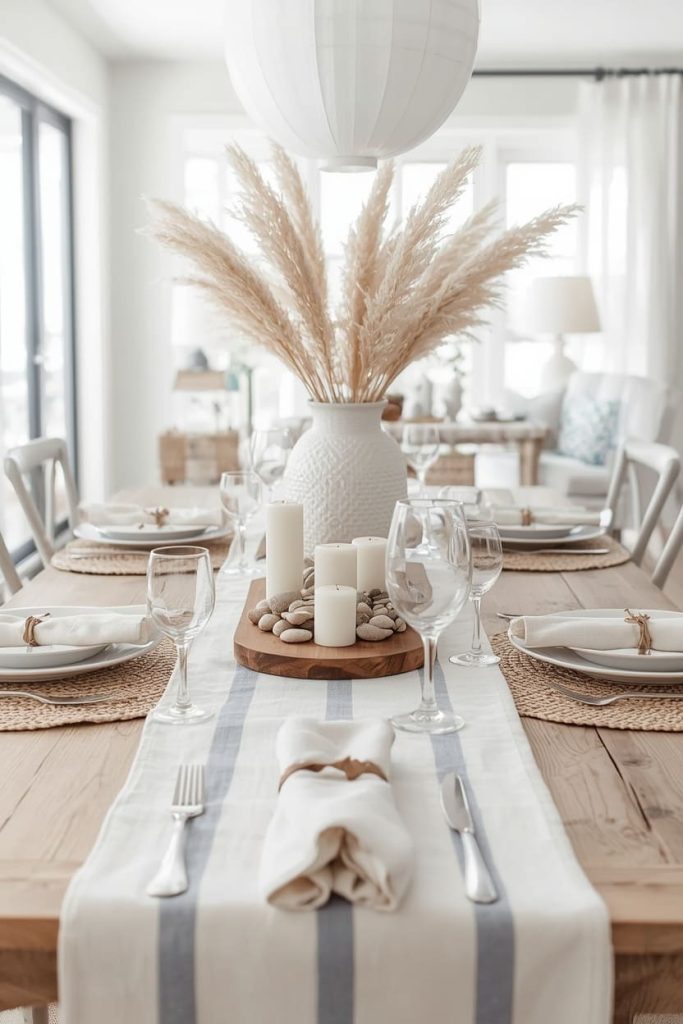
Table styling in a coastal dining room should feel like you just came back from a morning walk on the beach with your arms full of beautiful things — effortless, natural, and quietly lovely.
The goal is not a formally set table but a thoughtfully arranged one that feels relaxed and inviting every single day, not just for dinner parties.
Start with a linen or cotton table runner in a stripe or a simple natural tone as your base layer. Then build upward with a low centerpiece — a shallow bowl of smooth pebbles, a bundle of dried pampas grass or bleached cotton stems in a simple vase, or a cluster of white and sand-toned pillar candles on a wooden board.
White or cream ceramic tableware is your best friend here because it pops beautifully against natural wood or linen surfaces and keeps the palette clean and cohesive. Add your woven placemats, fold your linen napkins loosely rather than precisely, and resist the urge to over-style.
Coastal table styling is at its best when it looks like it came together in five minutes — even if it did not.
Bring the Outside In
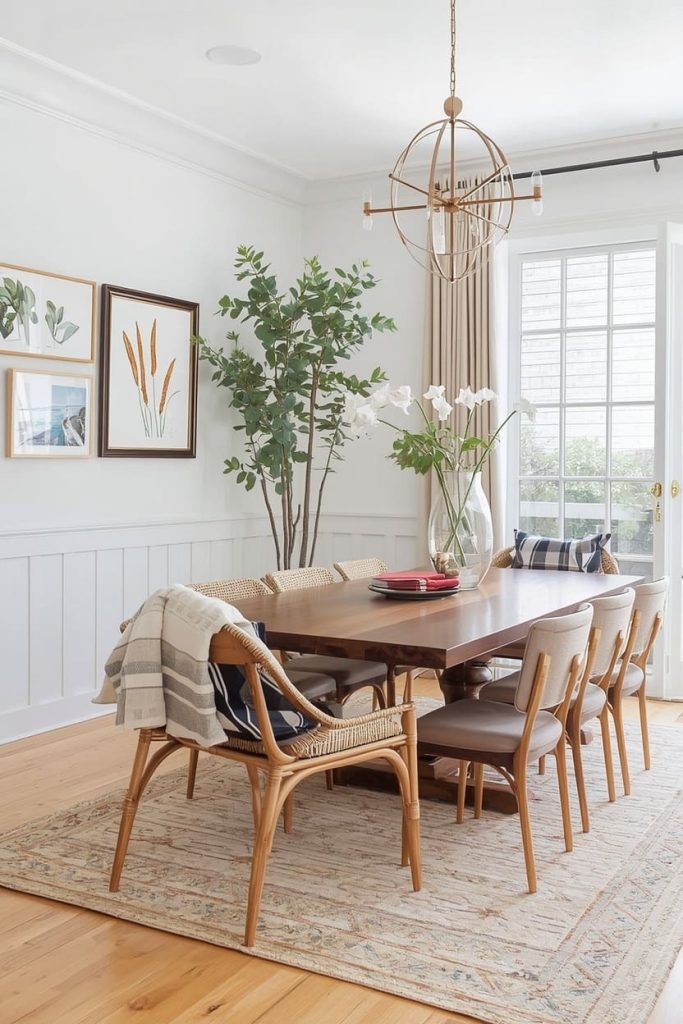
The most transportive coastal dining rooms I have ever walked into all share one quality: they blur the boundary between inside and outside so gently that you almost forget which side of the door you are on.
You do not need to live on an actual coastline to achieve this feeling — you just need to be intentional about bringing natural, living elements into your dining space in a way that feels genuine rather than decorative.
Start with plants. Coastal-friendly varieties like trailing pothos, bird of paradise, olive trees, or simple eucalyptus stems in a tall vase all add organic life and a gentle green note that grounds the blue and white palette beautifully.
If your dining room has a door or large window that opens to a garden or outdoor space, keep that connection as open and visible as possible — even a potted herb garden on the windowsill creates a sense of the outside coming in.
Natural artwork also works beautifully here: a simple framed print of sea grasses, a watercolor coastline, or even a collection of pressed botanical specimens in matching frames adds visual interest while keeping the room feeling connected to the natural world.
Frequently Asked Questions
Will a coastal dining room look too themed or “beachy kitsch”?
This is the most common worry I hear, and it is completely valid — a poorly executed coastal room can easily tip into seaside souvenir shop territory. The way to avoid it is to focus on natural materials, a restrained color palette, and quality basics rather than literal nautical accessories like anchors, rope, and novelty shell prints. Think less “beach gift shop” and more “beautiful coastal home” — the difference is always in the restraint and the quality of the materials you choose.
What is the best paint color for a coastal dining room?
Warm whites and soft off-whites with a hint of grey or cream undertone are the most versatile and universally flattering base for a coastal dining room. Benjamin Moore’s White Dove, Farrow & Ball’s Wimborne White, and Sherwin-Williams’ Alabaster are all beautiful options that read as crisp and fresh without feeling stark or cold. If you want to introduce blue, use it on an accent wall, in your soft furnishings, or in your ceramics rather than on all four walls.
Can I create a coastal dining room if I live nowhere near the ocean?
Absolutely — and in fact some of the most beautiful coastal interiors I have seen are in landlocked cities far from any shoreline. The coastal aesthetic is really about a feeling: light, natural, calm, and connected to the outdoors. You can create that feeling anywhere through your choice of materials, colors, lighting, and plants, regardless of your postcode.
Do rattan chairs work with a dark or non-wood dining table?
Yes, and the contrast can actually be really striking. Rattan chairs pair beautifully with a painted white table for a clean, fresh coastal look, and they also work surprisingly well against a dark navy or charcoal painted table if you want a moodier, more sophisticated take on the coastal aesthetic. The natural warmth of rattan is versatile enough to bridge very different table finishes.
How do I make a small coastal dining room feel bigger and brighter?
Keep your walls light, your window treatments sheer, and your furniture off the floor — slim-legged chairs and tables with visible floor space underneath make any room feel larger and airier. A large mirror on one wall will bounce natural light around the room beautifully, and sticking to a tight, cohesive palette of two or three tones will prevent the space from feeling visually cluttered. In a small coastal dining room, less is genuinely more.

Jenny is a passionate writer specializing in home decor, design, and styling. With years of experience in transforming spaces, she shares expert tips on creating beautiful, functional homes. From interior design trends to DIY decor ideas, Jenny’s work helps homeowners craft spaces that reflect their unique style. Whether it’s a cozy living room, a modern kitchen, or a serene bedroom, her articles offer practical advice and inspiration to elevate any home.