For almost a year, my dining room had one giant, blank, beige wall staring back at me every single time I sat down to eat.
I kept telling myself I’d “get to it eventually.” Then I hosted Thanksgiving. My aunt walked in, looked around, and said, “Oh, are you still working on this room?” Nothing like a well-meaning relative to light a fire under you.
That comment sent me down a months-long rabbit hole of trial and error until I finally figured out what actually works.
Now that wall is the first thing people compliment. Below, I’m sharing the 7 ideas that got me there, plus the products that made it happen.
Table of Contents
- My Top 5 Amazon Picks for Dining Room Wall Art
- The 7 Ideas
- Start With a Statement Piece Instead of Filling Space
- Try a Gallery Wall for a Curated, Collected Look
- Use Oversized Mirrors to Add Light and Depth
- Incorporate Floating Shelves for Dimensional Display
- Bring in Textile and Woven Wall Art for Warmth
- Display Decorative Plates or Objects as Wall Art
- Choose Art That Reflects Your Personal Story
- Frequently Asked Questions About Dining Room Wall Art
- Bringing It All Together
My Top 5 Amazon Picks for Dining Room Wall Art
- Multi-Panel Framed Canvas Art Sets — These give you an instant, cohesive gallery look without the guesswork of arranging individual pieces yourself.
- Gallery Wall Frame Kit with Hanging Template — This takes the anxiety out of spacing and alignment, especially if you’ve never hung more than one frame before.
- Floating Wood Wall Shelves (Set of 2–3) — These add dimension and let you display art, plates, or decor objects instead of just hanging everything flat.
- Large Round Wall Mirror with Wood or Metal Frame — This bounces light around your dining space and makes even a small room feel bigger and brighter.
- Picture Hanging Kit with Level and Hooks — This one small toolkit saves you from the classic problem of crooked frames and unnecessary nail holes.
The 7 Ideas
Start With a Statement Piece Instead of Filling Space
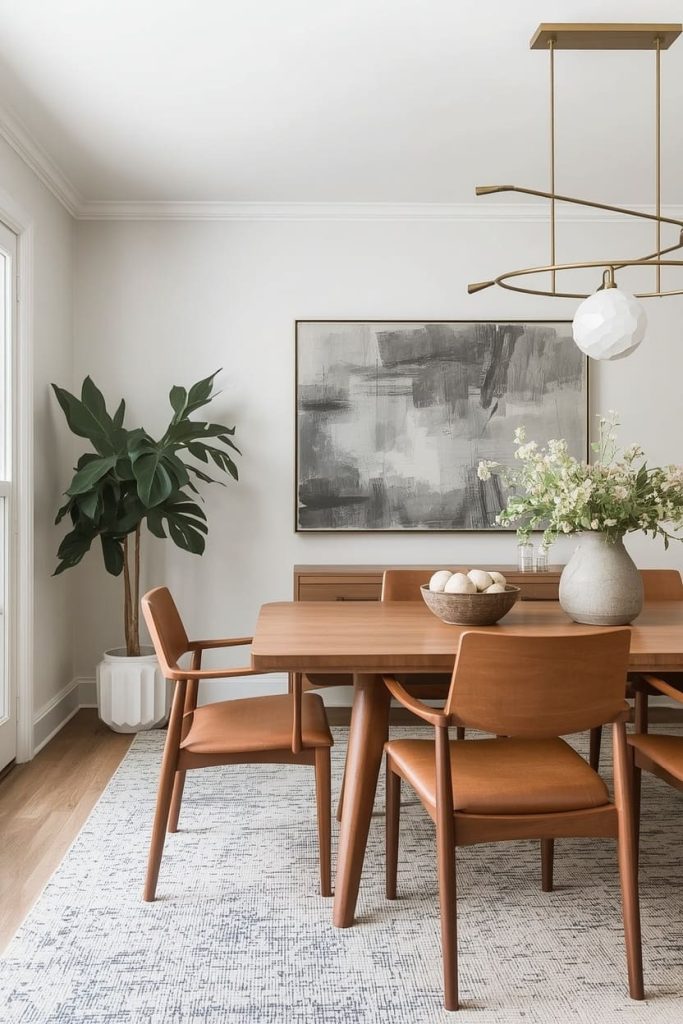
When I first started, my instinct was to grab a bunch of small prints and scatter them around. Big mistake. It looked cluttered and unintentional. What actually worked was flipping the approach: I found one large statement piece first, then built everything else around it.
A statement piece could be an oversized canvas print, a bold abstract painting, or even a large piece of textile art. The key is scale — for a dining room wall, you generally want your art to take up about two-thirds the width of your table or console below it. Anything smaller tends to look like an afterthought floating on the wall.
If you’re nervous about commitment, look for something in your existing color palette but with a slightly bolder pattern or contrast than the rest of your room. This gives you a focal point without needing you to redesign the whole space. Once that anchor piece is up, everything else you add will feel purposeful instead of random.
Try a Gallery Wall for a Curated, Collected Look
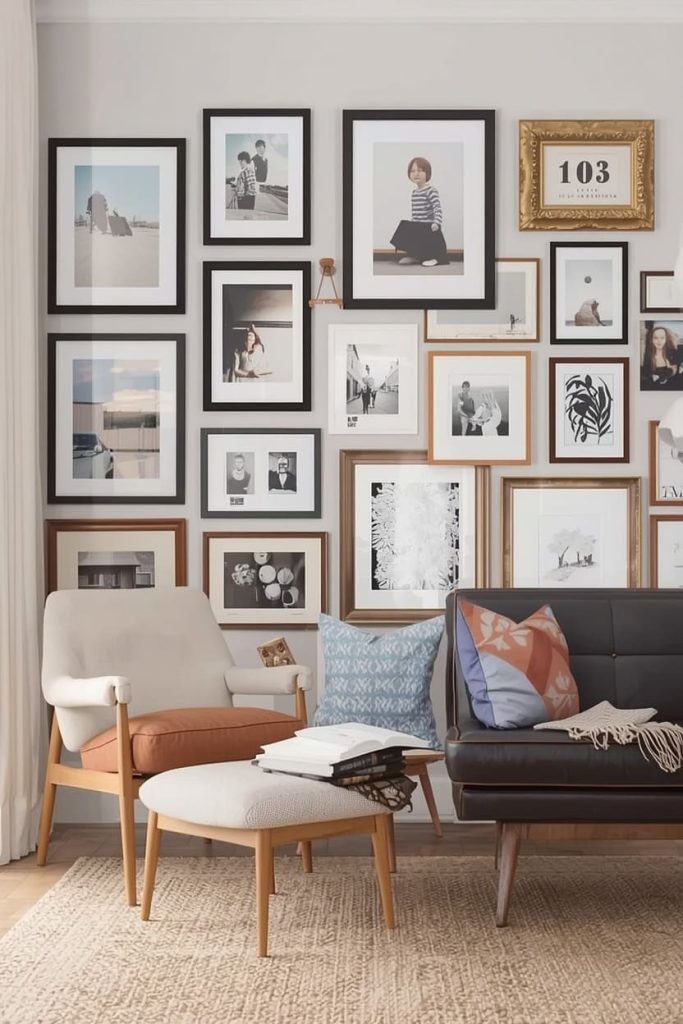
If you’re someone who loves variety, a gallery wall might be your best bet. I was intimidated by this idea for a long time because I’d seen so many Pinterest photos that looked effortlessly perfect, and I assumed I’d never get there without professional help.
Here’s what actually made it manageable for you: lay your frames out on the floor first before putting a single nail in the wall. Play with spacing, mix vertical and horizontal orientations, and don’t be afraid to combine different frame sizes — just try to keep the color or finish consistent (all black, all wood, or all gold) so it reads as intentional rather than mismatched.
A mix of family photos, art prints, and even a small mirror or two adds texture and keeps things from feeling too flat. Keep about 2–3 inches between frames for a cohesive but breathable layout. This is one of the few ideas where “more” genuinely does look better, as long as there’s a visual thread tying it all together.
Use Oversized Mirrors to Add Light and Depth
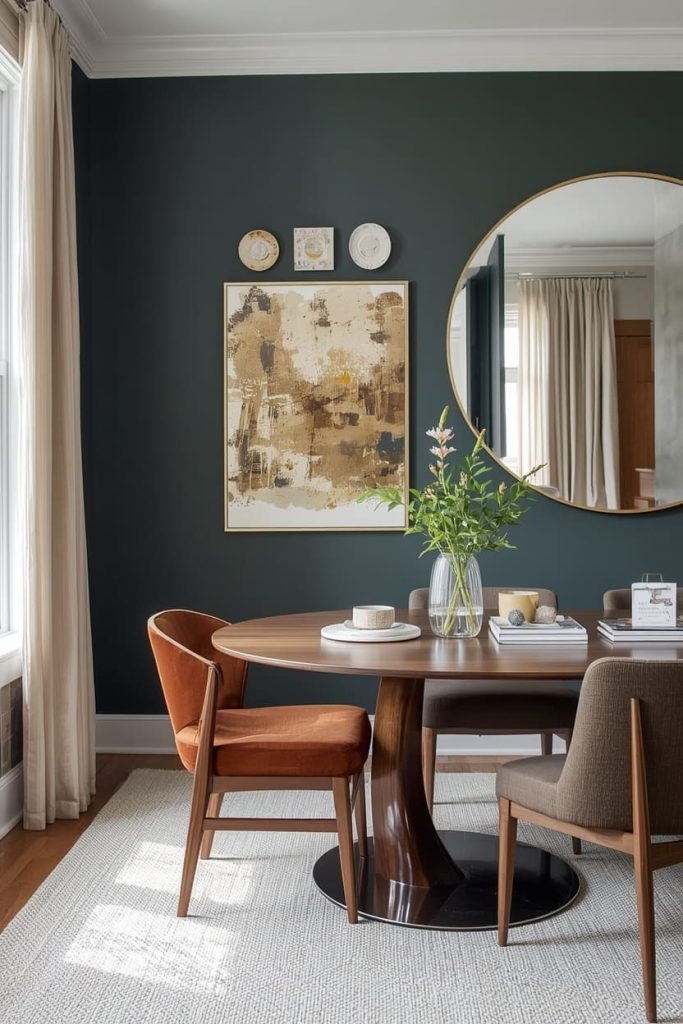
I didn’t expect a mirror to make such a dramatic difference, but it did. My dining room doesn’t get much natural light, and adding a large round mirror across from the window instantly made the whole space feel brighter and more open.
Beyond the light-bouncing benefit, mirrors also work as a stylish alternative when you want visual impact without committing to a specific art style. They’re neutral by nature, so they won’t clash with your existing decor, and they pair beautifully with other art pieces if you want to combine them into a mini gallery moment.
When choosing a mirror for you, go bigger than you think you need. A small mirror on a large wall gets lost, while an oversized one becomes a design feature on its own. Round or organic-shaped mirrors soften a room full of rectangular furniture, while framed rectangular mirrors work well in more traditional spaces. Either way, this is one of the lowest-effort, highest-impact changes you can make.
Incorporate Floating Shelves for Dimensional Display
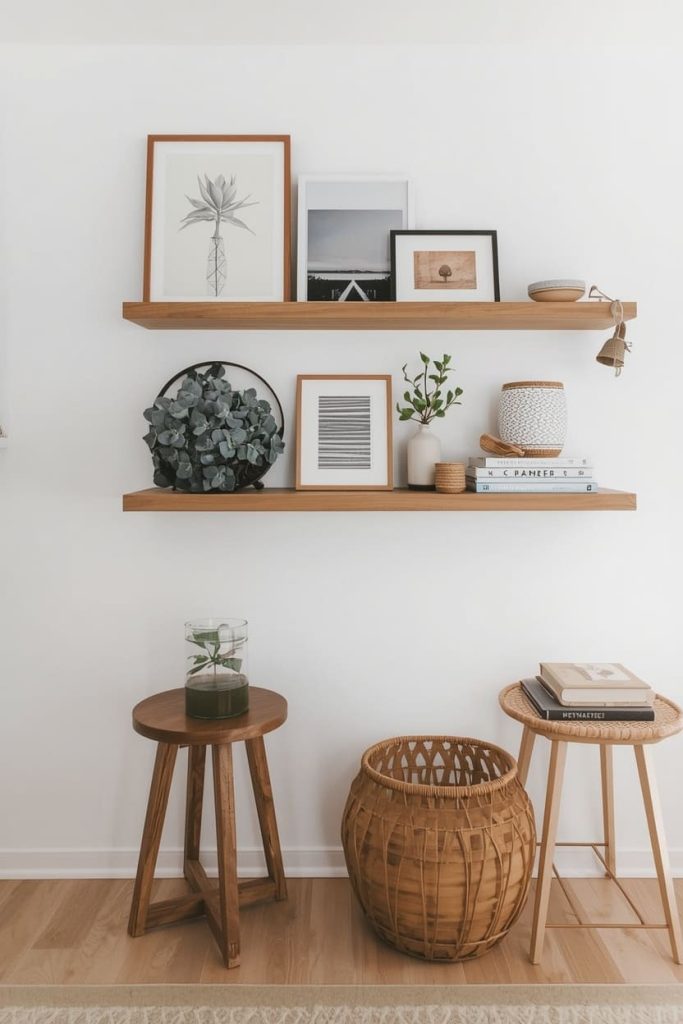
Flat wall art is great, but adding floating shelves gave my dining room a layered, more designer-looking finish. Instead of everything being pinned flat against the wall, shelves let you display objects with actual depth — small framed prints leaning against the wall, a vase, a plant, or even stacked books.
What I love about this idea for you is how easy it is to update. Seasonal decor, new finds from thrift shops, or rotating art prints can all live on these shelves without you needing to repaint or rehang anything major. It keeps your dining room feeling fresh without a full redecorating project every few months.
Stick to two or three shelves at varying heights rather than one long row, and stagger the styling so it doesn’t look too symmetrical or stiff. A mix of heights among the objects you place — tall, medium, short — creates a natural, curated rhythm that feels collected over time rather than staged all at once.
Bring in Textile and Woven Wall Art for Warmth
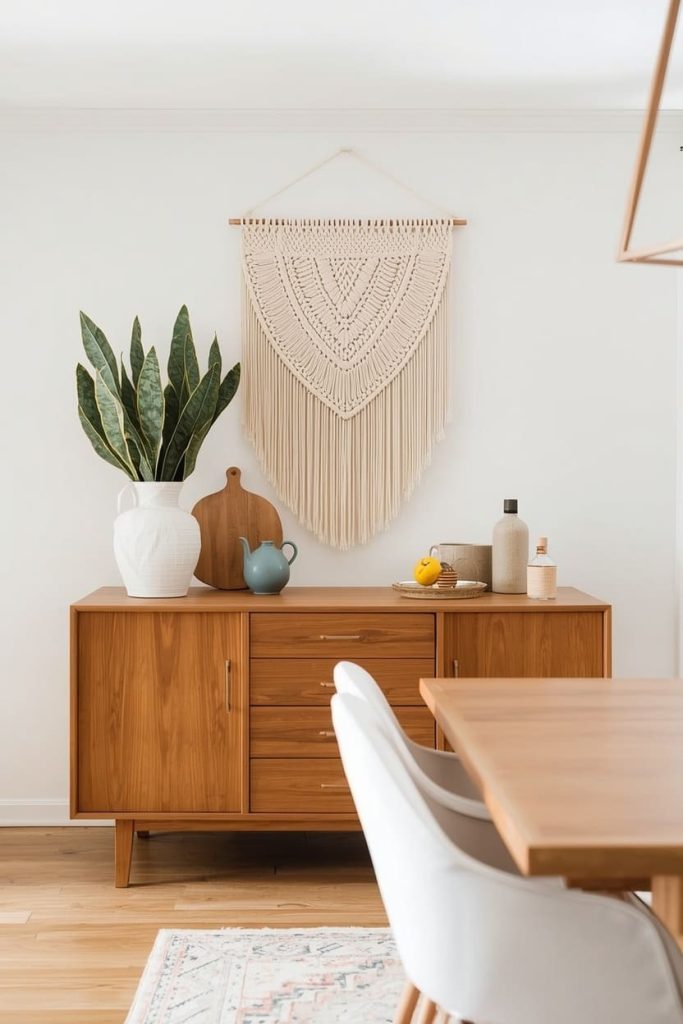
If your dining room feels a little cold or sterile, textile wall art might be exactly what’s missing. I added a woven wall hanging above my buffet table, and it immediately softened the whole room. Fabric and fiber pieces absorb sound slightly too, which is a nice bonus if your dining room tends to echo.
Macrame, woven tapestries, and fabric wall art come in enough styles now that you can find something boho, modern, or even minimalist depending on your taste. They also pair beautifully with wood tones, so if your dining table or chairs have a natural wood finish, this is an easy way to tie the whole room together.
For you, the easiest place to start is a single medium-sized woven piece on an otherwise plain wall, or as part of a gallery wall alongside framed prints. It adds texture without requiring you to introduce a whole new color into your space, which makes it a low-risk, high-reward addition.
Display Decorative Plates or Objects as Wall Art
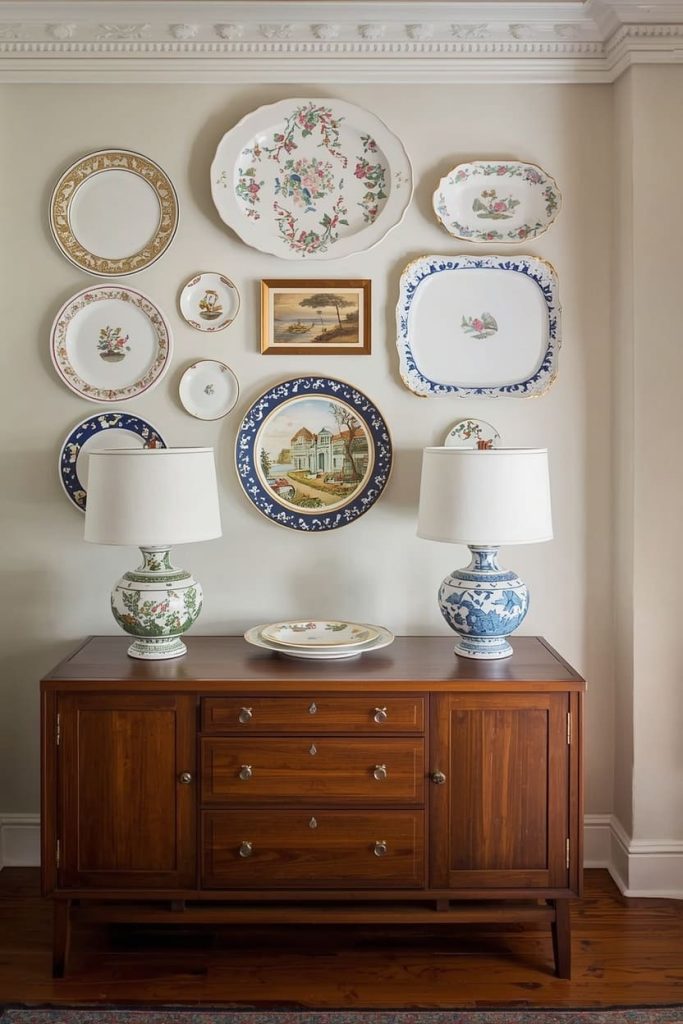
This idea surprised me the most because it wasn’t something I would have thought of on my own. A friend had a wall of vintage decorative plates in her dining room, and it looked so unexpectedly elegant that I tried it myself with a small collection I’d been storing in a cabinet.
Plates, platters, or even decorative trays hung in a cluster or a single row create a look that feels collected and personal rather than store-bought. It’s also a great option if you already own pieces with sentimental value — inherited china, travel finds, or flea market discoveries all work beautifully here.
If you want to try this for yourself, plate hangers are inexpensive and easy to install, and you don’t need a huge collection to start. Even three or four plates arranged in a simple line above your buffet or sideboard can make a strong visual statement without overwhelming the space.
Choose Art That Reflects Your Personal Story
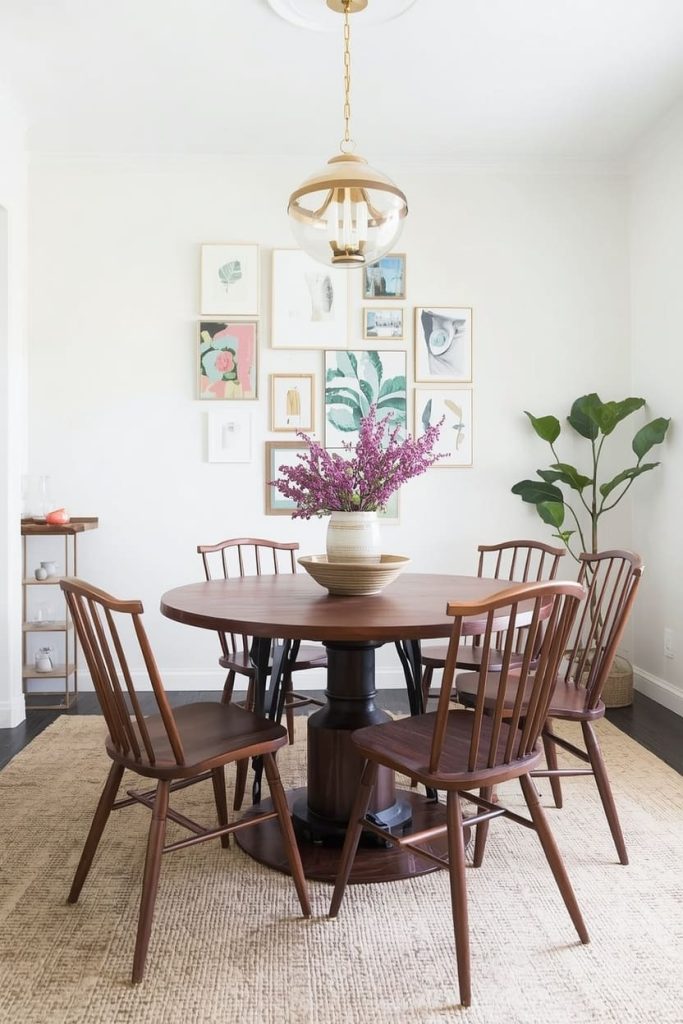
Out of everything I tried, this final idea is the one that made my dining room feel truly finished. Generic art from a big box store looked fine, but it didn’t feel like mine. Once I started incorporating pieces that meant something — a print from a city I’d traveled to, a piece of art from a local artist, even a framed menu from a memorable dinner — the room finally felt complete.
This doesn’t mean everything needs to be sentimental, but weaving in even one or two personal pieces among more decorative choices gives your dining room a story instead of just a look. Guests notice it too. People stop and ask about specific pieces instead of just complimenting the room in general.
For you, this might mean framing a favorite recipe card, a piece of art from a trip, or even a print in a color that reminds you of a favorite memory. It’s a small shift, but it’s the difference between a room that looks nice and one that actually feels like yours.
Frequently Asked Questions About Dining Room Wall Art
How high should I hang wall art in my dining room?
A good rule of thumb is to center your art about 57–60 inches from the floor to the middle of the piece, which is standard eye level for most people. If the art is hung above furniture like a buffet, leave about 6–8 inches of space between the top of the furniture and the bottom of the frame.
Can I mix different frame styles and colors?
Yes, but try to limit yourself to two or three finishes (like black, wood, and gold) so the mix feels intentional rather than chaotic. Keeping a consistent thread, whether that’s color, subject matter, or frame style, helps tie a variety of pieces together.
What size art works best for a dining room wall?
For a single statement piece, aim for art that covers about two-thirds the width of your table or the furniture beneath it. For gallery walls, the overall arrangement should generally scale to a similar proportion of the wall so it doesn’t look too small or scattered.
How do I decorate a dining room wall art on a budget?
Look for affordable framed print sets, print your own favorite photos in large format, or shop secondhand for frames and mirrors you can update yourself. Floating shelves are also a budget-friendly way to display smaller, inexpensive pieces with a lot of visual impact.
Do I need matching art in a dining room?
Not at all — variety often looks more collected and personal than a perfectly matched set. The key is finding a common thread, whether it’s color palette, frame finish, or general style, so the pieces feel curated rather than randomly thrown together.
Bringing It All Together
Looking back, that blank wall my aunt commented on ended up being the push I needed to finally figure out what worked.
Whether you start with one bold statement piece, build out a full gallery wall, or simply add a mirror to open up the space, you don’t need a professional designer or a big budget to make your dining room feel finished.
Pick the idea that feels most like you, start small if you need to, and trust that it’ll come together one piece at a time — just like mine did.

Jenny is a passionate writer specializing in home decor, design, and styling. With years of experience in transforming spaces, she shares expert tips on creating beautiful, functional homes. From interior design trends to DIY decor ideas, Jenny’s work helps homeowners craft spaces that reflect their unique style. Whether it’s a cozy living room, a modern kitchen, or a serene bedroom, her articles offer practical advice and inspiration to elevate any home.