You know that feeling when your dining room is perfectly fine — clean, functional, nothing technically wrong — but every time you walk in, it just feels flat? Like it’s missing a pulse? That’s not a furniture problem.
That’s a wall problem. And the best part is, you only need to fix one of them. A single dining room accent wall can shift the entire energy of a space — adding drama, warmth, personality, and that elusive sense of intention that makes a room feel genuinely designed.
The ideas ahead range from a single weekend with a paintbrush to a slightly more ambitious DIY that pays off tenfold. Pick one. Your dining room is about to look completely different.
Top 5 Products to Shop on Amazon Right Now
- RoomMates Peel and Stick Wallpaper — Vintage Floral — A renter-friendly peel-and-stick wallpaper in a large-scale botanical print that applies in under an hour and removes cleanly, perfect for traditional or cottagecore dining rooms.
- Portola Paints Lime Wash Paint — Classico — A ready-to-use authentic limewash paint that creates a beautifully aged, textured finish with zero special tools required, ideal for rustic, Mediterranean, or organic modern dining rooms.
- House of Antique Hardware Board and Batten MDF Molding Kit — A pre-cut MDF panel and molding kit that makes DIY board-and-batten wainscoting achievable for beginners, perfect for farmhouse, transitional, or classic dining rooms.
- RELIABILT Nickel Gap Shiplap Pine Board (6-pack) — Real pine nickel-gap shiplap boards with a pre-finished edge that install horizontally or vertically for an authentic wood accent wall in farmhouse or coastal dining rooms.
- Rust-Oleum Chalked Ultra Matte Paint — Aged Gray — A rich ultra-matte wall paint with a velvety, flat finish that absorbs light beautifully and creates a moody, sophisticated backdrop for any dining room style.
The 7 Ideas To Elevate Your Dining Room Wall
One Bold Paint Color: The Fastest Way to Give Your Dining Room a Completely New Identity
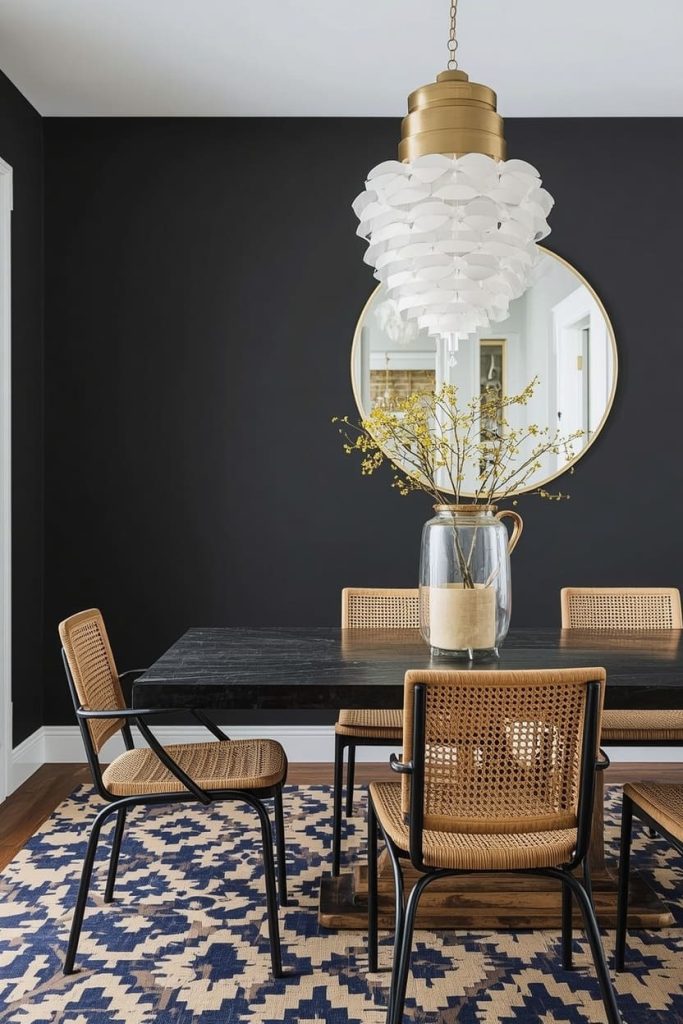
If you have never considered painting a single dining room wall a deep, saturated color, this is your sign. Bold paint is the lowest-cost, highest-impact accent wall treatment available — and in a dining room, it works with almost every furniture style imaginable. Think forest green behind a wood table and cane chairs. Navy behind a white linen tablecloth and brass candlesticks. Terracotta behind warm wood tones and rattan pendants. Charcoal behind a marble table and velvet dining chairs.
The visual effect is immediate and transformative. A dark or saturated wall makes the furniture in front of it pop with definition, creates a sense of intimacy and enclosure that feels intentional, and gives the room a focal point it previously lacked.
Application is genuinely beginner-friendly. You need painter’s tape, a quality roller, an angled brush for edges, and one to two coats of paint. A standard dining room accent wall can be completed in a single afternoon for $40–$80.
Choose an ultra-matte or eggshell finish for a sophisticated, light-absorbing look that photographs beautifully and hides imperfections far better than satin or semi-gloss.
This is the perfect starting point if you want maximum transformation with minimum commitment, budget, and time.
Wallpaper or Peel-and-Stick: Add Pattern, Texture, and Personality to One Wall
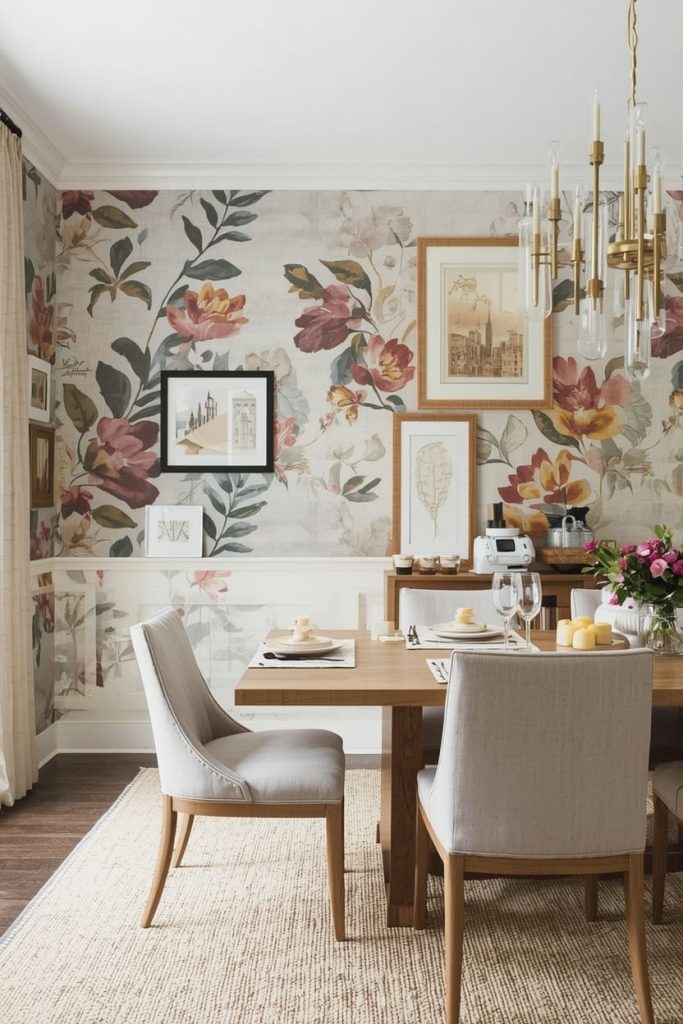
Wallpaper on a single dining room wall is one of the most effective design moves in the entire home décor playbook — and modern options have made it more accessible than ever. Traditional wallpaper delivers the most luxurious result, with rich colors, textured surfaces, and large-scale prints that feel genuinely high-end. Peel-and-stick wallpaper is the renter-friendly alternative that applies without paste, removes without damage, and has improved enormously in print quality over the last few years.
The visual effect of wallpaper on a dining room accent wall is unlike anything paint alone can achieve. A large-scale botanical print brings the room to life with color and organic energy. A geometric pattern adds graphic boldness and modern edge. A grasscloth or linen-textured wallpaper adds warmth and tactile depth that reads as effortlessly sophisticated.
For a dining room, the wall behind the head of the table or the wall most visible from the entrance are the ideal candidates. Center any large-scale pattern carefully so the focal point of the print sits at eye level when seated.
Peel-and-stick versions range from $30–$80 per roll; traditional wallpaper $50–$150. Most accent walls require three to five rolls depending on wall size and pattern repeat.
This idea suits you perfectly if you want maximum personality and visual drama from a single wall without committing to a permanent treatment.
Shiplap and Wood Plank Walls: Add Warmth, Texture, and Architectural Interest
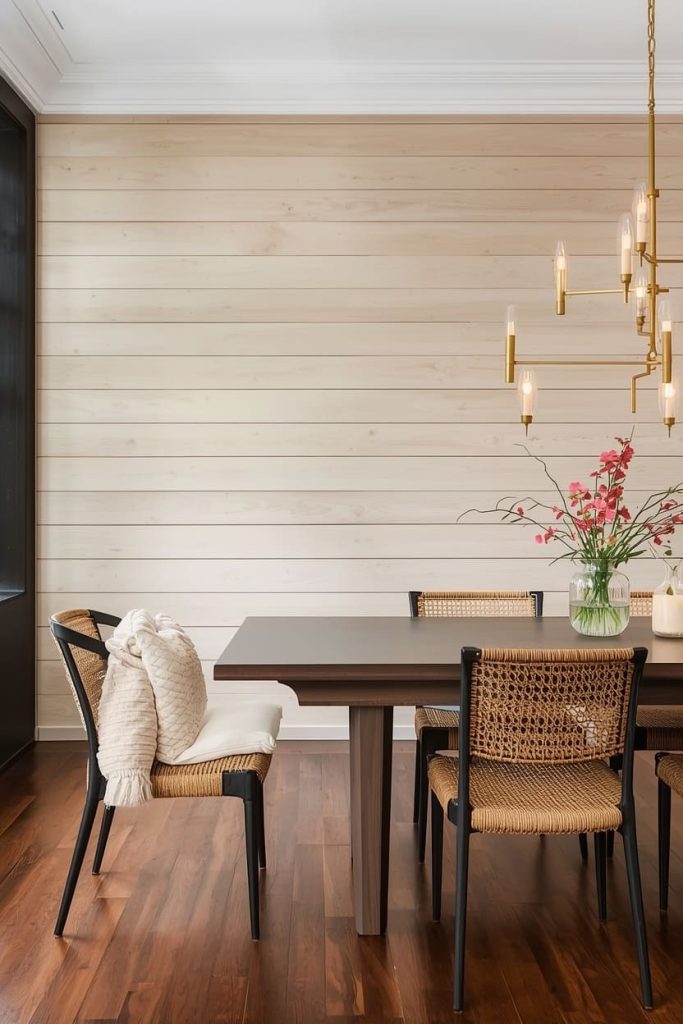
Shiplap remains one of the most searched and pinned accent wall treatments for good reason — it works. The horizontal lines of a shiplap accent wall add architectural interest, a sense of width, and a warmth that paint simply cannot replicate. In a dining room, it creates a backdrop that feels considered, cozy, and beautifully tactile — especially when paired with warm wood furniture, woven textures, and soft lighting.
Real pine shiplap boards install by nailing directly into wall studs, creating a genuinely durable, long-lasting result. For a softer commitment, peel-and-stick shiplap panels offer a similar look without the power tools. Whitewashed or natural wood tones suit farmhouse and coastal dining rooms; painted shiplap in deep green, navy, or black reads as dramatically modern and unexpected.
Vertical shiplap installation — running the boards floor to ceiling rather than horizontally — is an increasingly popular variation that draws the eye upward and makes a dining room feel taller and more dramatic.
The cost of a real shiplap accent wall ranges from $200–$500 in materials depending on wall size and wood choice. Installation requires a nail gun, level, and a table saw or circular saw for cuts — a confident beginner can complete this in a full weekend.
This is your idea if you want genuine architectural character and organic warmth that elevates your dining room well beyond what any paint or wallpaper can achieve.
Board-and-Batten or Wainscoting: Add Classic Architecture That Makes Any Room Look More Expensive
Board-and-batten and wainscoting are the accent wall treatments that make rooms look like they were designed by a professional — and both are far more achievable as DIY projects than most people expect. Board-and-batten involves attaching vertical MDF boards at regular intervals across a wall, creating a clean grid of raised panels that adds architectural dimension without covering the entire wall surface. Wainscoting typically covers the lower half of the wall with paneling, capped with a horizontal rail, adding a formal, classic quality.
In a dining room, these treatments work on multiple levels. They add visual texture and shadow that flat walls simply lack. They make ceiling heights feel more pronounced by drawing the eye upward. And they provide a backdrop that makes any furniture placed in front of it look intentionally curated.
Paint the panels the same color as the wall for a subtle, tonal effect — or go two-tone with white paneling against a deep-colored upper wall for a more dramatic result that has dominated Pinterest boards for the past three years.
MDF molding kits make this genuinely beginner-accessible. The tools required are a miter saw, nail gun, caulk, sandpaper, and paint. A full dining room accent wall costs $150–$400 in materials and takes a weekend to complete.
This suits you if you want your dining room to feel architecturally elevated, classically styled, and genuinely high-end without touching the furniture.
Limewash and Textured Paint: Create a Moody, Organic Wall That Looks Like It Belongs in Tuscany
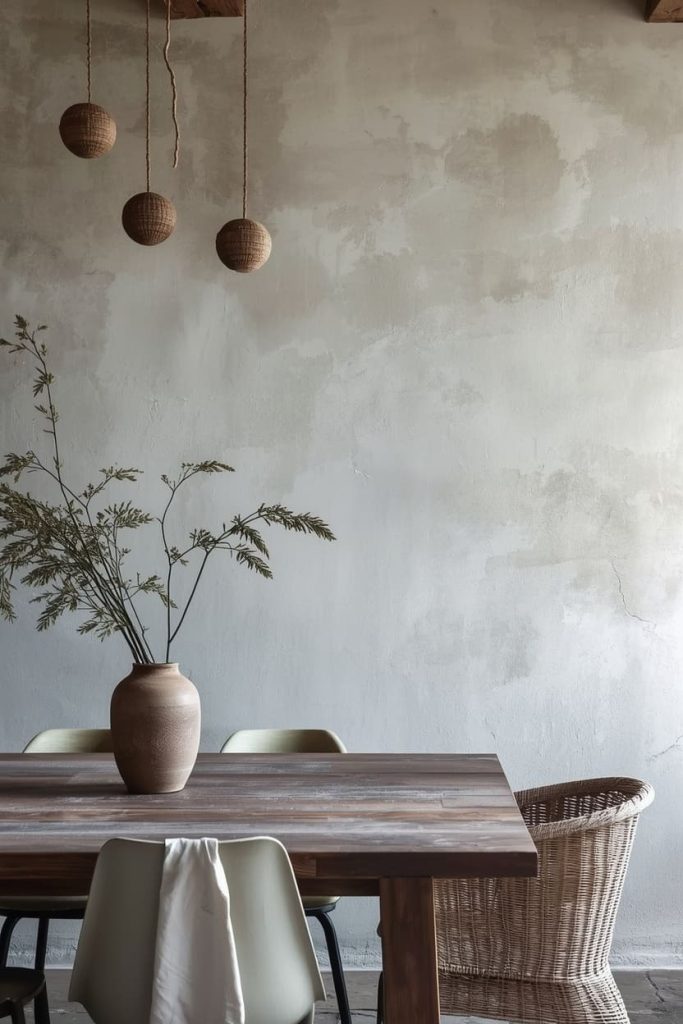
Limewash paint is having a major moment — and once you see it in person, you understand exactly why. Unlike flat or matte paint, limewash creates a living, layered finish with natural variation in tone and texture that looks simultaneously ancient and completely current. Each section of wall catches light differently, giving the surface a depth and movement that transforms a flat wall into something that feels genuinely artisan.
In a dining room, a limewashed accent wall creates an atmosphere that no other treatment can replicate. It’s moody without being dark. It’s textured without being busy. And it pairs beautifully with natural materials — wood, linen, stone, rattan, terracotta — making it a perfect match for organic modern, Mediterranean, rustic, or earthy dining room styles.
Application is simpler than it looks. Limewash paint is applied with a natural bristle brush in a cross-hatch motion, then partially wiped back with a damp cloth before drying. No special skills are required — in fact, the more imperfect the application, the more beautiful and authentic the result.
Ready-to-use limewash paints cost $60–$120 per gallon, and most accent walls require one to two gallons. The entire project can be completed in a single afternoon.
This is your idea if you want a dining room that feels warm, atmospheric, and uniquely personal — a finish that looks like it took years to develop but actually took an afternoon.
Arched and Geometric Molding Panels: Create a Custom Designer Look With Simple MDF
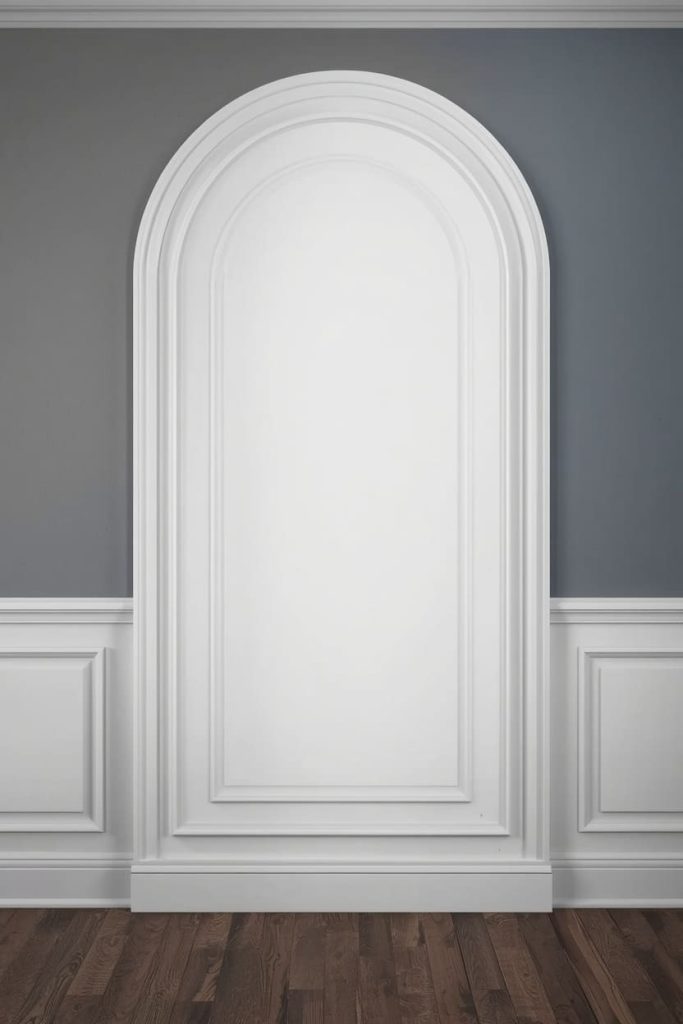
Arched molding panels are the accent wall treatment you’ve been seeing all over high-end interior design accounts — and they’re far more achievable than they look. The concept is simple: thin MDF or wood molding strips are applied directly to a painted wall in geometric shapes — rectangles, squares, hexagons, or the dramatically popular arch — creating a raised panel effect that adds extraordinary architectural depth and visual interest.
In a dining room, an arch panel wall creates an instant focal point with a sense of grandeur and craftsmanship that looks custom-built. Paint the molding the same color as the wall for an ultra-sophisticated tonal look, or go two-tone — white molding against a deep-colored wall — for a more graphic, statement result.
The arch shape in particular photographs beautifully and has become one of the most shared dining room accent wall treatments on Pinterest for its combination of elegance and achievability.
Materials are inexpensive — thin MDF molding strips cost $1–$3 per linear foot, and most accent walls require $50–$150 in materials. The tools needed are a miter saw, construction adhesive, caulk, and paint. Templates for arch shapes are widely available online as free printable guides.
This is perfect for you if you want a dining room accent wall that looks genuinely custom, architecturally rich, and expensive — without spending more than a long Saturday to achieve it.
Gallery Wall With Large-Scale Art: Create a Curated, Personal Focal Point in an Afternoon
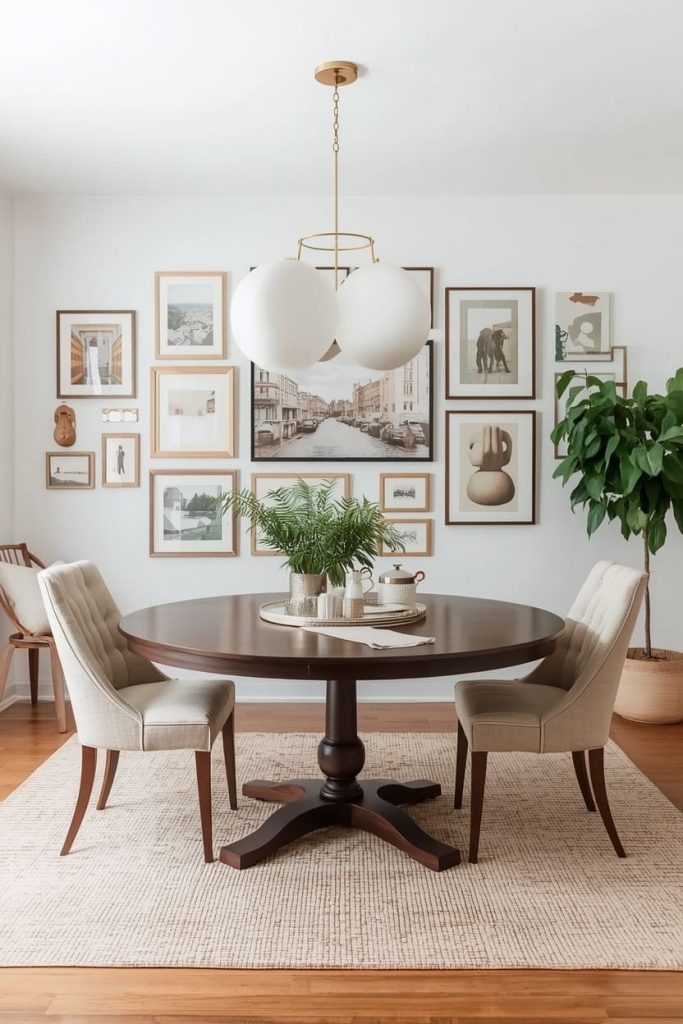
A gallery wall done well is one of the most personal and visually compelling accent wall treatments you can create — and in a dining room, a carefully curated collection of art, prints, mirrors, and objects tells a story that makes the whole room feel warmer and more alive. The key word is “curated” — a gallery wall that works has intention behind it, not just a collection of frames that happened to be available.
For a dining room accent wall, aim for a cohesive palette — art that shares two or three colors drawn from the room’s existing tones. Mix frame sizes deliberately: one or two large anchor pieces surrounded by smaller supporting works. Include at least one oversized piece — 24×36 inches or larger — to give the arrangement genuine visual weight.
For maximum impact with minimum effort, consider a single oversized canvas or print rather than a multi-piece gallery. One 40×60-inch piece of abstract art centered on a dining room wall makes a powerful, immediate statement that costs less and installs in under ten minutes.
Peel-and-stick picture hanging strips make this approach entirely renter-friendly — no nails, no damage, fully removable and repositionable.
This idea is for you if you want a dining room accent wall that reflects your personality, requires zero construction skills, and can be updated and evolved over time as your style develops.
Frequently Asked Questions
Which wall in a dining room should be the accent wall?
The best accent wall in a dining room is the one most visible from the room’s entrance — the wall your eye naturally travels to first when you walk in. In most dining rooms this is the wall at the end of the room or directly behind the head of the table. If your dining room has a buffet, sideboard, or built-in, the wall behind that piece is also an excellent candidate since it already functions as a visual focal point.
What is the most popular accent wall treatment right now?
Limewash paint, arched molding panels, and bold saturated paint colors are currently dominating Pinterest and interior design content. Limewash in particular has seen explosive growth due to its organic warmth and approachable DIY application. Board-and-batten and shiplap remain consistently popular for their timeless architectural quality. Peel-and-stick wallpaper in large-scale botanical and geometric prints is the top choice among renters and commitment-shy decorators.
Can renters create a dining room accent wall without damaging walls?
Absolutely. Peel-and-stick wallpaper is the most popular renter-friendly option — it applies without paste and removes cleanly without damaging paint or drywall. Removable picture hanging strips allow a full gallery wall with zero nail holes. Some renters also use temporary removable molding applied with mounting tape rather than nails for a panel effect. Always test peel-and-stick products on a small patch first to ensure clean removal from your specific wall finish.
How much does a dining room accent wall typically cost?
It depends on the treatment. Bold paint is the most affordable at $40–$80 for paint and supplies. Peel-and-stick wallpaper runs $90–$200 for a standard wall. Limewash paint costs $80–$150. Shiplap and board-and-batten range from $150–$500 in materials. MDF molding panel walls cost $50–$200. A gallery wall varies widely based on art choices but can be executed beautifully for $100–$300. Every option on this list delivers a result that looks far more expensive than it costs.
You’ve been pinning dining room accent wall ideas long enough — it’s time to actually make one happen. Pick the treatment that made you stop scrolling, order what you need, clear your weekend, and go. One wall. One weekend.
One completely transformed dining room. The before-and-after moment you’ve been imagining is genuinely closer than you think, and the satisfaction of standing back and looking at what you just created is absolutely worth it. Start this weekend.

Jenny is a passionate writer specializing in home decor, design, and styling. With years of experience in transforming spaces, she shares expert tips on creating beautiful, functional homes. From interior design trends to DIY decor ideas, Jenny’s work helps homeowners craft spaces that reflect their unique style. Whether it’s a cozy living room, a modern kitchen, or a serene bedroom, her articles offer practical advice and inspiration to elevate any home.