I still remember standing in the doorway of my dining room, hands on my hips, completely stumped. The room was long, narrow, and awkward — more hallway than dining space. Every table I tried looked wrong.
Every chair arrangement felt cramped. I almost gave up and just put a console table there and called it storage. But then I started experimenting, researching, and slowly piecing together a space that actually felt like a room I wanted to eat in.
If you’re staring at your own narrow dining room right now wondering where to start, these seven ideas are exactly what turned things around for me — and they can do the same for you.
Before we dive in, here are five products that made a real difference.
Table of Contents
- Choose a Table That Works With Your Room, Not Against It
- Replace Chairs on One Side With a Wall-Hugging Bench
- Consider a Wall-Mounted or Drop-Leaf Table for Extreme Flexibility
- Use Mirrors and Layered Lighting to Make the Room Breathe
- Go Vertical With Storage to Keep the Floor Clear
- Use a Light, Monochromatic Palette to Visually Widen the Space
- Anchor the Space With a Narrow, Well-Proportioned Rug
Top 5 Picks to Get You Started (Available on Amazon)
- VASAGLE Narrow Dining Table (47 inches) — Its slim 28-inch width fits comfortably against a wall or centered in a tight space without swallowing the room.
- Homfa Backless Storage Bench — A backless design slides neatly under the table edge when not in use, freeing up walking space in a narrow room.
- WLIVE Wall-Mounted Drop-Leaf Table — Folds completely flat against the wall when not in use, giving you a full dining surface only when you actually need it.
- Christopher Knight Slim Parsons Dining Chairs — Their straight, armless profile takes up minimal visual and physical space while still looking polished and intentional.
- Neutype Large Horizontal Wall Mirror (48 x 24 inches) — Mounted on a long wall, this mirror doubles the perceived width of any narrow dining room instantly.
The 7 Ways To Style Your Narrow Dining Room
Choose a Table That Works With Your Room, Not Against It
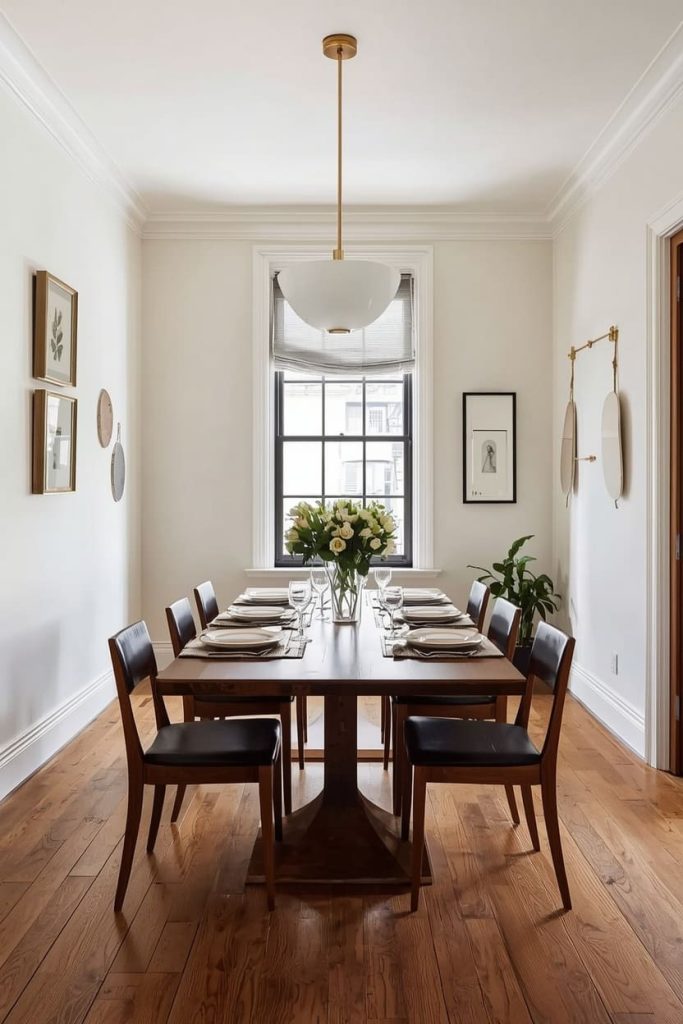
The table is the single most important decision you’ll make in a narrow dining room, and I learned this the hard way after dragging a round pedestal table in and immediately realizing it blocked every path through the room.
The shape and size of your table either solves the narrow room problem or makes it worse.
For narrow spaces, a rectangular table is almost always the right call. It runs parallel to the length of the room, which feels natural and keeps the flow of movement open on at least one side.
Look for tables that are no wider than 30 to 32 inches — that’s the sweet spot where you can still fit plates and glasses without the table dominating the floor plan.
If your room is under 8 feet wide, aim for a table that is 28 inches wide or less. You want at least 36 inches of clearance on the sides where people will pull out chairs and walk past.
I know that sounds tight, but once you’re sitting down, it feels completely comfortable. Measure before you shop, and don’t skip that step — every inch counts in a narrow room.
Replace Chairs on One Side With a Wall-Hugging Bench
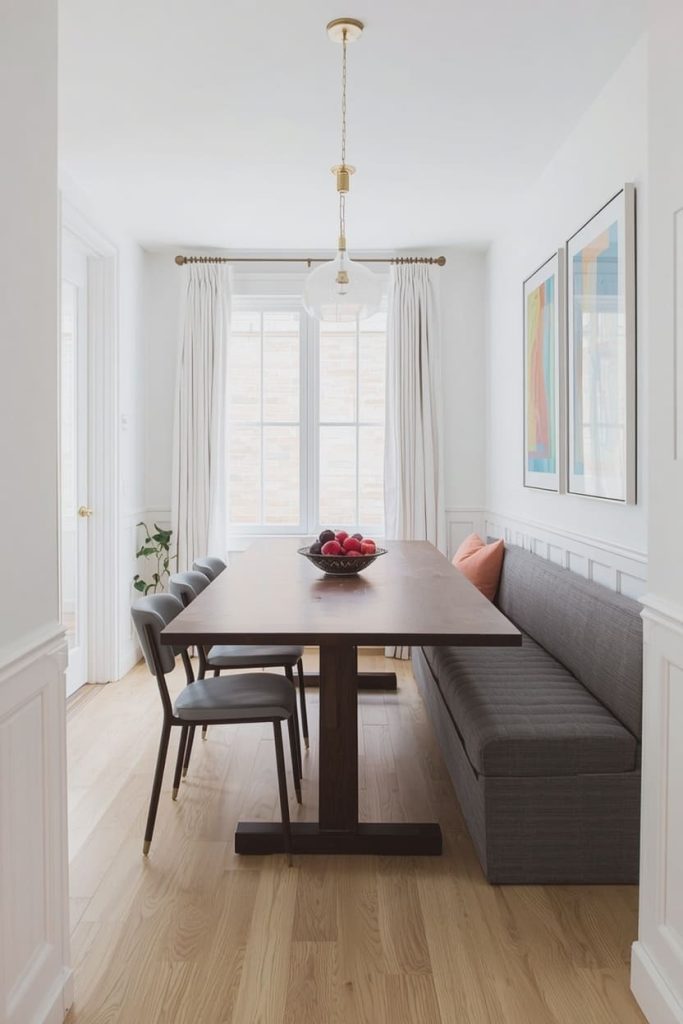
One of the simplest swaps I ever made was replacing the chairs on one side of my table with a long backless bench. It sounds minor, but it changed everything about how the room functioned and looked.
Here’s why it works so well in a narrow space: a bench can slide fully under the table when no one is sitting on it. Chairs, even slim ones, typically stick out eight to ten inches from the table edge even when pushed in.
Multiply that across three or four chairs and you’ve lost nearly a foot of clearance on one side of the room before anyone even sits down.
A bench also makes the room feel less visually busy. Instead of multiple chair legs and backs breaking up your sightlines, you have one clean horizontal line that your eye moves across easily. You can dress it up with a runner or a few cushions to make it feel warmer and more intentional.
For you, this works especially well if one side of your table runs along or near a wall. Slide the bench in tight, and that whole wall side of the dining area almost disappears visually when the table isn’t in use.
Consider a Wall-Mounted or Drop-Leaf Table for Extreme Flexibility
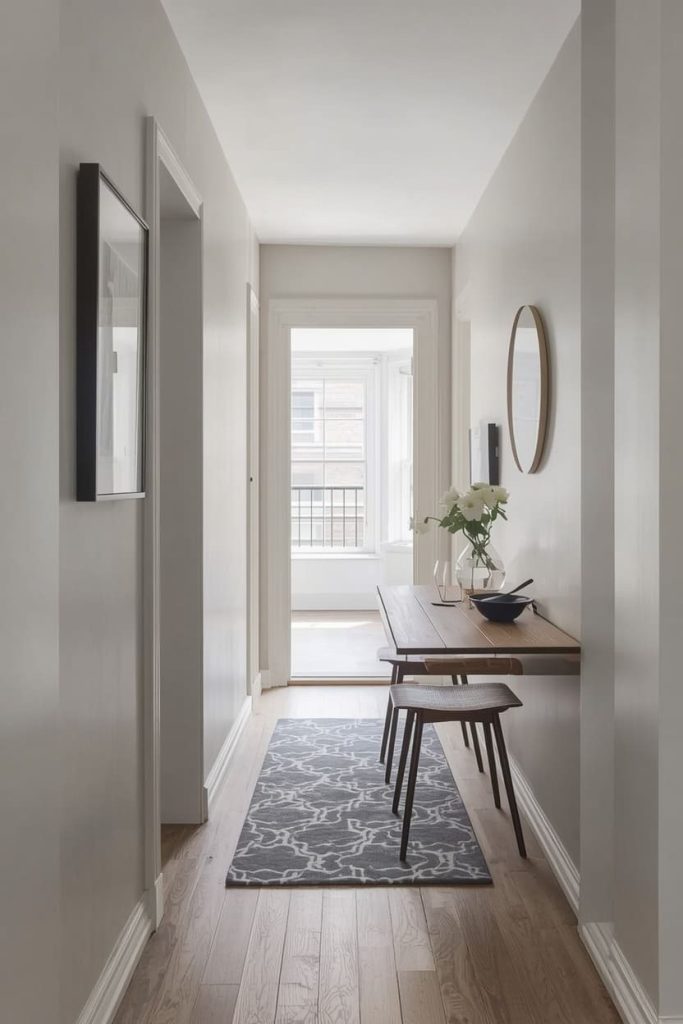
If your narrow room doubles as a hallway, a passthrough, or a space that needs to serve more than one purpose, a wall-mounted drop-leaf table might be the most practical thing you can invest in.
I installed one in a rental apartment years ago, and it completely changed how I used that room. When the table was folded up, the space worked as an entry area. When I had people over for dinner, I dropped the leaf down and suddenly had a real dining surface for two to four people with zero effort.
Wall-mounted tables are available in wood, metal, and laminate finishes, and many are designed to look intentional rather than makeshift.
The key is to mount it at the correct dining height — 28 to 30 inches from the floor — and to pair it with stools or slim chairs that can tuck fully underneath when not in use.
For you, this option also works beautifully in narrow galley kitchens where a dedicated dining room doesn’t really exist.
You get the function of a dining table without permanently sacrificing floor space that the room honestly can’t afford to give up.
Use Mirrors and Layered Lighting to Make the Room Breathe
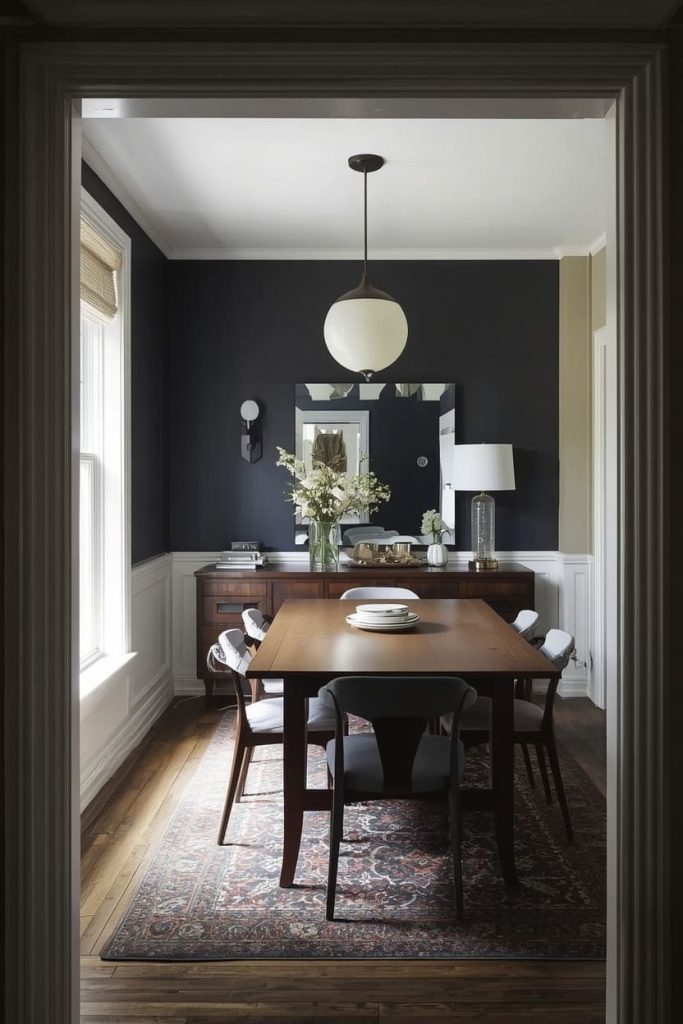
The narrow dining room I struggled with the most wasn’t just small — it was dark. And I quickly figured out that a dark, narrow room feels like a corridor no matter what furniture you put in it. Light is the thing that makes a space feel livable, and mirrors are how you multiply the light you already have.
I mounted a large horizontal mirror on the longest wall of the room, directly across from the window. The difference was immediate. The room looked nearly twice as wide, the natural light bounced deeper into the space, and the whole mood shifted from cramped to considered.
Beyond mirrors, layer your lighting intentionally. A single overhead fixture in a narrow room creates one flat pool of light that flattens the space. Instead, combine a pendant light or chandelier over the table with wall sconces or a floor lamp at one end.
That layering creates dimension and makes the room feel like it has corners and depth that your eye wants to explore.
For you, even one well-placed mirror and a dimmer switch on your existing fixture can make a noticeable shift in how your dining room feels on an average evening.
Go Vertical With Storage to Keep the Floor Clear
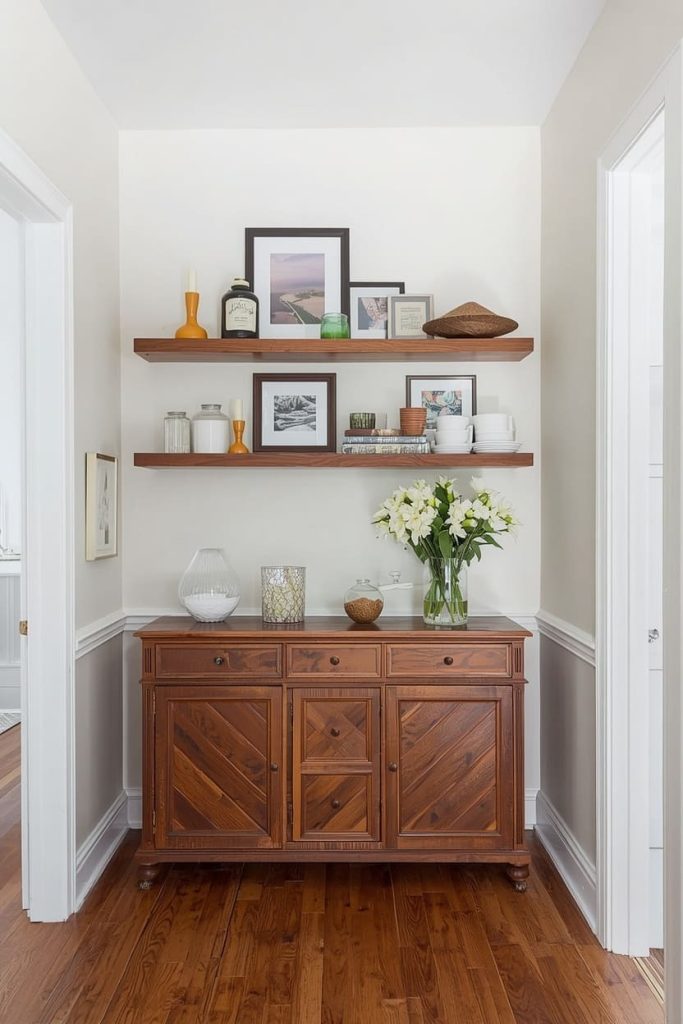
In a narrow dining room, the floor is your most valuable real estate. Anything you place on it has to earn its spot, and freestanding furniture that doesn’t serve double duty is often not worth the trade-off.
That’s why I started looking up. Vertical storage — open shelving, a slim wall-mounted cabinet, or floating shelves — keeps the floor open while giving you a place for dining extras like serving bowls, candles, extra glassware, and linen napkins.
It draws the eye upward, which also makes the ceiling feel higher and the room feel less compressed horizontally.
When I added two floating shelves to the narrow wall at the end of my dining room, it did two things at once: gave me storage I desperately needed and created a styled focal point that made the room feel finished rather than forgotten.
For you, keep shelves at a height that doesn’t interfere with movement — I recommend starting at least 66 inches from the floor if the shelves will be near a walkway. Style them with a mix of practical and decorative items so they feel personal rather than purely functional.
Use a Light, Monochromatic Palette to Visually Widen the Space
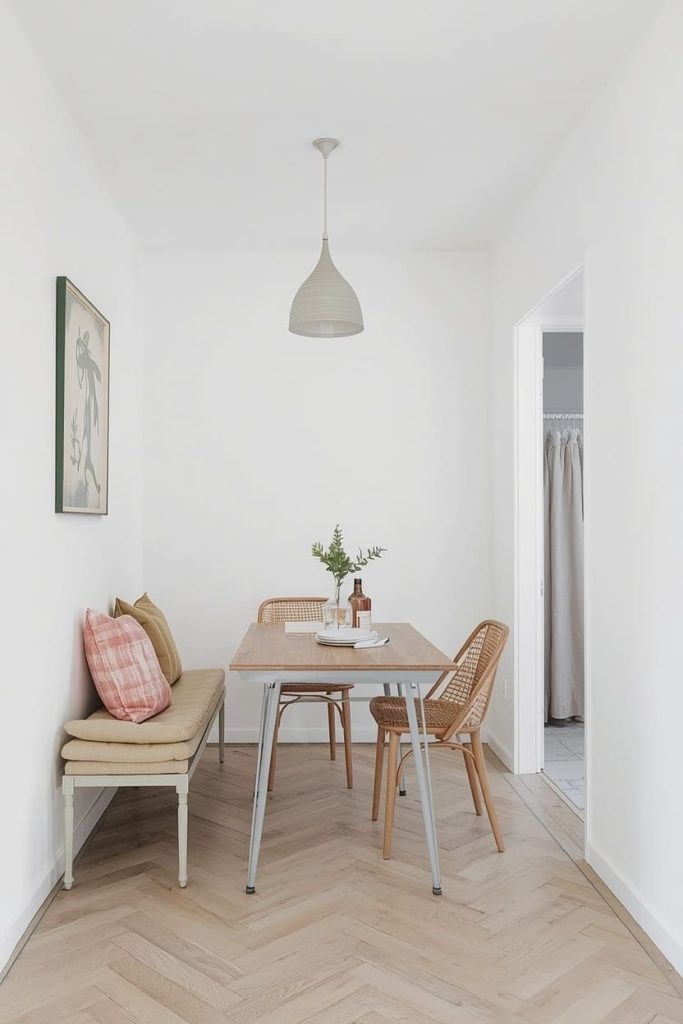
Color is one of the most underestimated tools in a narrow room, and I used to make the mistake of trying to add personality through bold, contrasting colors. What I got instead was a room that felt even more pinched and choppy.
When I repainted the walls in a soft warm white and switched to dining chairs in a similar tone, the room exhaled.
A monochromatic palette — meaning everything lives in the same color family, even if the shades and textures vary — removes the visual boundaries between surfaces.
Your eye doesn’t stop at the wall, then the chair, then the floor. It moves through the room continuously, which creates an illusion of more space.
You don’t have to go all white. Soft sage greens, warm greiges, and creamy neutrals all work beautifully. The key is keeping the contrast low between your walls, furniture, and floor. Add personality through texture instead — a linen cushion, a wooden table, a woven bench — rather than through competing colors.
For you, even repainting just the walls in a lighter tone while keeping your existing furniture can make a surprisingly significant difference in how open the room feels day to day.
Anchor the Space With a Narrow, Well-Proportioned Rug
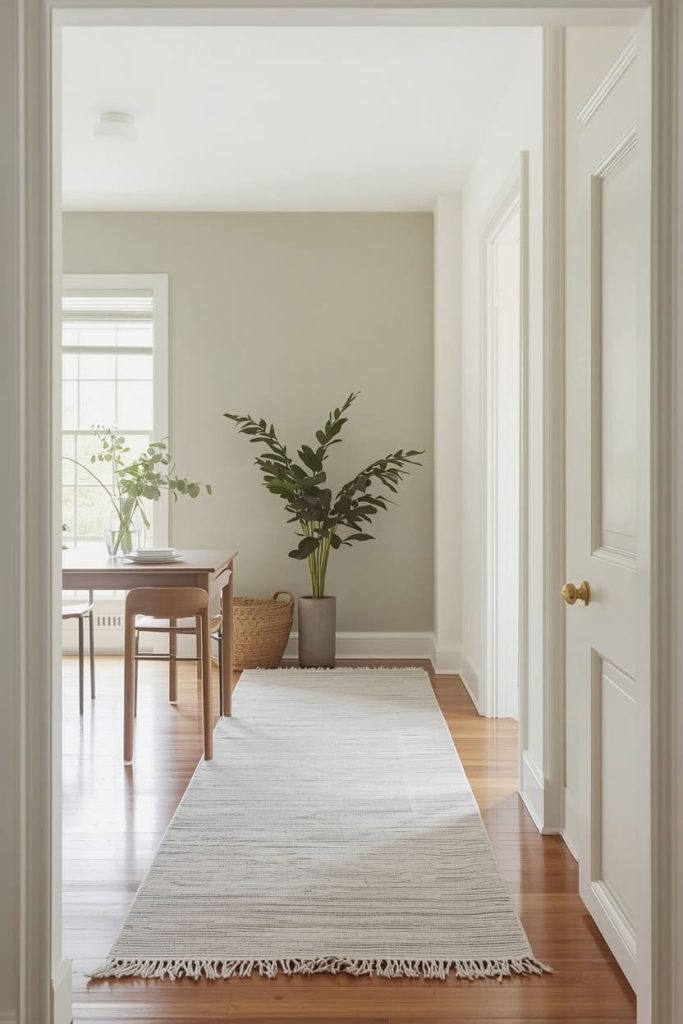
A rug is the thing that tells a room it’s a room. In an open floor plan or a space that bleeds into a hallway, a rug defines the dining area and gives it a sense of purpose and boundary. I skipped a rug for two years in my narrow dining room thinking there wasn’t enough space for one, and I was completely wrong.
The trick is getting the proportions right. In a narrow room, you want a rug that runs the length of your table and extends about 24 inches beyond each end — enough that chair legs stay on the rug even when pulled out.
In terms of width, go as wide as your room will allow while still leaving at least six inches of bare floor on each side. That border of floor around the rug actually makes the room feel wider, not narrower.
For narrow rooms, a runner-style rug or a low-pile rectangular rug in a simple pattern or solid color works best. Busy patterns can feel overwhelming in tight quarters.
A rug in a warm neutral or a tone that complements your table grounds the entire room and makes the dining area feel complete and intentional.
Frequently Asked Questions About Narrow Dining Rooms
What is a good size table for a narrow dining room?
For most narrow dining rooms, a table between 28 and 32 inches wide is the ideal range. This gives you enough surface space for place settings while leaving room to move comfortably on both sides. In rooms under 8 feet wide, lean toward the lower end of that range and prioritize clearance over table size.
How do I make a narrow dining room look wider?
The most effective combination is a large horizontal mirror on your longest wall, a light monochromatic color palette, and layered lighting that creates depth. Keeping furniture low-profile and the floor as clear as possible also helps. Avoiding heavy curtains and maximizing natural light contributes significantly to making the room feel more open.
Can I fit a dining room in a 7-foot-wide space?
Yes, you absolutely can. A table 28 inches wide leaves about 25 inches of clearance on each side in a 7-foot-wide room — enough to seat people comfortably and allow movement. Use a bench on one side to minimize chair intrusion into the walkway, and keep additional furniture minimal to maintain that clearance.
What chairs work best in a narrow dining room?
Slim, armless chairs are the best choice for narrow spaces. Parsons chairs, ghost chairs, and simple wooden side chairs all take up minimal visual and physical space. Avoid chairs with wide arms, thick cushioned backs, or heavy frames — they eat into your clearance quickly and make the room feel more crowded than it actually is.

Jenny is a passionate writer specializing in home decor, design, and styling. With years of experience in transforming spaces, she shares expert tips on creating beautiful, functional homes. From interior design trends to DIY decor ideas, Jenny’s work helps homeowners craft spaces that reflect their unique style. Whether it’s a cozy living room, a modern kitchen, or a serene bedroom, her articles offer practical advice and inspiration to elevate any home.