If your dining room doubles as a drop zone for mismatched serving platters, orphaned wine glasses, and tablecloths stuffed into random drawers — you are not alone.
The dining room is one of the most under-stored spaces in the entire home, and that lack of dedicated storage is exactly what makes it feel perpetually unfinished. The right cabinet changes everything.
It gives every entertaining essential a home, clears the visual clutter, and anchors the room with a piece of furniture that works as hard as it looks good.
Whether you need a sleek sideboard, a display hutch, or a full built-in, there is a dining room cabinet solution perfectly matched to your space, your style, and your storage reality.
Table of Contents
- The Sideboard or Buffet: The Most Hardworking Cabinet Your Dining Room Will Ever Own
- The Hutch: Display and Storage Combined in One Statement Piece
- The China Cabinet: Give Your Good Pieces the Showcase They Deserve
- Open Shelving: Curated Display That Makes a Dining Room Feel Lived-In and Personal
- Built-In Cabinets: The Permanent Solution That Adds Value and Architecture to Your Home
- The Bar or Drinks Cabinet: Elevate Your Entertaining Game With a Dedicated Drinks Station
- Tall Freestanding Cabinets: Maximize Vertical Storage in Dining Rooms That Lack Wall Space
Top 5 Dining Room Cabinets to Shop on Amazon Right Now
- Nathan James Ellery Sideboard Buffet Cabinet (70″) — A wide mid-century modern sideboard in walnut and black with four doors and adjustable interior shelving, ideal for transitional or contemporary dining rooms that need serious storage without visual bulk.
- SIMPLIHOME Acadian SOLID WOOD Hutch — A two-piece farmhouse hutch with glass-front upper doors and closed lower cabinet storage in a warm medium saddle brown finish, perfect for traditional or rustic dining rooms that want display and storage in one piece.
- Coaster Home Furnishings China Cabinet with Lighting — A tall formal china cabinet with mirrored back panels, interior LED lighting, and adjustable glass shelves that showcases fine china beautifully in traditional or glam dining rooms.
- Prepac Wall-Mounted Floating Shelving Unit — A set of clean-lined wall-mounted open shelves in white or black that provides curated display storage without taking up floor space, suited to small or modern minimalist dining rooms.
- Yaheetech Bar Cabinet with Wine Rack and Glass Holder — A compact drinks cabinet with stemware rack, wine storage, and a fold-out serving surface in a rich walnut finish, perfect for entertaining-focused dining rooms that need a dedicated bar area.
The 7 Ideas
The Sideboard or Buffet: The Most Hardworking Cabinet Your Dining Room Will Ever Own
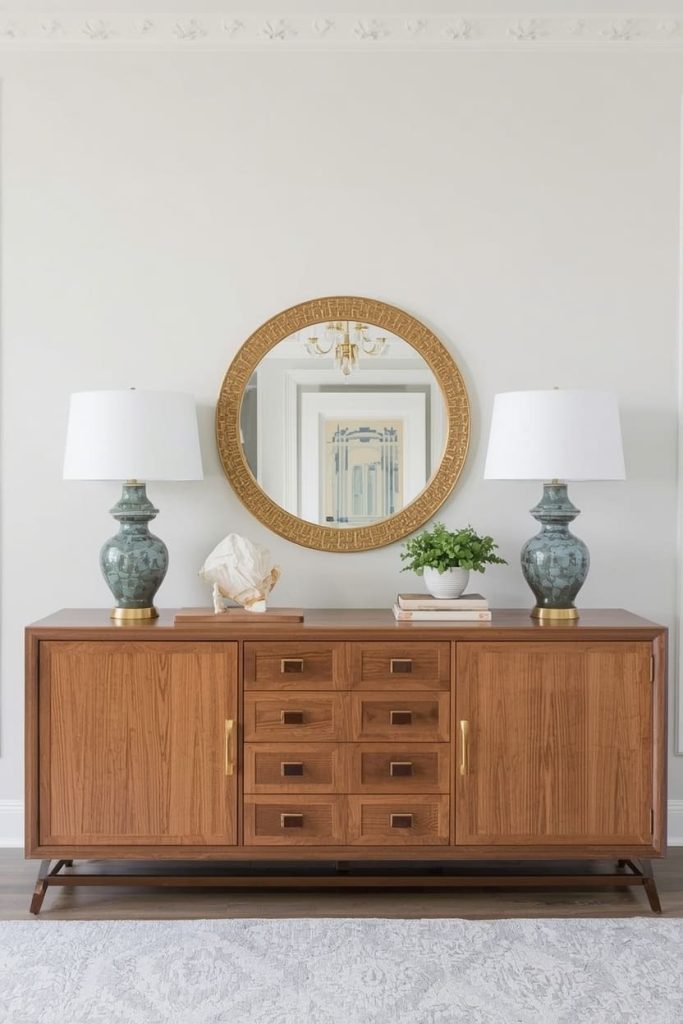
If there is one dining room cabinet that belongs in virtually every home regardless of style, size, or budget, it is the sideboard. Low, long, and built along a single wall, a sideboard provides generous closed storage for everything you need at the dining table — linens, serving pieces, candles, extra place settings — while offering a beautiful surface on top for styling, serving during dinner parties, or displaying a lamp, mirror, and a few curated objects.
Sideboards typically range from 48 to 72 inches wide and 30 to 36 inches tall — low enough to hang art above, wide enough to make a wall feel fully furnished. Choose a width that fills at least two-thirds of your available wall space for the best visual proportion.
In terms of style, sideboards come in every finish imaginable — warm walnut, painted white, matte black, natural oak, aged brass hardware — making them one of the most versatile furniture investments you can make. A well-chosen sideboard transitions beautifully through multiple style updates over the years.
Style the top with a tray, two matching lamps flanking a mirror, a plant, and a few meaningful objects — this instantly transforms a storage piece into a designed moment.
This is the right choice for you if you want one foundational dining room cabinet that solves your storage problem and anchors the entire room in a single purchase.
The Hutch: Display and Storage Combined in One Statement Piece
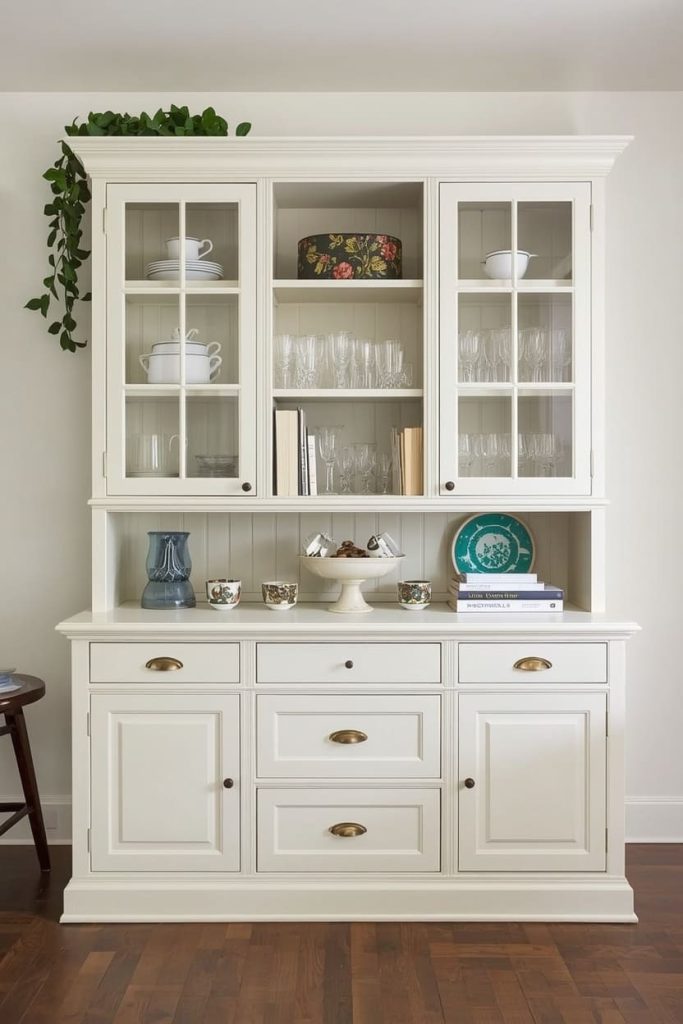
A hutch is essentially a sideboard with a superpower — it keeps going upward. The lower section provides the same closed cabinet and drawer storage as a standalone sideboard, while the upper section features open shelves, glass-front doors, or a combination of both for displaying your most beautiful dining pieces. The result is a single furniture piece that handles both storage and display simultaneously, making it one of the most efficient dining room cabinet solutions available.
In a dining room, a hutch creates an instant focal wall. The upper section draws the eye upward, making rooms feel taller, while the combination of open and closed storage lets you show off the pieces worth displaying — good china, crystal, vintage ceramics — while hiding the everyday clutter behind closed doors below.
Hutches work best against a wall with adequate ceiling clearance — most range from 72 to 84 inches tall, so measure your ceiling height before purchasing. In rooms with 8-foot ceilings, a hutch with 6 inches of clearance above looks intentional; anything tighter starts to feel cramped.
Style the open upper shelves with a mix of heights — stack plates vertically, layer glasses in front of stacked books, add a small plant or trailing vine for organic softness.
This idea is perfect for you if you want your dining room cabinet to do double duty as a display feature and a storage solution without requiring two separate pieces of furniture.
The China Cabinet: Give Your Good Pieces the Showcase They Deserve
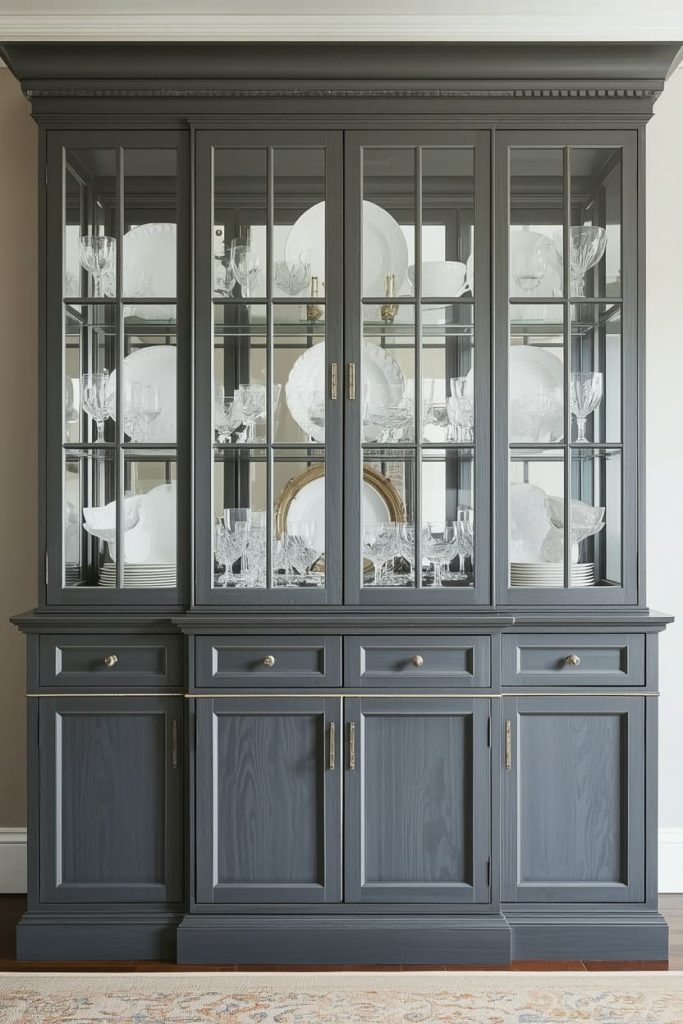
If you own fine china, crystal stemware, or cherished heirloom serving pieces, a dedicated china cabinet is the dining room solution that honors those pieces rather than hiding them in a box under the stairs. A china cabinet is specifically designed to display and protect your most beautiful dining pieces — typically featuring glass panels on the front and sides, interior lighting, mirrored backs that reflect and amplify the display, and adjustable shelving to accommodate pieces of varying heights.
Beyond pure display, a china cabinet makes your entertaining pieces genuinely accessible. When everything is visible and organized behind glass, setting a formal table becomes a pleasure rather than a rummage through overcrowded cupboards.
China cabinets range from slim and contemporary — barely 14 inches deep with clean glass panels and minimal framing — to grand, ornate pieces with carved details and antique brass hardware. The style spectrum is wide enough to suit everything from a traditional formal dining room to a modern glam space.
Placement tip: position a china cabinet on a wall that receives natural light during the day — the way daylight filters through the glass and catches your crystal is genuinely beautiful. Add interior LED lighting for evening atmosphere.
This is the right idea for you if you have a collection of beautiful china or glassware that currently lives in boxes or overcrowded kitchen cabinets and deserves a proper home.
Open Shelving: Curated Display That Makes a Dining Room Feel Lived-In and Personal
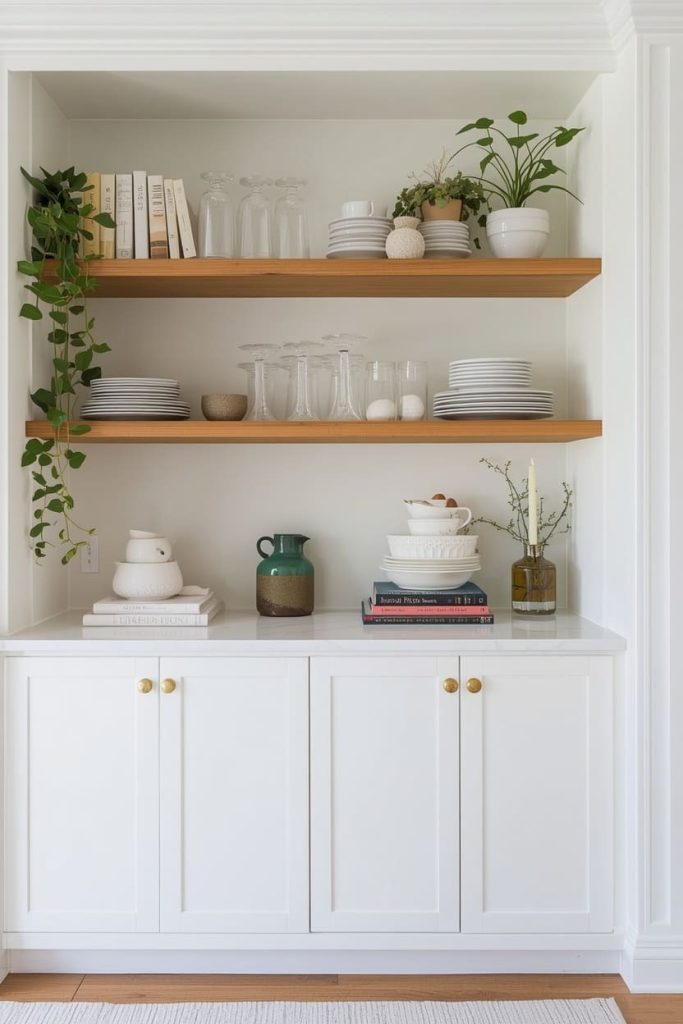
Open shelving in a dining room is a polarizing topic — people either love the curated, collected look it creates or worry it will become a dust-collecting mess within a week. The truth is that open shelving works beautifully in a dining room when it is edited intentionally and styled with purpose rather than used as general overflow storage.
The key distinction is this: open shelves in a dining room should hold your most beautiful, most used pieces — not everything you own. Think a stack of your favorite everyday plates, a row of matching glasses, a few cookbooks, a trailing plant, some linen napkins folded neatly, and a candle or two. Everything on display should earn its place.
Wall-mounted floating shelves are the most space-efficient option — they provide storage and display without occupying floor space, making them ideal for smaller dining rooms or spaces where a full cabinet would feel overwhelming. Freestanding open shelving units offer more flexibility in placement and typically provide more overall surface area.
Practically, choose shelves that are deep enough for stacked plates — at least 10 to 12 inches — and space them at least 12 to 14 inches apart vertically to accommodate taller pieces like pitchers, vases, and bottles.
This idea suits you if you love a curated, personal aesthetic and are disciplined enough to keep the display edited and intentional rather than letting it become a catch-all.
Built-In Cabinets: The Permanent Solution That Adds Value and Architecture to Your Home
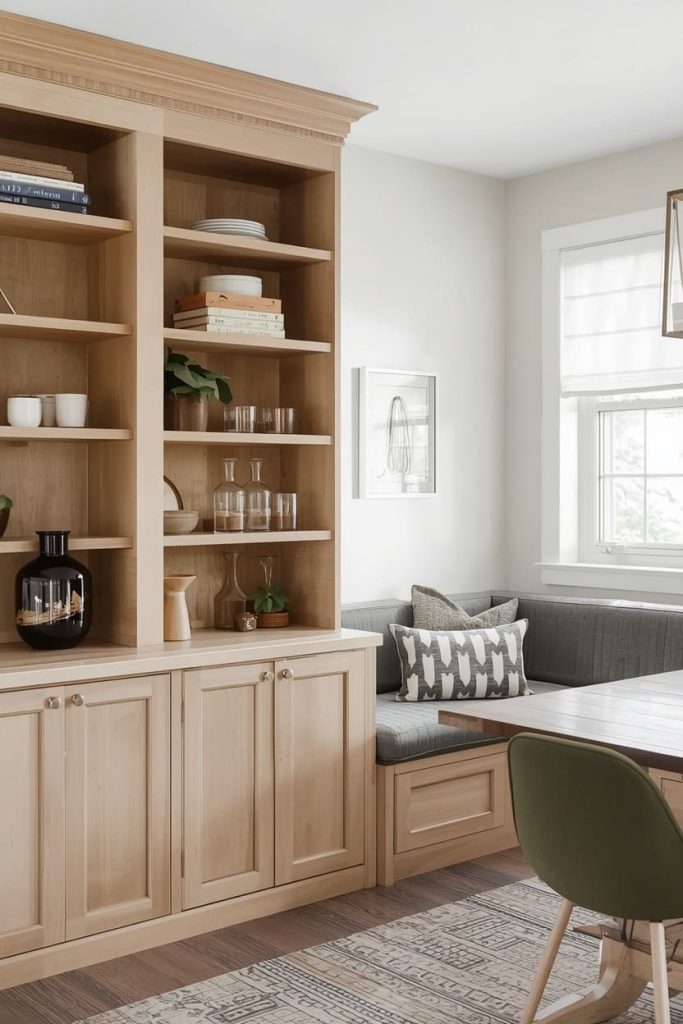
A built-in dining room cabinet is the gold standard of dining room storage — a custom or semi-custom solution that fits your exact wall dimensions, addresses your specific storage needs, and adds genuine architectural value and character to the room. Unlike freestanding furniture, a built-in becomes part of the house itself, creating a sense of permanence, intention, and craftsmanship that no standalone piece can fully replicate.
Built-ins can take many forms in a dining room — flanking a fireplace or window with symmetrical cabinet towers, running a full wall of floor-to-ceiling storage, or creating a built-in banquette with under-seat storage that solves both seating and organization simultaneously. Each approach maximizes every inch of available space in a way that freestanding furniture simply cannot.
The cost is the primary consideration — a true custom built-in ranges from $3,000 to $10,000 or more depending on size, materials, and complexity. However, semi-custom options using IKEA cabinet boxes with custom fronts and trim — a technique popularized as the “IKEA hack” — can achieve a nearly identical result for $800 to $2,500, making built-in quality achievable at a fraction of the price.
This is the right investment for you if you plan to stay in your home long-term, want maximum storage impact, and are ready to commit to a solution that becomes a permanent, value-adding feature of the room.
The Bar or Drinks Cabinet: Elevate Your Entertaining Game With a Dedicated Drinks Station
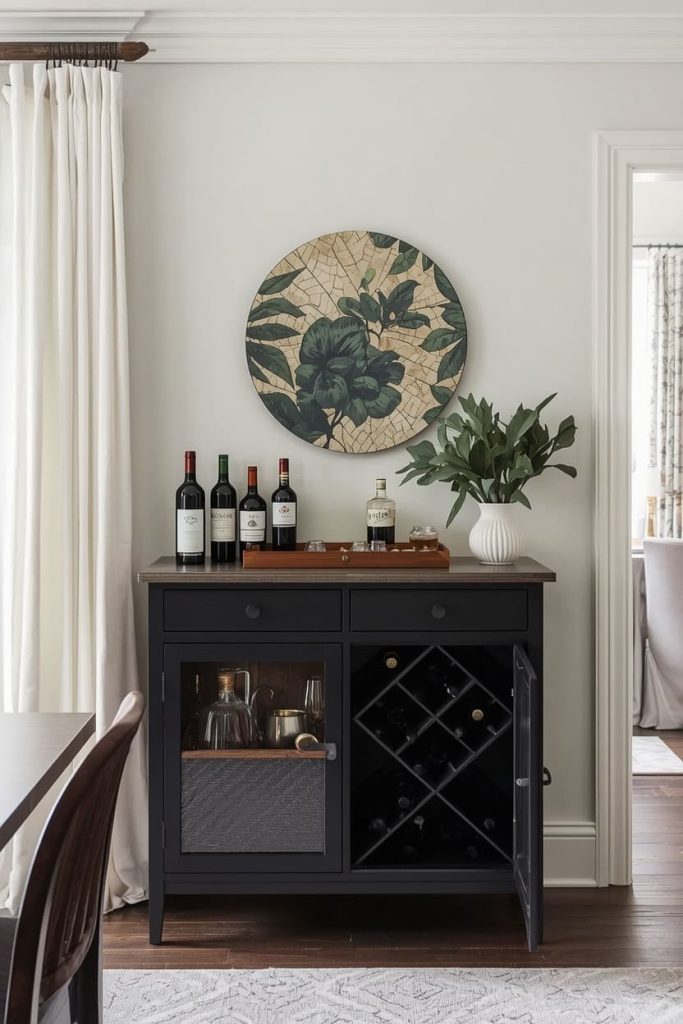
A dedicated bar or drinks cabinet in a dining room is one of those additions that feels like a luxury until you have one — and then you cannot imagine entertaining without it. Rather than making repeated trips to the kitchen during dinner parties or crowding wine bottles and cocktail supplies onto the dining table sideboard, a bar cabinet gives your entertaining essentials their own dedicated, beautifully organized home.
Bar cabinets typically feature a combination of wine storage, stemware racks, open shelving for spirits and mixers, and a flat surface for mixing and serving. Some include a fold-out surface that extends when in use and tucks away when not needed — a practical feature for smaller dining rooms where space is tight.
Style-wise, bar cabinets have evolved dramatically. You’ll find everything from sleek matte black modern designs to warm brass-accented mid-century pieces to rustic reclaimed wood options — making it entirely possible to find one that complements your existing dining room furniture rather than competing with it.
Placement tip: position your bar cabinet on the wall opposite your dining table so guests can access drinks without disrupting the flow of the meal. Add a small tray on top to corral bottles and tools into a styled, organized grouping.
This idea is perfect for you if you entertain regularly and want a dining room that functions as a genuine hospitality space rather than just a room with a table in it.
Tall Freestanding Cabinets: Maximize Vertical Storage in Dining Rooms That Lack Wall Space
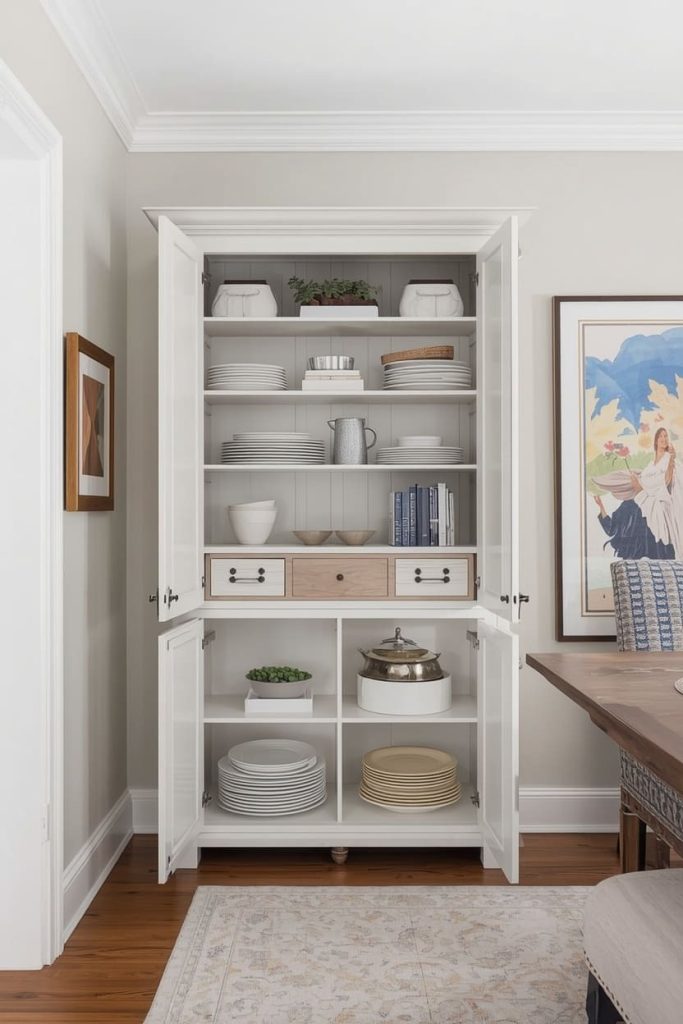
In dining rooms where floor space is limited but ceiling height is generous, a tall freestanding cabinet — sometimes called a pantry cabinet, armoire, or storage tower — is the smartest storage solution available. Rather than spreading storage horizontally across a long wall, a tall cabinet goes vertical, delivering an impressive amount of storage in a relatively small footprint.
A tall dining room cabinet typically ranges from 70 to 84 inches in height and 24 to 36 inches wide, making it manageable in a dining room that cannot accommodate a full-length sideboard. Inside, adjustable shelving configurations allow you to customize the storage for your specific needs — tall shelves for serving platters and trays, shorter sections for stacked plates and bowls, door-mounted storage for smaller items.
Visually, a tall cabinet draws the eye upward and makes a room feel more vertical and architecturally interesting — a particular benefit in dining rooms with standard 8-foot ceilings that need some visual height. Pair one with a piece of art or a mirror above a shorter piece on the adjacent wall to balance the room’s visual weight.
Choose a style that echoes your dining room’s existing furniture — a shaker-style painted cabinet for a farmhouse space, a sleek high-gloss piece for a modern room, or a warm wood armoire for a traditional or transitional dining room.
This is the right choice for you if your dining room has limited wall length but adequate ceiling height, and you need maximum storage capacity without sacrificing the entire perimeter of the room.
Frequently Asked Questions
What is the difference between a sideboard, a buffet, and a hutch?
A sideboard and a buffet are largely interchangeable terms — both describe a low, long storage cabinet designed to sit against a dining room wall, typically 30 to 36 inches tall with a flat serving surface on top. The main practical difference is that buffets are traditionally associated with food service, while sideboards are broader in function. A hutch is a sideboard or buffet with an upper display unit — shelves or glass-front cabinets — added on top, creating a taller, two-section storage piece.
How do I choose the right size cabinet for my dining room?
Start by measuring your available wall space and leaving at least 36 to 48 inches of clearance for traffic flow around the dining table. For width, aim for a cabinet that fills at least two-thirds of the wall it occupies — anything narrower looks visually lost. For height, consider your ceiling height and what you want to hang above the piece — leave at least 8 to 12 inches between the top of the cabinet and any artwork or mirror above it.
How do I style the top of a dining room sideboard or cabinet?
The most reliable formula is: one large anchor element in the center or slightly off-center — a mirror, large artwork, or a tall lamp — flanked by two smaller matching elements like lamps, vases, or candlesticks for symmetry. Add a tray to corral smaller objects into a cohesive grouping, include one plant or organic element for warmth, and keep the overall arrangement odd-numbered. Edit ruthlessly — a styled sideboard top with five intentional objects looks far better than one crowded with fifteen.
Are open shelving units practical in a dining room or do they just collect dust?
Open shelving is absolutely practical in a dining room when it holds items you use regularly — everyday plates, glasses, napkins, and serving pieces that are touched frequently enough that dust never settles. The mistake is using open shelves for display-only pieces that sit untouched for months. If you entertain often and rotate your dining pieces regularly, open shelving stays clean and beautiful naturally. For purely decorative items, glass-front cabinets offer the visual openness of shelving with dust protection.
The right dining room cabinet is out there for your exact space, your specific storage needs, and your personal style — and when you find it, the difference it makes to how the room looks and functions will be immediately obvious.
Measure your wall space, make a list of everything you currently have nowhere to put, and let that list guide your choice of cabinet format. Solve the biggest storage problem first, style it beautifully, and watch your dining room finally feel like the complete, intentional space it was always meant to be.

Jenny is a passionate writer specializing in home decor, design, and styling. With years of experience in transforming spaces, she shares expert tips on creating beautiful, functional homes. From interior design trends to DIY decor ideas, Jenny’s work helps homeowners craft spaces that reflect their unique style. Whether it’s a cozy living room, a modern kitchen, or a serene bedroom, her articles offer practical advice and inspiration to elevate any home.